Hannah Arendt's 1936 analysis of German antisemitism reveals the profound implications of Hitler's rise and its resonance across Europe.
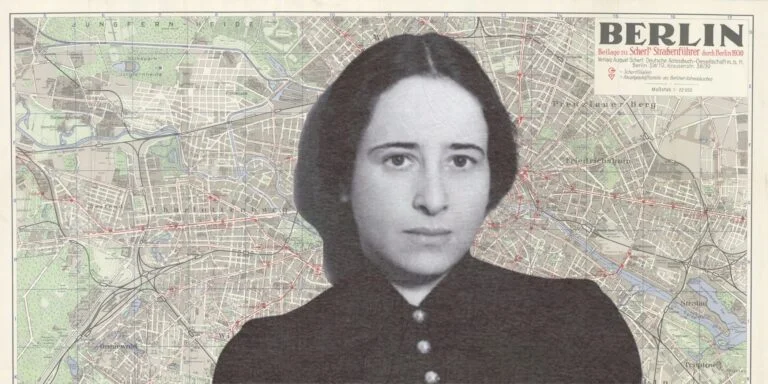
Hannah Arendt's lectures from 1936 in Paris marked a pivotal moment for the émigré community, signaling her determined focus on modern antisemitism. Having dedicated substantial time to her manuscript, initially announced in 1934, she sought to stimulate discussion and refine her work. The result was a significant 159-page typescript, structured around the evolution of antisemitism and its consequences, poignant for a time when many remained uncertain about the longevity of National Socialism.
What stands out in Arendt's work is the unyielding pessimism that permeates her analysis. She firmly believed the particular brand of antisemitism taking root in Germany was uniquely entrenched there. By referencing historical texts, starting with Christian Wilhelm Dohm's Ueber die Verbesserung der Juden (1781) and others, Arendt positioned her discourse within a long tradition of anti-Jewish sentiment. This included critical assessments of how Jewish populations had been portrayed throughout history, leading to a logical conclusion that with the Nazis' ascension, a brutal realization of antisemitic aspirations was imminent.
Arendt noted that before the implementation of the Nuremberg Laws in 1935, many speculated on the durability of Hitler's regime, but she was unambiguous in her evaluation. Her manuscript glossed over the optimistic tendencies of some observers; instead, it laid bare an understanding that the catastrophe evolving in Germany would likely extend beyond its borders. Arendt perceived the plight of German Jews as a harbinger, warning that their experience might be replicated elsewhere.
The connection between antisemitism and Jewish history was central to her argument. For Arendt, the history of Jewish emancipation was tightly interwoven with the societal structures that fostered antisemitism. She documented a harsh reality for Jews—where their previous illusions of superiority were swiftly dismantled when faced with the reality of societal rejection and violence. The Western Jewish community's brief period of liberation faltered dramatically as they confronted the sordid conditions of their existence in the historical moment sparked by Hitler's ascent.
Moreover, Arendt's critique went beyond mere historical reflection; she challenged the status quo of Jewish identity vis-à-vis the majority society. By dissecting Jewish history, she raised critical questions about the identities fabricated by both Jews and non-Jews, warning that misunderstanding the essence of Jewish history could lead to tragic misinterpretations. Her reasoning was that Jewish experiences were not simply victim narratives but were crucial for understanding broader societal ailments.
A pointed critique emerged in her discussion of Theodor Herzl's Zionism, which Arendt believed had failed to adequately address the complexities of Jewish identity. She posited that the Zionist movement's tendency to portray Jewish existence as fundamentally separate from the nations surrounding them was a miscalculation. In doing so, it neglected the reality that antisemitism must be understood not as a mere opinion held by individuals but as a systemic issue precipitated by underlying societal tensions.
Arendt wielded historical analyses to uncover how antisemitism evolved as a structure of thought. Seemingly innocent associations became threads of an elaborate fabric that upheld Jewish caricatures as antagonists in society. This abstraction, she asserted, led to a pernicious narrative equating Jews with malevolence—a notion that had far-reaching implications for both the perception and treatment of Jews in society.
In her theoretical exploration, she addressed how modern antisemitism arose simultaneously with the aspirations of Jewish assimilation. It became evident to Arendt that the very attempts of Jews to integrate into European society precipitated a backlash resulting from the very equality they sought. In attempting to conform to societal norms, Jews unwittingly placed themselves at the mercy of a populace already primed to deny their identity.
In a parallel chapter, Arendt dissected the stereotype of the "usurer," "pariah," and "parasite," associating these outdated socio-economic categories with modern perceptions of Jews. As she articulated, the influx of Jewish populations into broader social frameworks revealed deep-seated antagonisms that had been silently nurtured. This troubling picture only intensified as Jews were relegated to the status of pariahs, a phenomenon underscored by their exclusion from national identities.
The impact of this dislocation was profound. In her analysis of "exceptional Jews," Arendt captured the irony of privilege in a time of peril, where alleged success became a source of resentment rather than elevation. This paradox highlights the dynamic interplay between Jewish identity and societal structures, with deep implications for modern antisemitism.
Arendt concluded that antisemitism flourished in a political vacuum where it could gain traction. In an environment devoid of societal solidarity, it represented a dangerous allure to those who felt disenfranchised. Assimilated Jews unwittingly provided fodder for extremist narratives as they navigated their identities amid the intensified pressures of conformity and societal expectations.
As Arendt articulated, an effective response to the rising tide of antisemitism required stepping beyond conventional wisdom and critically rethinking Jewish responses to existential threats. Her insights underscore a continuing dialogue regarding the political ramifications of identity and the cultural positioning of Jews throughout European history.
Ultimately, Arendt’s incisive and often uncomfortable scrutiny of antisemitism and its roots demands a reevaluation of both historical narratives and the political frameworks that shaped Jewish existence. Her work remains a vital lens through which to examine not just the past, but the ongoing challenges faced in grappling with these complex societal dynamics.
Discussion
Sign in to join the discussion.