Spotify's new "AI Personas" badge will label fully AI-generated artists, removing their music from personalized recommendations to protect human artists.
Spotify’s AI Personas Initiative
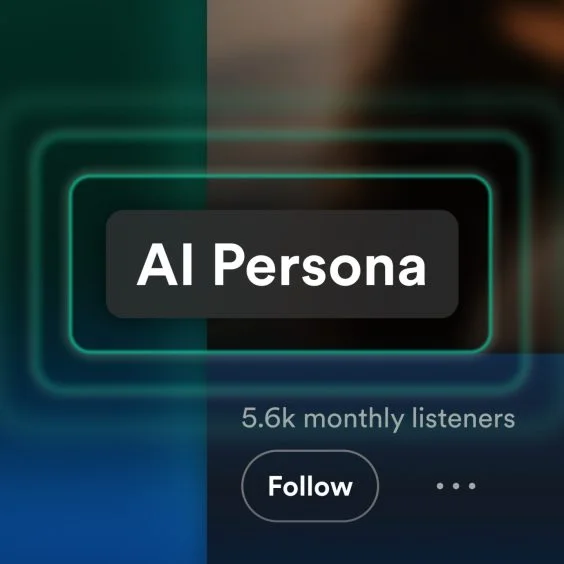
Spotify has taken a significant step in addressing the growing presence of AI-generated musicians by introducing a new badge for “AI Personas.” This label will clearly identify fully AI-generated artist profiles, ensuring that their music is excluded from both editorial and algorithmic recommendations. This move comes amidst rising concerns from industry stakeholders about how AI content is flooding digital streaming platforms and changing the dynamics of music consumption.
The Magnitude of AI Influence
Statistics reveal the scale of this change: as of April, about 44% of the new songs uploaded to the French streaming service Deezer were AI-generated, translating to a staggering 75,000 tracks added daily. These figures are striking, pulling into focus the rapid shift in content production that traditional musicians are grappling with. For artists already facing tough competition, the sheer volume of AI-generated music is overwhelming. Instances like the virality of AI-created acts, including the Velvet Sundown, only amplify these anxieties. It's a situation that begs the question: how do real musicians insert themselves into a digital ecosystem overflowing with artificial creations?
Concerns Over Ghost Artists
Critics have pointed out Spotify's history of promoting “ghost artists”—background tracks created under different pseudonyms that are often linked to the platform but produce lower royalties for creators. This practice raises ethical questions in a landscape already riddled with uncertainty. Journalist Liz Pelly has highlighted these issues, stressing that the presence of ghost artists blurs the line between genuine music and profit-driven aggregation. Damon Krukowski’s concerns about how AI-generated music might further complicate the competitive environment for human artists reveal just how skewed the playing field has become. Traditional musicians may feel the need to compete not just against other human artists but against an ever-growing database of soulless creations.
Transparency in AI Music
According to Spotify, the AI Personas badge aims to clarify when listeners are encountering music from an AI entity. In a press release detailing this initiative, Spotify stated, “Listeners have been clear in telling us that they don’t like seeing an artist profile that seems human, only to find out that the persona is AI-generated.” Starting mid-September, users will begin seeing this badge on identified profiles. This transparency is crucial for maintaining trust within the Spotify ecosystem. Additionally, profiles that self-disclose as AI Personas will be tagged accordingly, providing clear guidelines for consumers. It signifies a deliberate effort by Spotify to manage the complexities of listener expectations in a world where the definition of “artist” is evolving.
The Impact of Personalized Recommendations
The platform is set to exclude AI-generated artists from personalized recommendations by default, reinforcing its commitment to promoting authentic musicians. This move could provide some breathing room for human artists feeling the pressure from digital content overload. However, there's a notable caveat: if users choose to follow an AI Persona, that music can still appear in personalized playlists. This illustrates the tricky balance Spotify is trying to strike—a boundary that may not be as clear-cut as it seems. What this means for you, if you're working in this space, is that the choices you make on the platform might still affect your exposure to AI-generated content.
The Finer Points of Categorizing AI in Music
A broader context emerges when we consider the challenges in categorizing music made with the aid of AI technologies. The current policy falls short of addressing tracks created by human artists who incorporate AI elements in their work. For example, Fenix Flexin's hit "Rubberz" has sparked controversy due to its AI-assisted production. Furthermore, artists like Empire of the Sun and Two Shell have publicly acknowledged their own utilization of AI in music production. This becomes a slippery slope. Is the music truly human if it’s heavily influenced by AI? Who holds the rights, and how does one quantify artistic merit in such cases? These are essential questions that will shape how we think about music in the future.
The Ethical Dimensions of AI in Music
This initiative coincides with ongoing discussions about Spotify's use of AI in features like "About The Song." Some critics, including Lorde, have condemned it for its inaccuracies, suggesting a need for greater scrutiny and ethical considerations surrounding AI in the music industry. This isn’t just about convenience or feature richness; it enters a realm where misinformation can damage artists' reputations. The introduction of the AI Personas badge might be a step toward better accountability, but it also underscores the urgent need for a more systematic approach to AI ethics in music. As artists grapple with these developments, they'll need clarity and assurance that their creative contributions are being protected.
Future Implications of the AI Personas Initiative
As the conversation around AI in music continues, Spotify’s approach to labeling AI-generated content sets a precedent that other platforms may soon follow. However, the complexities of integrating burgeoning technologies with traditional artistry raise many unanswered questions about the future of music creation and consumption. Are we heading toward an era where authenticity is sacrificed on the altar of technological convenience? As AI continues to proliferate, the music industry must consider who gets recognized and rewarded for their work. This is more significant than it looks; after all, the essence of music lies not just in melodies and beats, but in the humanity behind them. Artists and listeners alike need to navigate these waters carefully, balancing innovation with an appreciation for artistry.
Discussion
Sign in to join the discussion.