Exploring Jewish Dissent: Benjamin Moser's Insightful Journey Through Anti-Zionism
Published Sep 22, 2026319 readers
Benjamin Moser's *Anti-Zionism: A Jewish History* delves into diverse voices of Jewish dissent, challenging readers to reconsider nationalism and human rights.
## A New Perspective on Anti-Zionism
Benjamin Moser has long been recognized for his exceptional contributions to life-writing, particularly through his acclaimed biographies of literary figures like Clarice Lispector and Susan Sontag. In his latest endeavor, he ventures into a broader historical narrative with *Anti-Zionism: A Jewish History*, which will be published by Doubleday on September 22. This work isn't merely an exercise in biography; it's a deeply personal exploration that chronicles the often-overlooked voices of Jewish dissent against Zionism from the 19th century to today.
What’s striking about Moser’s approach is that he does not limit himself to a single protagonist but rather profiles twelve distinct figures, all of whom contribute to a rich tapestry of anti-Zionist thought. Notably, Moser’s examination of these lives is not just academic; it's also a reflection of his own evolution from a passive supporter of Zionism to someone who critiques its implications deeply. This journey commenced after the events of October 7, prompting Moser to embark on an intense period of research across various countries, including staples like South Africa and Germany.
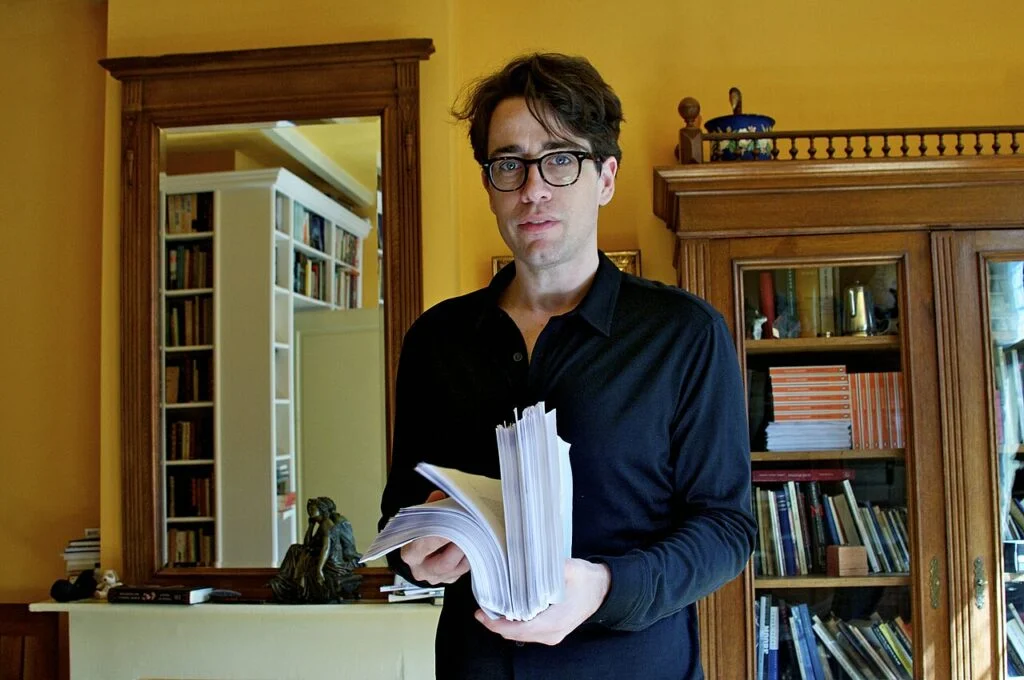
I had the opportunity to connect with Moser while he completed this project at the New York Public Library. At first glance, Moser expected the promotion of his book to unfold smoothly, but given the contentious nature of its subject matter, he anticipates that it could provoke strong reactions. What he’s crafting is a narrative that extends beyond the Jewish community; it seeks to engage a wider audience through layered, impressionistic portraits that highlight the diverse history of anti-Zionism.
Moser’s findings about the interplay between Zionism and broader global issues—like colonialism and racial injustice—are particularly compelling. “Zionism affects everything,” he explains, pointing out how the discourse surrounding Israel engages with issues from South Africa to India. It’s a lens that offers a critique not only of Zionist ideology but also of its broader ramifications in the world.
Central to Moser’s argument is the accumulation of historical perspectives that emphasize accountability within the Jewish community. He reflects on how past writers and thinkers grappled with the consequences of disobedience to their moral imperatives. This reflective stance is perhaps best embodied in his anecdote about his grandfather’s journey, linked to a copy of Theodor Herzl’s *Zionist Writings*, which he deftly uses to bridge personal history with larger ideological questions.
In sum, Moser's work challenges readers—whether they identify as Jewish or otherwise—to confront a tangled legacy of nationalism and resistance. He deems anti-Zionism a “big tent,” inviting a spectrum of voices and experiences that highlight a more expansive understanding of what it means to question statehood in the face of human rights violations. As he prepares to launch this ambitious project, it's clear that Moser aims not just to inform, but to provoke thoughtful discussion about a highly charged topic.
Reflections on Writing and the Weight of Controversy
This is a moment of clarity for anyone delving into sensitive subjects, especially those that are loaded with historical and political implications. The writer openly grapples with the anxiety that accompanies discussions on Zionism, revealing a reality many creators might overlook: the fear of backlash can stifle truth-telling. It’s not merely about the accuracy of facts, like whether Vermeer painted a certain masterpiece, which might prompt a couple of academic tweets if mishandled. Instead, when tackling topics like Zionism, the stakes soar. Invalidating perspectives is more than a critique; it can provoke deeply emotional and consequential defenses from those who feel attached to the narrative. This is a vital point for anyone working in journalism or literature, underscoring how such fears affect the tone and approach of discourse.
The writer confesses to intense scrutiny even after submitting the manuscript, which illustrates the exhaustive nature of mixing research with historic complexity. Covering a sprawling timeline and diverse geographic contexts leaves very little room for simple fact-checking. It's not just about finding one or two people to verify the information—it’s about trusting the integrity of your sources. This expansive scope makes it clear that some arguments are easier to deflect than confront. The frustration of feeling limited to discussions about punctuation or footnote placement rather than the overarching issues signifies a broader pattern in public discourse.
Here’s the thing: fear of criticism can either shackle creativity or embolden it. The writer presents this dichotomy compellingly, describing how anticipation of critique can be paralyzing yet invigorating at the same time. That self-awareness turns inward as they ponder on the nature of experience and growth as a writer. Crafting narratives that emerge from decades of introspection provides a kind of freedom, a familiarity with one’s themes that can’t be forged overnight. It’s akin to muscle memory; those who have spent years contemplating specific questions will naturally pull those insights into their work.
Moreover, it’s relatable to recognize feelings of despondency in the creative process. The moment of doubt before embarking on a new project often leads to a profound sense of vulnerability. This newfound awareness isn’t just personal; it resonates with anyone who’s ever feared their own obsolescence. However, it’s also liberating to realize that this phase isn’t unique. Each writer must confront these dark moments, and understanding they aren’t isolated can be a beacon, fostering resilience.
In essence, this writer’s journey is a valuable reminder for those of us in similar creative endeavors. It emphasizes the need to navigate difficult conversations with sensitivity while remaining unyielding in the pursuit of truth. It pushes us to consider how we address controversy—balancing factual rigor with an emotional understanding of the narratives involved. So, if you're working in this sphere, embrace the complexity. Your voice is essential in a world that often restricts discourse to superficialities. Keep writing, keep questioning, and don’t shy away from the tough subjects.
Discussion
Sign in to join the discussion.