The 1926 silent film *The Sea Beast*, introducing Captain Ahab's half-brother Derek, significantly impacted the legacy of *Moby-Dick* and its reception.
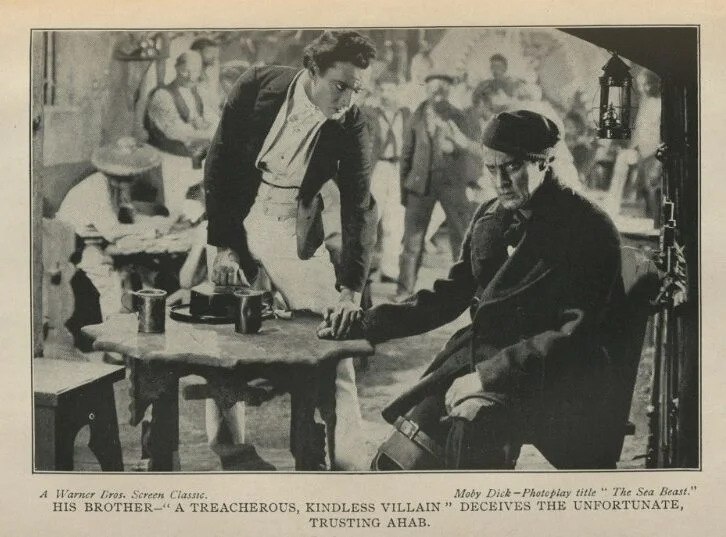
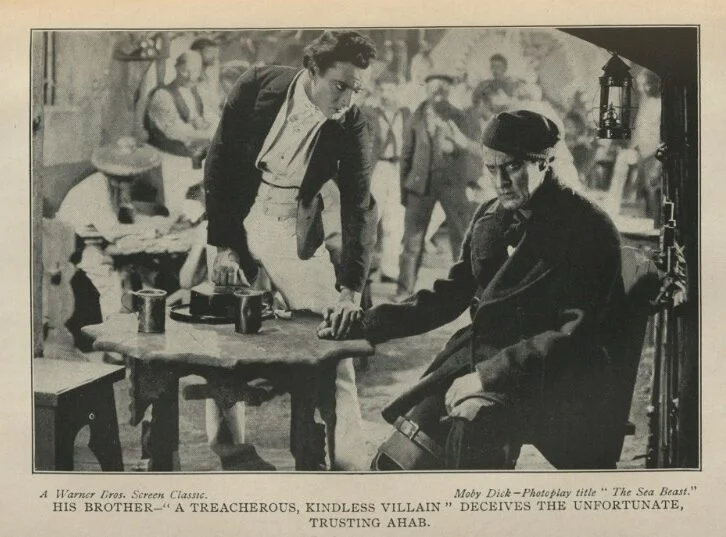
Still from The Sea Beast (1926), Grosset & Dunlap photoplay edition. Public domain, courtesy of John Hay.
In a remarkable twist on classic literature, the 1926 film The Sea Beast presents a curious alternative to Herman Melville's *Moby-Dick*: the film introduces Captain Ahab’s fictional half-brother, Derek. This unexpected character not only adds drama but significantly altered the way audiences engaged with Melville's text during the early 20th century.
In this silent cinematic adaptation, the narrative centers around a young harpooner named Ahab Ceeley, portrayed by the charismatic John Barrymore, who becomes embroiled in personal and maritime treachery. Derek, Ahab's nefarious sibling, is driven by jealousy and a desire for Esther's affection, leading him to betray Ahab by endangering him in a whale attack. This act of treachery triggers a downward spiral for Ahab, setting him on a path of vengeance against both Derek and Moby Dick.
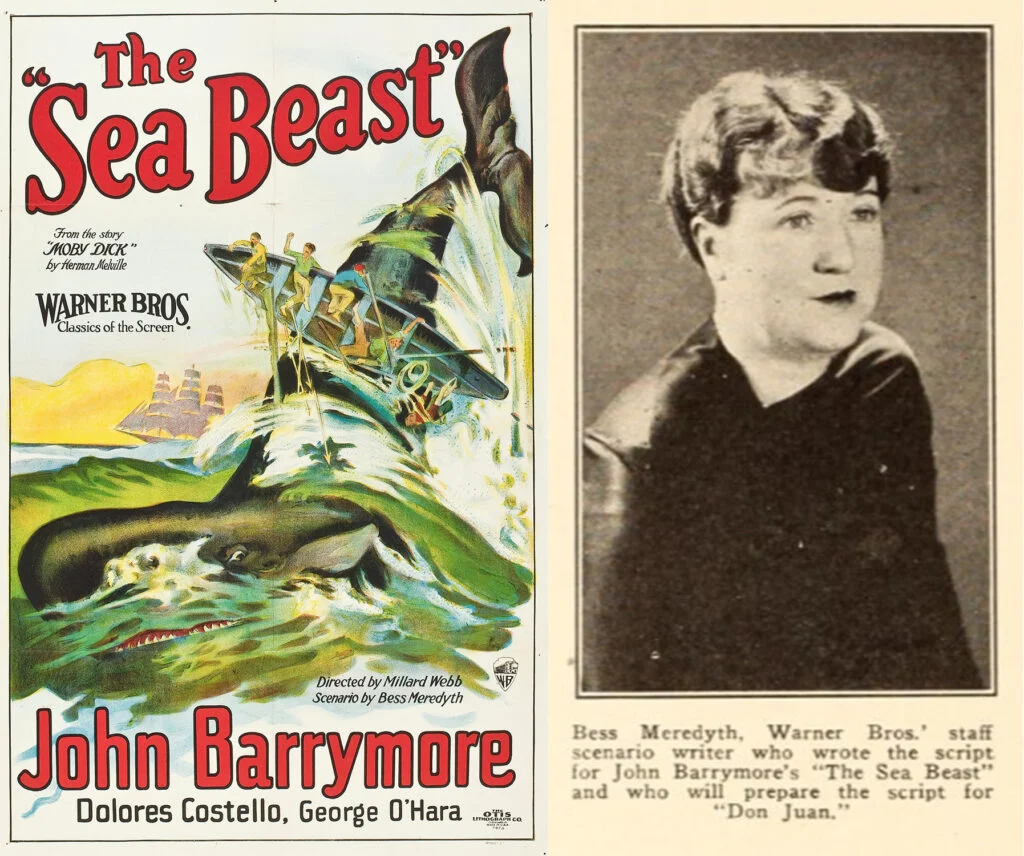
Warner Bros. poster for The Sea Beast, via Wikimedia Commons (left). Bess Meredyth, Motion Picture News, via Internet Archive (right). Public domain.

Derek's character was crafted by scenarist Bess Meredyth, a strategic decision by film producers eager to inject dramatic conflict into Melville's philosophical work. This fabrication oddly finds its roots in the popular narrative structures of the time; films like The Sea Wolf and The Sea Hawk, which also featured evil brothers, shaped the expectations of audiences. Notably, Meredyth's choice to add a romantic triangle aligns with the contemporary Hollywood penchant for melodrama, despite her own misgivings about diverging from Melville's original storyline.
In a departure unlike any found in the novel, *The Sea Beast* culminates in a conventional and upbeat resolution: Ahab avenges both his brother and Moby Dick, ultimately reuniting with Esther, whose faithfulness remains intact despite Ahab's physical scars. This transformation from a tragic narrative to a triumphant one further exemplifies Hollywood’s trends during that era.
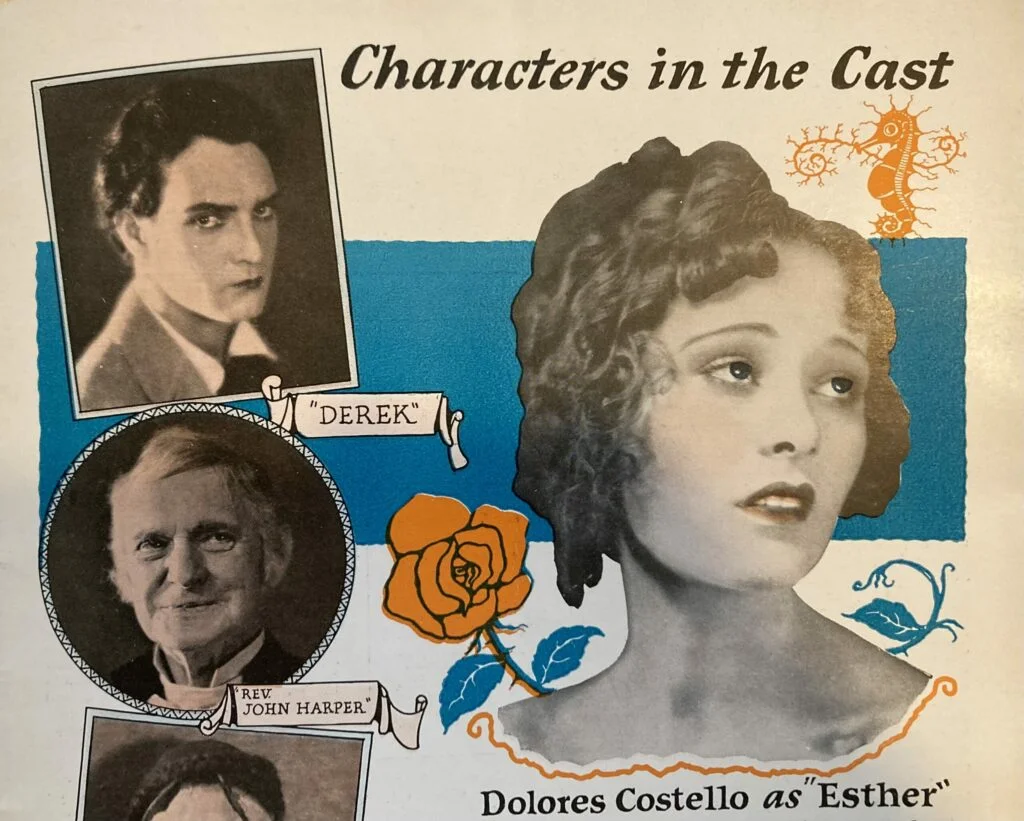
Warner Bros. promotional booklet for The Sea Beast. Photograph by John Hay.
Despite its significant divergences, Derek played an unexpected role in the broader cultural resurgence of *Moby-Dick*. At the time of the film's release, Melville's novel was relatively obscure, his genius stifled by a long period of critical neglect. The *Nation* magazine’s 1919 retrospective on Melville marked the beginning of a shift, sparking the “Melville Revival.” Over the following decade, growing interest transformed Melville from an afterthought into an essential figure in American literature, with *Moby-Dick* coming to be viewed as a contender for the Great American Novel.
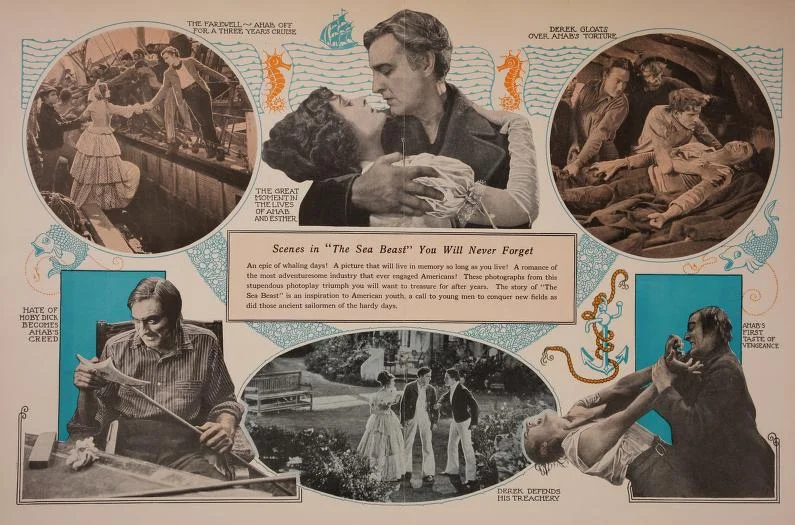
Warner Bros. promotional booklet for The Sea Beast. Photograph by John Hay.
The release of *The Sea Beast* gave Melville’s work an unprecedented platform, spurring numerous adaptations and reprints. The film’s run was a commercial success; theaters were packed, and promotional events linked to the film included a *Moby-Dick* week at Wanamaker's department store, complete with lectures and memorabilia, all fostering a newfound interest in Melville's narrative.
Publishers like Grosset & Dunlap seized on this momentum, creating photoplay editions of *Moby-Dick*, often incorporating scenes from *The Sea Beast* in repackaged formats. Their marketing touted the connection to the film, featuring Barrymore’s Ahab prominently yet distorting the essence of Melville’s writing by integrating a narrative that never existed in the original text.
The phenomena continued even overseas as publications proliferated. The Readers Library produced novelizations of the 1926 film, further embedding Derek into popular culture. Despite the dubious mechanics of its incorporation, the figure of Derek helped maintain the film's influence and popularity throughout the years.
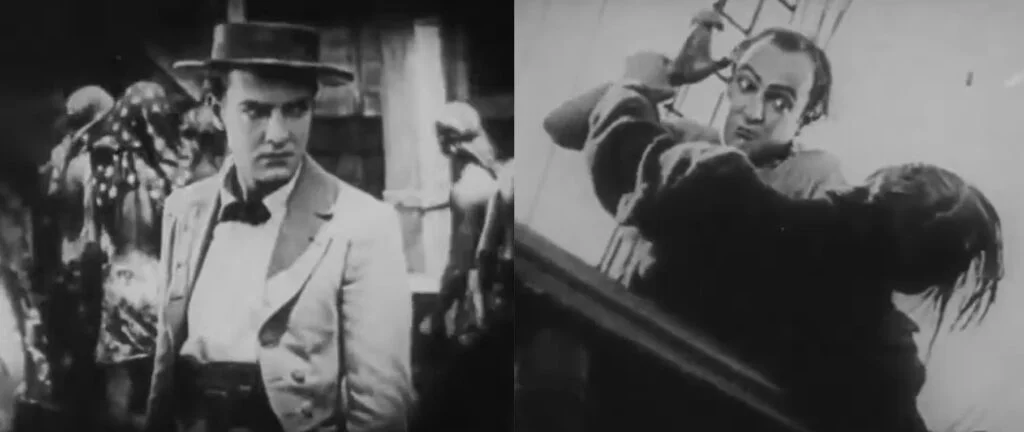
George O’Hara as Derek in two stills from The Sea Beast (1926). Public domain, courtesy of John Hay.
Derek's legacy didn't end here. In 1930, Warner Bros. capitalized on the character's popularity with a talkie adaptation titled *Moby Dick*, which resurrected Derek’s malevolence through engaging dialogues. Even then, *The Sea Beast* continued to influence interpretations of Ahab’s persona and his relationships, cementing Derek’s place in the public consciousness.
Interestingly, the name Derek itself poses contradictions against the Old Testament context of Ahab’s Nantucket origins, likely introducing an element of modernity that resonated with audiences following World War I, possibly reflecting prevailing societal sentiments. Critics have noted this peculiar choice serves as a classic illustration of Hollywood's creative liberties.
In terms of Melville's legacy, the character of Derek exemplifies Hollywood’s trend to prioritize dramatic arcs over fidelity to source material, forever intertwining a villainous sibling into the lore of *Moby-Dick*, all while maintaining Melville’s narrative at the forefront of American literary conversation.
As scholars and viewers continue to grapple with the contrasts and adaptations of Melville's work, it's clear that Derek will endure as an unusual, yet significant chapter in the canon of literary adaptations.
— John Hay, Professor in the Department of English at the University of Nevada, Las Vegas, with contributions to various literary publications.
Discussion
Sign in to join the discussion.