Exploring John Berger's Legacy: The Art of Storytelling and Social Consciousness
Published Sep 24, 2026426 readers
John Berger's impactful storytelling and social activism shaped his legacy, illustrating the profound connections between art, life, and the memory of the dead.
The Legacy of John Berger: A Life Indelibly Marked by Storytelling
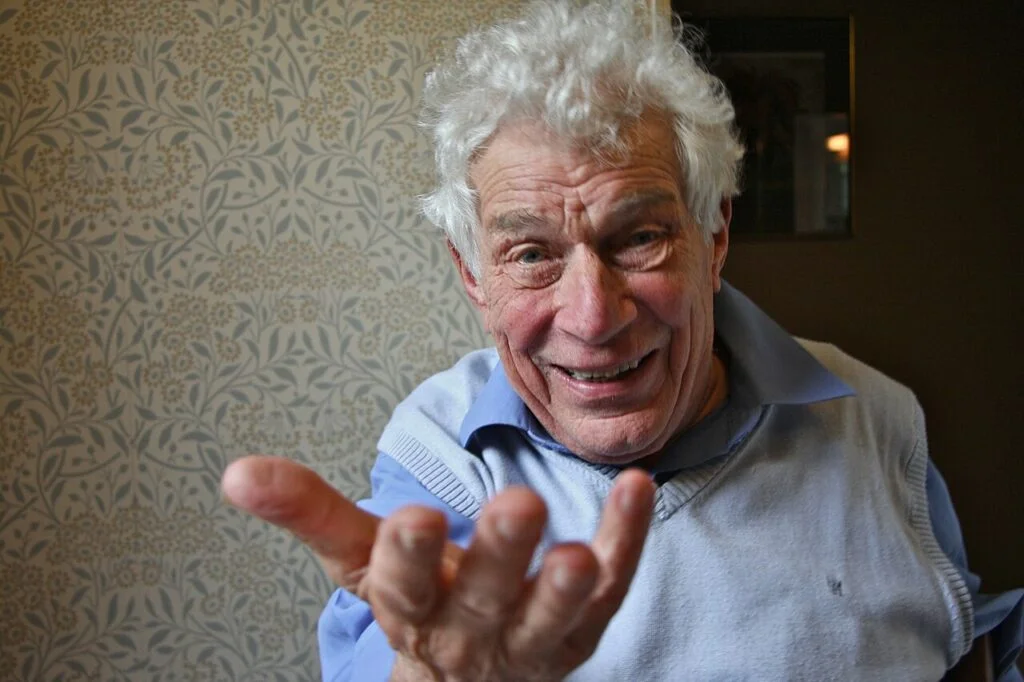
John Berger, who would have celebrated his centenary this November, remains an unsettling figure in the literary and artistic world. He passed away in 2017, leaving behind a rich tapestry of work that includes critical essays, inventive narratives, and a legacy intertwined with social consciousness. Berger’s most famous contributions are undoubtedly the 1972 book and accompanying BBC series, *Ways of Seeing*, which revolutionized the way we interpret art history. Yet, his decision during the Booker Prize acceptance speech that year—to allocate half of his monetary award to the British Black Panthers—cements his status as a cultural provocateur. This moment didn't just amplify his voice; it marked a significant gesture against the prize’s origins linked to the slave trade, a point that helped propel his papers to the archives of the British Library. There, biographer Tom Overton devoted years to cataloging these profound contributions to culture and thought in his book *John Berger: From Life*.
Berger’s Unique Perspective on Storytelling
Born in North London, Berger trained initially as a painter but found his true calling in writing. His critiques of art paired with a uniquely inventive approach to biography and fiction solidified his influence among postwar intellectuals. He famously identified himself as a storyteller, coining the term “Death’s Secretaries” in his 1984 work, *And Our Faces, My Heart, Brief as Photos*. For Berger, a life only materializes into a narrative upon its conclusion, and the writer's role is to document that journey. This engagement with mortality and memory also finds voice in his thought-provoking essay, “Twelve Theses on the Economy of the Dead,” where he grapples with the question of how the living relate to those who have passed.
Overton, in his biography, positions these themes as a central thread in Berger’s work. The dead leave behind stories that shape how we navigate our own lives. As Overton articulated during our conversation, “You don’t have to dig very deeply into Berger’s work to find his sense of the continued presence of the dead.” This idea permeated our discussion of the biographer’s responsibility to preserve the complexities of Berger’s relationships and contributions, as well as the challenges involved in bringing his multifaceted life into focus.
A Biographer's Intimate Journey
Probing into Berger's past, Overton found that uncovering the intricacies of his subject wasn't just an academic endeavor; it became a personal expedition. Their exchanges began casually as Overton based his inquiries on treasures discovered in Berger's archive. “I would scan things and email them, and then Beverly, his wife, would print them off—he used an iPhone but not a computer,” Overton shared, recounting their correspondence that felt like a bridge across time. This back-and-forth infused life into the archival material, blurring the lines between past and present.
Ultimately, Overton’s work isn’t merely a retelling of Berger’s life; it's a reflection of the connections made throughout the biographical journey. Berger's narrative often juxtaposed his own recollections with the facts unearthed from letters and documents, an exploration rife with contradictions that ultimately enrich the reader’s understanding of this complex figure.
As Overton himself put it, the biographical process is an exercise in navigating the unpredictable nature of human relationships—one that strives for authenticity while contending with the myriad interpretations and perceptions of others. In recognizing Berger’s “sense of the presence of the dead,” Overton boldly asserts that the way we honor memory shapes not only our understanding of the past but also our political engagement with the present. Acknowledging the challenges of grappling with such a vast legacy, he illustrates how, despite being there for so many poignant moments in Berger's life, it was after his passing that Overton felt he truly grasped the full depth of Berger's story.
Reflecting on Legacy and Connection
What stands out in this discussion is the intricate tapestry woven between John Berger's artistic pursuits and his political consciousness. It’s not merely that Berger’s work inhabited two worlds; it’s how those worlds illuminate one another. Overton highlights Berger's ability to merge the personal with the political, suggesting that our relationships—especially with the dead—shape our notions of belonging and home. This might sound abstract, but considering contemporary issues like forced migration, it suddenly feels very urgent. The longing for a place tied to memory resonates deeply in today's socio-political climate, highlighting the consequences of dislocation and the rise of exclusionary politics.
Overton wrestles with the tension between Berger’s Marxist ideology and his holistic connection to place, illustrating that Berger’s identity as a "Romantic Marxist" reflects a nuanced understanding of human experience. It's compelling to see how he frames language as not just a means of communication but as a lifeline to a sense of home, particularly for those uprooted by political strife. This perspective can serve as an eye-opener for anyone entrenched in today’s political discussions about immigration and identity. If you're working in this space, Overton's insights about Berger might feel particularly relevant, suggesting that empathy must form the bedrock of any political dialogue.
There’s an added layer of complexity when we consider Berger’s stylistic choices. While he labeled himself a storyteller, Overton posits that storytelling was not his primary strength. This raises an interesting point: can we value the visual over the literary in a context where writing is a medium for grappling with complex ideas? Overton argues that Berger's fundamental nature as a portraitist informs his writing, suggesting that his struggles with language were a form of visual thinking. His notion that a drawing transcends mere representation to encapsulate the interpreter's experience is strikingly poignant.
In tackling the question of writing directly to the dead, Overton brings forth a raw honesty. He writes in quiet moments, perhaps where the boundary between life and death feels less pronounced. This intimate exploration not only personalizes his relationship with Berger but also provokes thought about how we might connect with those who have shaped our thoughts long after they’re gone. The act of writing letters to Berger seems less an exercise in nostalgia and more a bridge across time. Overton aptly frames this as a learning process—suggesting that to embrace one’s own subjectivity can result in richer narratives.
Ultimately, this exchange isn't just a reverberation of Berger's philosophies; it’s an invitation to engage with the past in a way that enriches the present. As readers and thinkers, we must ask ourselves: how do our reflections on loss and connection inform our understanding of current social issues? In that sense, Overton's work not only pays homage to Berger but also galvanizes us to reflect on how we document our own lives and the lives of those we hold dear.
Discussion
Sign in to join the discussion.