Explore the compelling insights from Gary Indiana’s life and literary contributions uncovered in a newly released interview from The Paris Review.
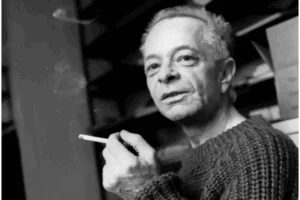
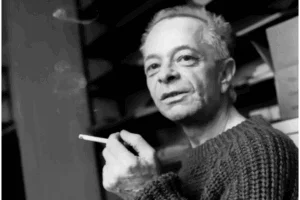
Gary Indiana in his New York apartment, February 2002. © Sylvia Plachy.
A Timely Rediscovery
This week, The Paris Review has unlocked an important interview with Gary Indiana from our archives, selected by Natalie Shapero. In an age where artists' voices are often amplified through social media and instantaneous platforms, the rediscovery of historical interviews provides an invaluable lens into the minds of those who paved the way. Indiana’s insights aren't just nostalgia— they’re a reminder of the often bygone thoughtful reflections that once flourished in traditional media.
The Lost Library
In Tobi Haslett’s preface to this Art of Fiction interview, the extensive collection of books that lined the walls of Indiana's New York City apartment is highlighted. Haslett observed, "More books are always arriving." The sheer volume of literature showcased not only Indiana's insatiable thirst for knowledge but also hints at the interconnectedness of his influences. Tragically, following Indiana's passing in 2024, this remarkable library was destroyed in a fire before it could be established in Altadena, California. Such losses highlight the fragility of cultural heritage, as personal archives often represent unique intersections of thought and creativity that may never be replicated.
A Multifaceted Mind
While that treasure trove of literature is now lost, the interview offers a poignant glimpse into Indiana's multifaceted mind. The discussion opens with Indiana's memorable performances, including his roles in Valie Export's The Practice of Love and Christoph Schlingensief’s Terror. These performances were more than mere acts; they shaped his artistic direction and hinted at the influences he absorbed during his career. Indiana intimately reflects on the various life experiences that informed his artistic journey. This provides a detailed view of his life, confirming that art is not just created in isolation but is deeply interwoven with personal narratives and broader societal contexts.
Art and Commerce
Indiana’s work, especially his collection of Village Voice columns in Vile Days, remains a bright spot in his portfolio, capturing the essence of an era with sharp commentary, particularly on the Wild West of art auctions in the 1980s. His insights into this tumultuous period expose the often uncomfortable relationship between art and commerce. By connecting his critiques to his later fiction writing, Indiana effectively demonstrates how the intersections of these two realms shaped his worldview, showcasing a continuum of thought and expression that many artists strive to achieve.
Personal Trauma and Authenticity
One striking element is Indiana’s candid exploration of personal trauma and its impact on trust and nostalgia. He underscores a vital distinction between mere opinions and meaningful actions, stating, “Having a million opinions about everything comes cheap and easy, whereas actually doing something can cost you quite a lot.” This insight reveals the depth of his character and the challenges he faced as both observer and participant in the arts. This isn’t just a throwaway comment; it’s an essential critique of how we often engage with art and culture on a superficial level, without demand for significant action or engagement. Indiana’s discourse beckons audiences to reassess their relationship with the creative fields.
Understanding the Artist's Journey
INTERVIEWER
Did you know that you wanted to be a novelist when you were writing for the Voice?
INDIANA
I was desperate to write a novel, but I didn’t have a story. Whenever I tried to write fiction it was all about my own inner bullshit. Writing about films and architecture and books was never the end point of what I wanted to do, but it forced me to get outside my own head, to describe physical objects and action. And then somebody handed me a story. I fell in love with a very comely young man who was trying to be an artist and was being a junkie without trying at all. I didn’t understand him, I didn’t understand his behavior, and I didn’t understand my behavior either. Francesco Clemente told me once that when you’re in love, the economy goes out the window. And that was my experience—he was all-consuming to me. A lot of what’s in Horse Crazy is pretty much how it went.
From issue no. 238 (Winter 2021)
The Artistic and Personal Interplay
Indiana’s reflections suggest a therapeutic connection between personal experiences and artistic expression. This intertwining is significant for any artist or writer. If you're working in this space, consider how your own life directly influences your output. Indiana's acknowledgment of “inner bullshit” reveals that grappling with personal pain can serve as a catalyst for creativity. (And this is the part most people overlook.) Often, artists shy away from confronting their inner conflicts, fearing vulnerability. Yet, as Indiana illustrates, the very act of confronting these complexities can result in profound narratives.
Future Implications and Significance
The re-emergence of Gary Indiana’s interview serves as a reminder of the importance of preserving voices from the past. Artists like Indiana have shaped not only their own narratives but the cultural conversation around art itself, which often becomes entangled with personal histories. Art can be a form of social commentary, an exploration of personal trauma, and a mirror reflecting societal dynamics—all themes Indiana adeptly navigated. In a time where artistic voices risk being commodified for trends, this interviews invites us to reflect deeply on what it means to create and connect.
Sign up for the Redux newsletter to receive these pieces in your inbox every Sunday morning.
Discussion
Sign in to join the discussion.