Italian supermarket shortages trace back to fuel costs and wider protests, while chocolate recipe changes and 3D-printed meat add to a busy week in food news.
Italy's shortage is an affordability story
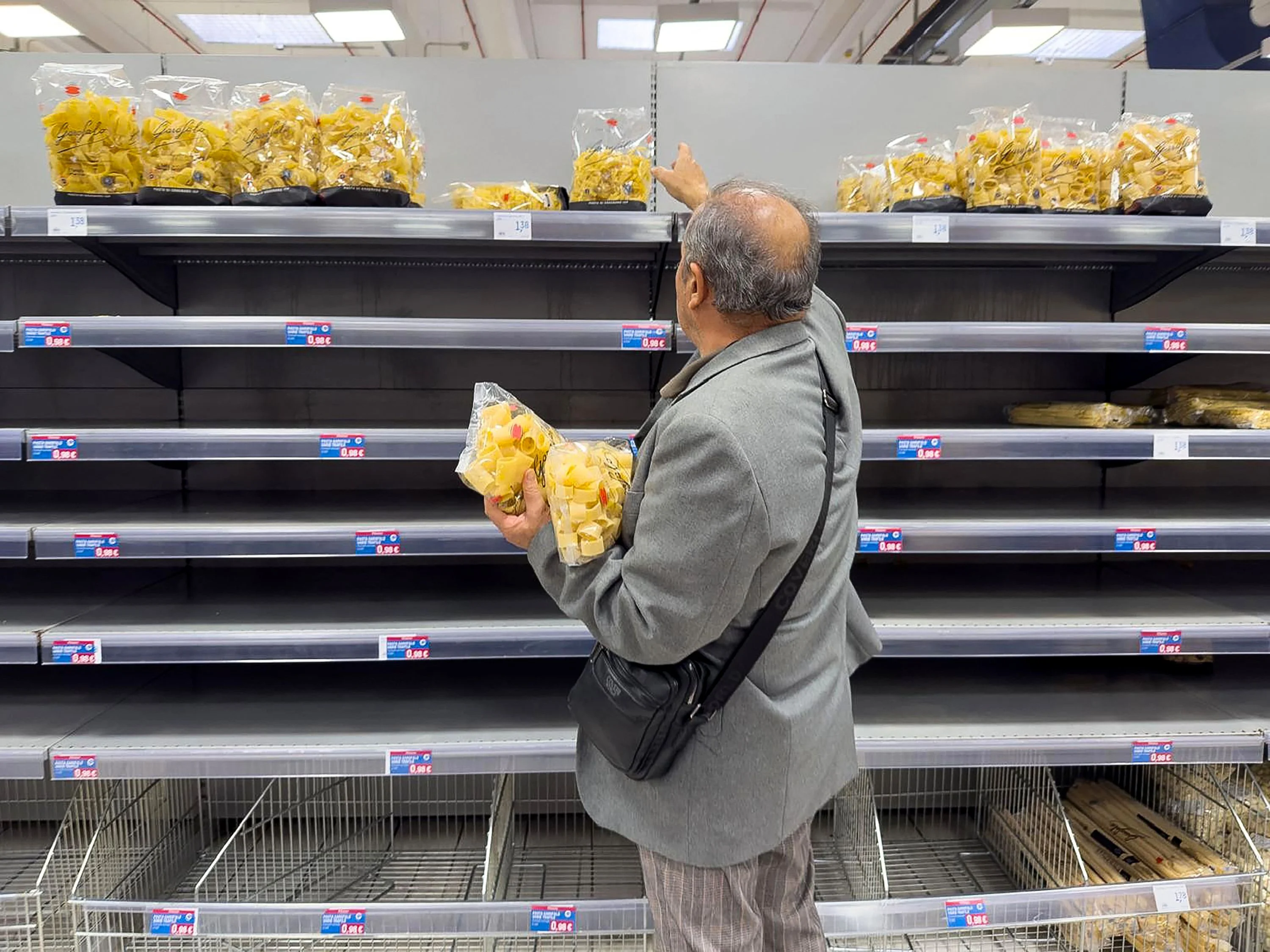
Strikes and blockades by truckers in southern Italy left many supermarket shelves bare this week. That's the image that will travel furthest, but it's the wrong place to start. Farmers joined the truckers, blocking ports and highways, and in the north the protests turned into riots. Students marched against low wages, high taxes, and fast-rising grocery and fuel bills. If you're trying to understand why the anger is so broad, start with the fact that the people on the road, in the fields, and in the lecture halls are all paying for the same inputs.
The southern blockades targeted the same thing: fuel costs that keep climbing. Trucking is a fuel-intensive business, so when fuel gets more expensive, a driver's margin shrinks long before a retailer raises a shelf price. Farmers feel a similar squeeze, since transport costs sit between their fields and the market. Empty shelves are the visible symptom. The underlying problem is a cost chain where nobody near the bottom can pass increases along.
Why the subsidies don't reach the shortage
Those costs trace back to the war in Iran, which is the link that turns a local grievance into a national one. On Thursday, Prime Minister Giorgia Meloni's government announced the equivalent of $200 million to cover gas prices. It has already spent the equivalent of $3 billion this year to lower or offset them. That's a lot of money chasing a problem that keeps resurfacing at the pump and the checkout counter. My read is that these payments buy time without touching the cost chain feeding the shortages. The $200 million is a modest slice of the $3 billion already committed, and that ratio tells its own story. Relief that arrives in rounds tends to be reactive by design. It can cushion households, but it doesn't reroute a fuel bill through a trucking contract or a farm's input costs, which is where the shortages actually start.
Italy isn't an outlier. Protests in France have drawn a major government response. Albanian students are demonstrating against government corruption and the high cost of living. Bolivia has seen longstanding protests against rising fuel costs. Read together, these look less like local disputes and more like a global wave of anger, with corruption and fuel and food prices as the common thread. Each country has its own politics, and I'd be cautious about lumping them into one movement. Still, the shared pressure is hard to ignore. Corruption, fuel, and food prices show up in very different systems, which suggests the strain is structural rather than partisan. And yet a shared grievance doesn't mean shared causes, so the specific demands in each place deserve more attention than a headline gives them.
Why chocolate tastes like less
Remember February, when Brad Reese, of the Reese's Peanut Butter Cup family, blew the whistle on changes to the candy's formula? That story hit a nerve because it gave words to something many people had already sensed: chocolate doesn't taste the way it used to. If a favorite bar seems thinner than it did a few years ago, you're probably not imagining it. (and this is the part most people overlook) the complaint is about ingredients and additives, not just nostalgia. Now New York magazine's Rachel Handler has published a deeply reported cover story that suggests the shift is far from new.
According to Handler, the big candy makers have been tweaking ingredients and additives in their chocolate for years, decades really. The main driver is price. Handler frames it as the bleak logic of late-stage capitalism, and I'm less convinced that label does much explanatory work on its own. Cost-cutting in packaged food is old news, and it usually shows up as small substitutions that nobody announces. That's what makes it hard to prove and easy to suspect. Reese, speaking by phone this week, said his whistleblowing has become even more widely shared since it first went viral. Specific, personal accounts travel faster than trend pieces, and that's probably why this one stuck.
Elsewhere this week
In the newly released documentary You Can See Everything, Elizabeth Holmes is shown half-heartedly beating an egg with a fork before her fiancé, Billy Evans, takes the bowl and finishes the job. Was it genuine incompetence, or a staged moment that casts him as the controlling one? The footage can't settle that, and I'd be wary of anyone who says it can. Documentaries built from existing footage are editing decisions first. The camera records a moment, and the cut decides what it means. Treat any single scene as a prompt for questions, not a verdict.
Michigan Senate candidate Abdul El-Sayed also sat down with Bon Appétit contributor Serena Maria Daniels to talk about Detroit's food culture and the grocery affordability issues he's campaigning on. It's a useful reminder that the cost of groceries is now a political conversation as much as a household budget one. Food writing and campaign talk don't often share a room, so the crossover is worth noticing. Affordability has become a shared frame across the Italian protests and an American Senate race alike. If you're tracking the food-policy conversation, that's where the signal is.
Meet 3D-printed meat
Plant-based meat has a new entrant with a different production approach. Perfecta, a subsidiary of Israel-based Steakholder Foods Ltd, is launching 3D-printed plant-based meats in grocery stores across the northeastern United States, including Delaware, New York, New Jersey, Maryland, Pennsylvania, Massachusetts, Maine, New Hampshire, Vermont, and Virginia. Most plant-based products lean on heavy processing to approximate texture. Printing structures instead is a different bet, and it's the production method that deserves the closest scrutiny. A launch list looks impressive, but a grocery footprint measures distribution, not demand.
This phase covers plant-based versions of poultry, steak, and seafood. Steakholder also owns Belgian company Peace of Meat, which has developed stem-cell-based technology to cultivate animal fats in a lab. Those fats can carry the meaty flavor that plant proteins usually struggle to deliver. Fat does much of the work in how we perceive meat, so it's a logical target for anyone trying to close that gap. That's the piece to watch. Printed plant structures are one bet and cultivated fat is another, and the grocery shelf is where both will meet real shoppers and their real verdicts.
What this means for the next few years
The thread connecting these stories is cost and trust. Italian truckers and farmers are angry about what they pay to keep goods moving. Chocolate buyers are wary of what's in the bar they're eating. Food companies, meanwhile, are betting that new production methods can rebuild the product itself. None of those problems will be solved by a single payment, a single reformulation, or a single printed steak.
If you're working in food, policy, or product development, the useful question isn't whether these stories are dramatic. It's whether the fix addresses the cost chain or only the symptom. Relief packages can buy a few months of calm. Transparency about ingredients can rebuild some goodwill. Neither will matter much if the underlying input costs keep rising. I'd watch whether any of these responses reach the point where a trucker, a farmer, or a shopper actually feels a difference.
Discussion
Sign in to join the discussion.