In a TikTok cooking video, Abdul El-Sayed traded political questions for shawarma talk, showing how food shaped his Egyptian American family.
Shawarma on the grill
That line came out of an April cooking video posted to TikTok, in which El-Sayed, wearing a Detroit Lions apron, teamed up with Lebanese American food creator Summer Homayed to make beef shawarma, a fixture of metro Detroit's Arab food scene. They grilled marinated flank steak and drained potatoes, and tossed garlic and herbs into the mix while Homayed fired political questions at him. "We don't usually grill shawarma," he admitted, nodding to the vertical spit that traditional shawarma relies on.
The questions were the point. Homayed pressed him on the thing voters in Michigan ask about most, which is whether an Egyptian American candidate can be trusted on Islam and the Constitution. "People are worried about that Sharia law, especially Michiganders. What do you have to say about that?" she asked. El-Sayed's answer was half civics lesson, half punchline: "I was born and raised in America. I believe deeply in the U.S. Constitution. So Sharia law? No, I'm here for Shawarma law."
He also made a campaign point out of the menu. The steak was bought without corporate money, he said, and the same rule applies to his campaign. He'll bend on how shawarma gets cooked. He won't bend on Medicare for All.
Two kitchens, one household
The stakes are real. The Nov. 3 election could decide which party controls the Senate, and El-Sayed would become the first Muslim senator in the country's history. He was born to Egyptian immigrants and raised in suburban Detroit by his father and his stepmother, a white woman born in Michigan. His childhood diet ran on two tracks: his stepmother's meatloaf at dinner, and his father's ful medames, a fava bean dish that's a staple of Egyptian breakfasts, in the morning.
Food, in his telling, was how his parents showed affection. Weekend trips to Eastern Market meant a stop at the cheese counter, where the family sampled everything before picking a single cheese to take home. His dad spent Saturday afternoons cooking, and the family ate together. His mom made traditional Midwestern dishes like meatloaf and tuna noodle casserole. On Sunday mornings, his dad made ful, a fava bean paste common in Egyptian households.
The burgers were a sore spot. At home they were always kofta in a bun, and as a kid El-Sayed wanted the real version of American food. Now he makes traditional pizza, traditional burgers, and traditional steak himself. His wife is Indian American, and that mix shows up at the dinner table. "My kids always prefer the spiced food," he said.
Where he'd eat in Detroit
Asked where he'd take a reporter for a meal, El-Sayed skipped the fancy picks. He named Ricewood, a barbecue joint near his house with a rotating Friday and Saturday burger special that he calls one of the best burgers he's had. Dearborn Meat Market, a butcher shop with a grill in back, made his list for kebabs. He picked Sicily's Pizza in Detroit for
the best Detroit-style pizza he knows, a three-ingredient pie built on aged, fermented sourdough that somehow avoids the grease and heaviness that often sink the style. His last pick was ice cream, specifically Midwestern-style soft serve eaten outside on a summer day, which he tied to memories of childhood and to time with his own kids.
Metro Detroit's food scene has changed a lot since he was young, he said. "When I was a kid, that whole ecosystem of halal burger shops and pizza didn't exist. It was a rare treat to be able to have a straight-up burger." Now the region has a wide range of halal restaurants, including places like
Al-Ameer in Dearborn, and fusion spots like
Warda Patisserie. For El-Sayed, that mix is the point. Michigan's history is about different people building things together, and food is where that shows up most clearly.
He also treats food as a campaign tool. Sharing a meal, he argues, is a way of sharing history and traditions, and of talking about where a community has been and where it's headed. That's a pitch you'd expect from a politician. It's also how he frames the whole race.
Groceries, monopolies, and the price of dinner
Affordability sits at the center of his platform, and he's blunt about the causes. Two factors, he said, should be stopped right away: the war in Iran and
the tariffs. Diesel prices have hit record highs during the war, and nearly everything in a grocery store arrives by truck. Local farmers depend on potash fertilizer, and much of it comes from Canada, which is now subject to tariffs.
He also points at concentration. According to El-Sayed, 85 percent of the country's meat supply comes from four meatpackers, which he says lets them squeeze what they pay farmers while raising what shoppers pay at the register. His prescription is to break up those monopolies, invest in local agriculture, and help farmers sell to local school districts. He also wants farmers to have the right to repair their own tractors.
Small restaurants feel the pressure too.
Running a profitable small business or restaurant in America has become much harder, largely because of input costs and what customers can afford to pay. Whether his proposals would move those numbers is another question. The interview doesn't say, and El-Sayed doesn't offer a timeline.
The safety net for freelancers
The interviewer raised a personal angle. A longtime journalist who lost a job last year, she had to
apply for food stamps. More workers are moving into freelance and contract work, and that makes it hard to document income and employment under new SNAP work requirements and coming Medicaid rules. How would he make sure those workers can get help?
His answer went back to Medicare for All. Much of the effort people spend on benefits, he argued, goes to assembling paperwork for a system built to say no. He pointed to
the work requirements now attached to Medicaid and SNAP, which he says will leave people facing a heavier burden next year. "It's a crazy thing that we've put so much time and effort into telling people what they can't have, rather than just creating good universal programs for everybody," he said.
His broader case is that childcare, education, and healthcare should be free, and that money spent policing eligibility, including what he calls waste, fraud, and abuse, should go to feeding people instead. He tied that to tax policy and foreign wars, arguing the budget has been bent toward cutting taxes for the richest and fighting conflicts he says the country has no business fighting. Those are campaign claims, not settled findings, and they'll be tested the closer the election gets.
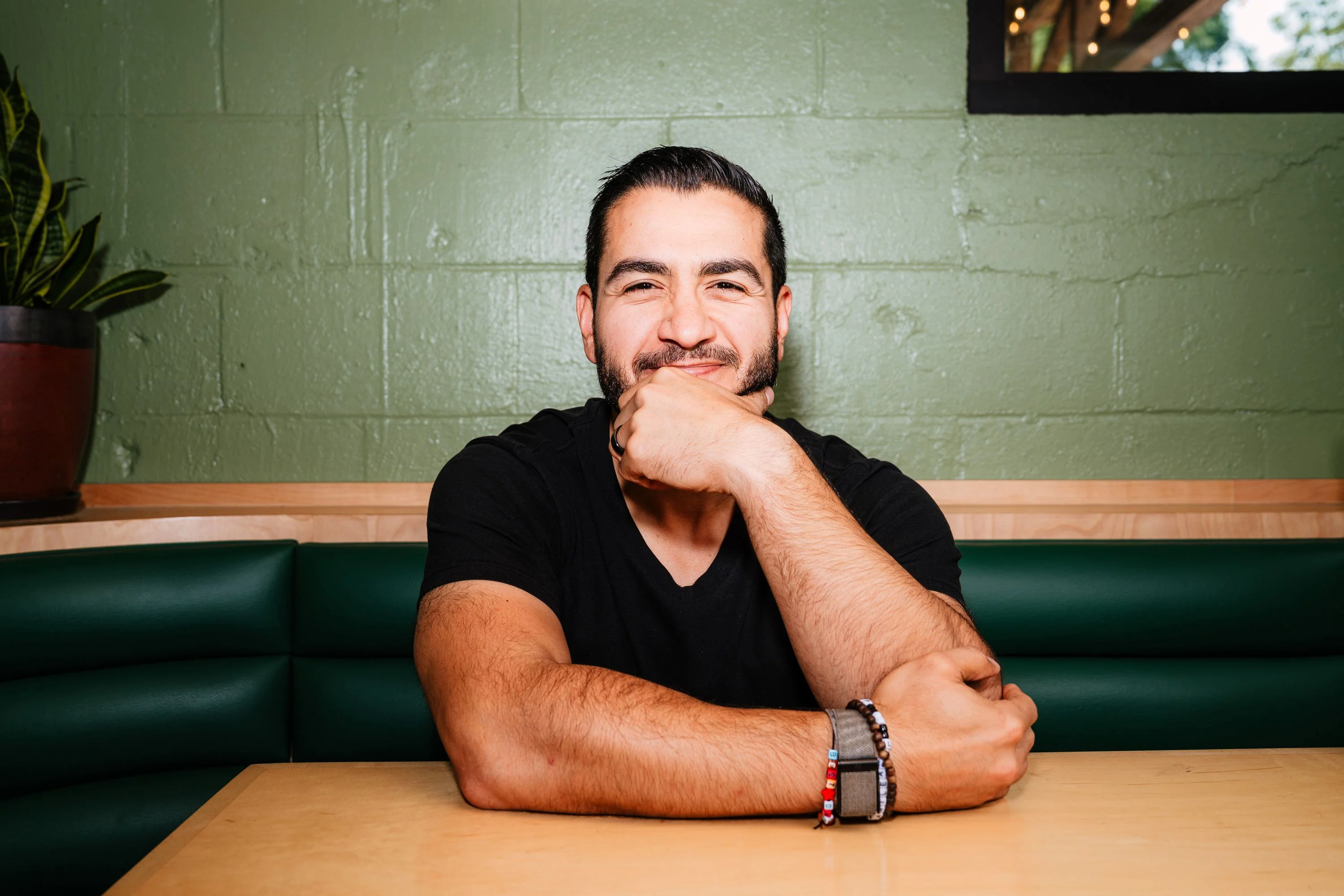
 *Abdul El-Sayed at the Lowertown Bar & Cafe in Ann Arbor, Mich., on Aug. 6, 2026. El-Sayed won a divisive Democratic Senate primary in Michigan with an unapologetically progressive message. (Nick Hagen/The New York Times)*
Sharia law? Abdul El-Sayed would rather talk about shawarma law.
Discussion
Sign in to join the discussion.