Equal parts miso and honey, a splash of soy sauce, and about 15 minutes under the broiler make a weeknight chicken worth repeating.

Dinner when you have no plan
Most marinade advice assumes you have a free evening and a fridge with room to spare. This one assumes it's Tuesday. Nina Moskowitz has made this chicken roughly a hundred times, and it still shows up when she has no plan, or no interest in making dinner at all. That's the real test of a weeknight recipe, and plenty of well-regarded ones fail it. They read beautifully but ask for a special shopping trip, a day of advance planning, and a pan you don't own. (That's the part most cookbooks quietly skip.)
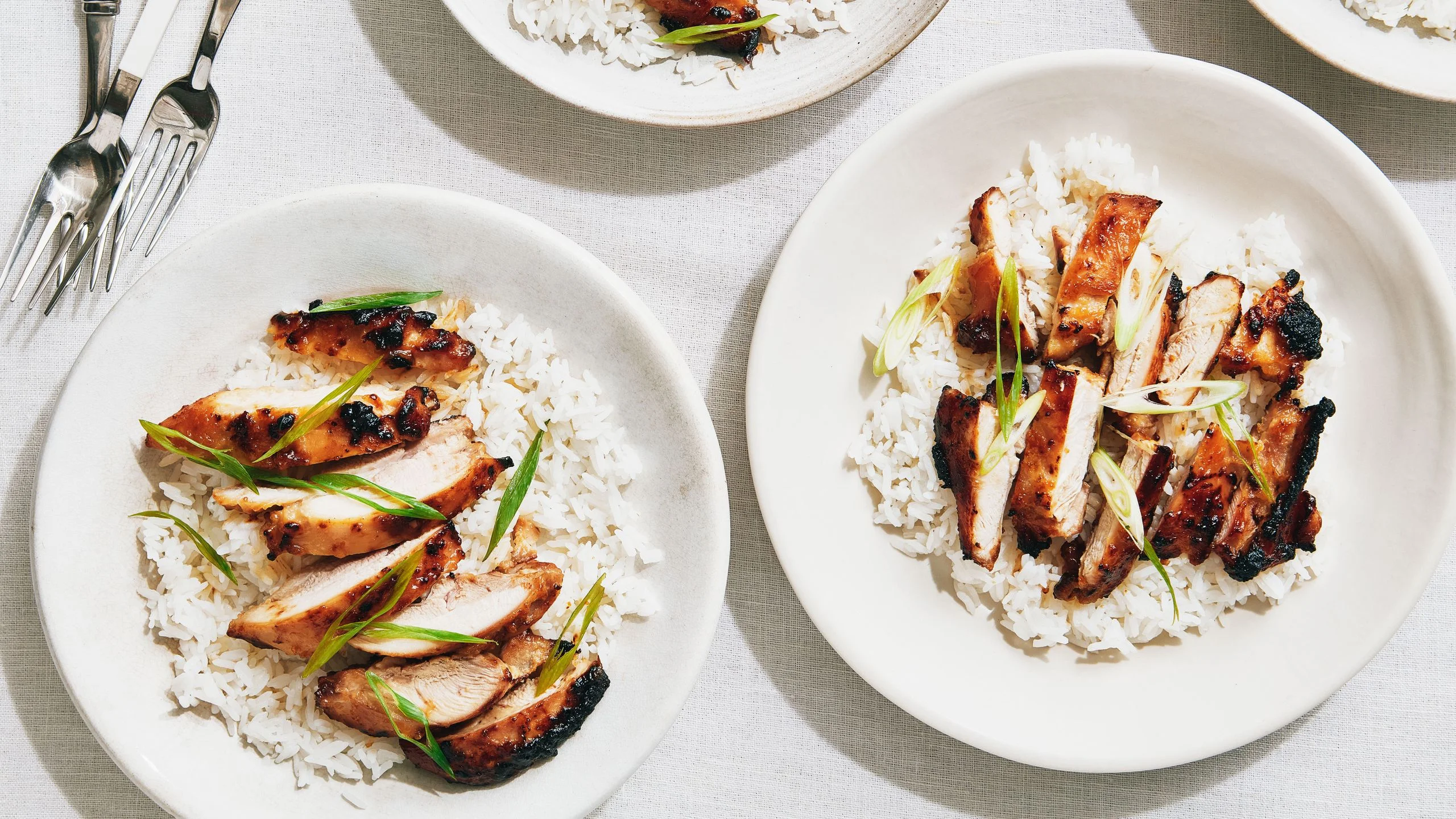
Three ingredients, no detours
The formula is three ingredients: equal parts miso and honey, plus a glug of soy sauce. There's no hidden pepper or stray drizzle of oil to track down. Each one carries its weight. Miso and soy sauce are both fermented, so they bring deep umami, while honey adds sweetness and gives the chicken a lacquered sheen.
Here's the thing: the simplicity isn't an accident. Miso and soy are salty, so they season the meat as well as flavor the surface. The honey does the browning work. Sugars caramelize under heat, which is why a glaze like this turns dark and glossy while the inside stays juicy. Strip out any one of these components and you get a flatter, duller dish, and that's a good reason not to tinker with the ratio on the first attempt.
Skip the overnight wait
Recipes that call for an hour of marinating, or preferably overnight, get skipped on busy nights. This mixture doesn't need that. It's closer to a paste than a liquid, so you can spread it straight onto the chicken and slide the pan into the oven. If you'd rather prep the night before, that works too.
Thin, watery marinades tend to slide off the meat and pool in the bottom of the dish. A thicker mixture stays where you put it, which means the flavor sits on the surface instead of running away. In practice, that's the difference between a quick dinner and a quick dinner that tastes like you planned it. You're not waiting for the chicken to absorb anything. You're giving the glaze a surface to grab.
Broil, then watch it
Under the broiler, the miso coating turns burnished and sticky in about 15 minutes, which leaves you time to finish the rest of dinner. Older drawer-style broilers run hot, so start checking at the 10-minute mark. This is not the window for folding laundry.
Sugar-heavy glazes scorch faster than most people expect. The same honey that gives you that lacquered finish can go from amber to bitter in a few seconds if you look away. That's the main risk here, and it's a common one with any broiled, sweetened dish. The fix is boring but effective: stay in the kitchen, keep the rack a comfortable distance from the element, and pull the pan the moment the edges look right.
If you're using a newer oven, don't assume it behaves like the one in your memory. Broilers vary a lot in heat output and in where the hot spots sit. Rotate the pan once if your oven runs uneven, and trust what you see over the clock. (The timing in any recipe is a starting point, not a promise.)
Serve it your way
Rice underneath is the right call, since it soaks up every saucy streak. Roasted broccoli or asparagus on the same sheet pan turns this into a full meal. Or keep it bare, with just the chicken and a scatter of scallions. My read is that next week's version is already decided.
The rice matters more than it looks. Plain white rice is neutral enough to let the miso and honey carry the flavor, and it's cheap, fast, and forgiving if you're not sure how long it needs. Vegetables on the same pan work well for a simpler reason: they roast at roughly the same temperature, so you're cleaning one dish instead of three. Keep an eye on delicate greens, though, because they'll char before the chicken is ready if you add them too early.
What this recipe says about weeknight cooking
This is more significant than it looks. A recipe that works on a bad night, with minimal planning and a handful of ingredients most people already keep around, is doing something harder than it appears. It asks very little of you, and it still rewards you. That's a rarer combination than the glossy food media tends to admit.
And yet, the appeal has limits. Three-ingredient recipes can get repetitive, and a roughly hundred-time habit suggests you'll either love the routine or start craving a change. The honest answer is that a dependable default is worth having, even if it's not the most exciting thing on the menu. Plenty of good home cooks rely on a small set of reliable dishes rather than chasing novelty every night.
What this means for you depends on your week. If you're working full days and dreading the stove, this kind of recipe takes the decision off your plate. If you're someone who cooks for pleasure on weekends, it's still a useful tool for the nights when your energy runs out. Either way, the lesson is the same: a good weeknight dinner usually comes down to a few well-chosen ingredients and a willingness to stop overthinking it.
Sticky Miso Chicken is the full recipe if you want the exact amounts and steps. Use it as your reference for the ratios and timing, then adjust to your oven and your appetite. If you're cooking this for the first time, follow it closely once before you start improvising. After that, you'll know exactly where you can bend it.
Discussion
Sign in to join the discussion.