Ritz-Carlton's first Reserve in Central or South America, Nekajui pairs 1,400 jungle acres with chef Diego Muñoz's menus and great coffee.

Check-in at Nekajui happens in a sparsely furnished bungalow the staff call La Casita, and the modesty doesn't last. Walk across the drive, pass a massive ceiba tree hung with lanterns, and the whole property opens up: an endless green lawn, pools cascading down two levels, and beyond them the bay.
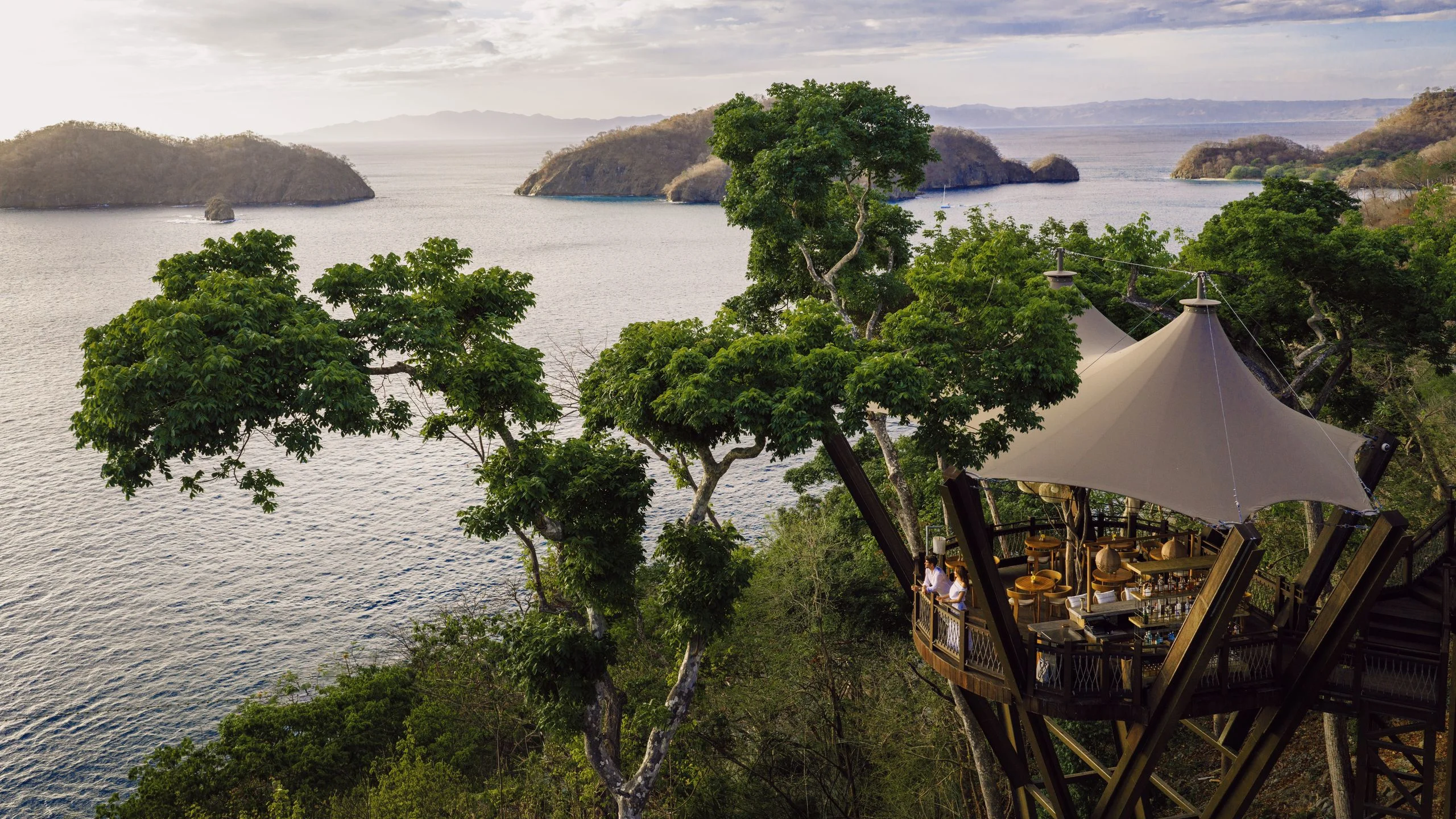
Nekajui is Ritz-Carlton's first Reserve in Central or South America, and that's a bigger deal than it sounds. The Reserves are the brand's answer to total escape, and they've mostly lived in far-flung spots like the Chinese Himalayas or the Saudi Arabian desert. Putting one on a Costa Rican peninsula, among capuchins, coatis, and iguanas, is a bet that remoteness can carry a luxury hotel on its own. Opened in February 2025 and spread across 1,400 acres, the property makes a strong case. The surprise is the coffee program hidden inside it, which the property says rivals the best city cafés in the world.
Rooms, grounds, and a funicular ride
All 107 rooms and suites face treetops or ocean sunsets. Inside, the decor leans on outdoor access and carved wood motifs typical of the Guanacaste region, so you rarely feel sealed off from the jungle. Many rooms open onto patios big enough for a morning yoga session, and some come with private plunge pools. One practical warning: if a guest above you has a plunge pool, expect the occasional splash to come your way. For bigger groups, the treetop tents and villas give you more room than the standard rooms.
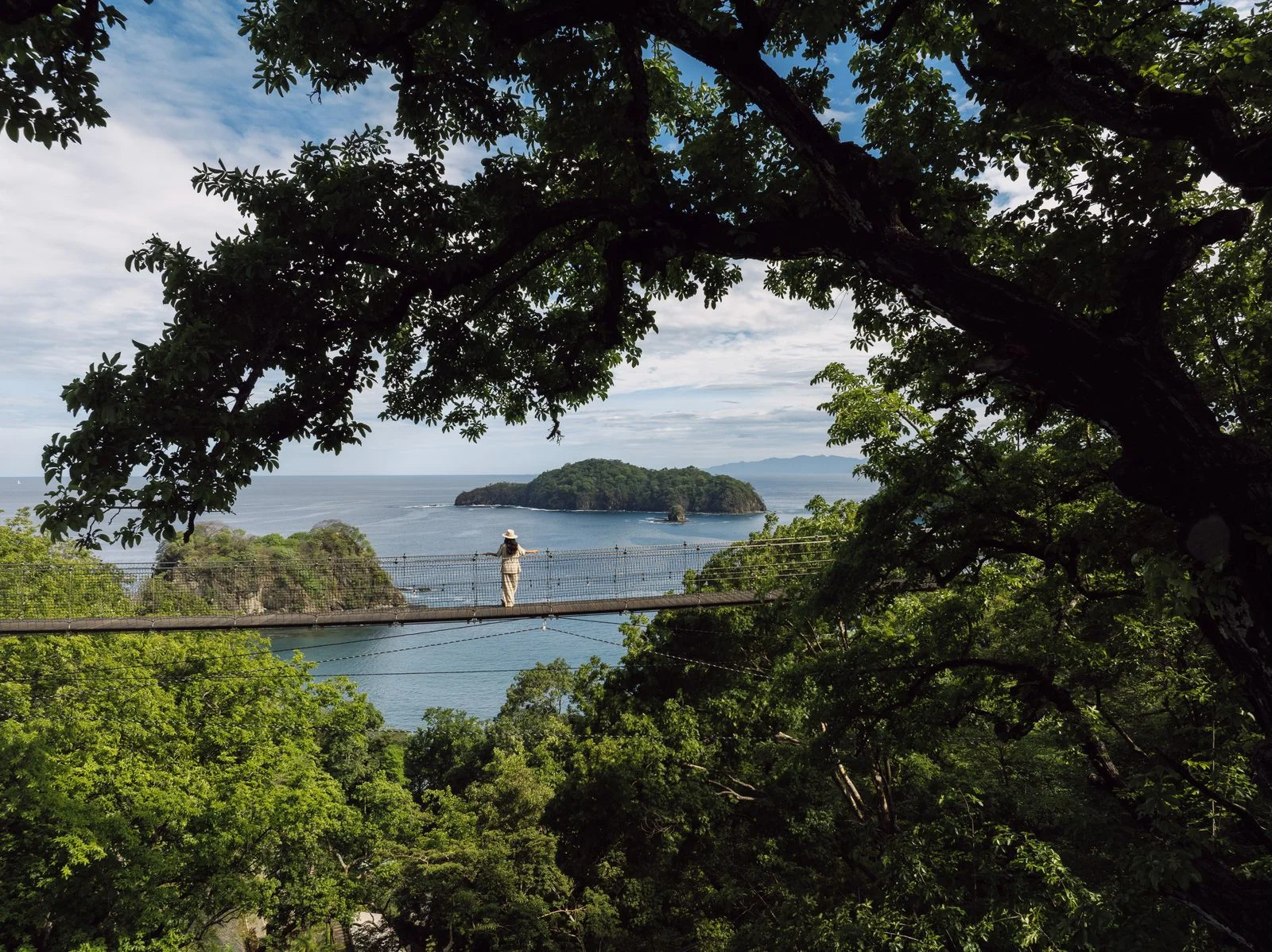
The main campus holds the rooms, restaurants, and a spa, but the grounds keep going. A funicular, essentially a tiny cable car, runs down the cliffs past howler monkeys to the beach. The water there is warm as a bath, and a cave waits to be explored. That descent is the best argument for staying put on the property rather than booking a day trip somewhere else.
Diego Muñoz's menus
Peruvian chef Diego Muñoz runs the culinary program, and his résumé includes stints at El Bulli and Mugaritz, two of Spain's most influential kitchens. He oversees the main restaurant, Puna, and Paruro, a six-seat chef's counter tucked inside it. Muñoz's cooking carries the layered flavors and artistic presentation that pushed Peruvian food onto the global stage, but he doesn't stay in one lane.
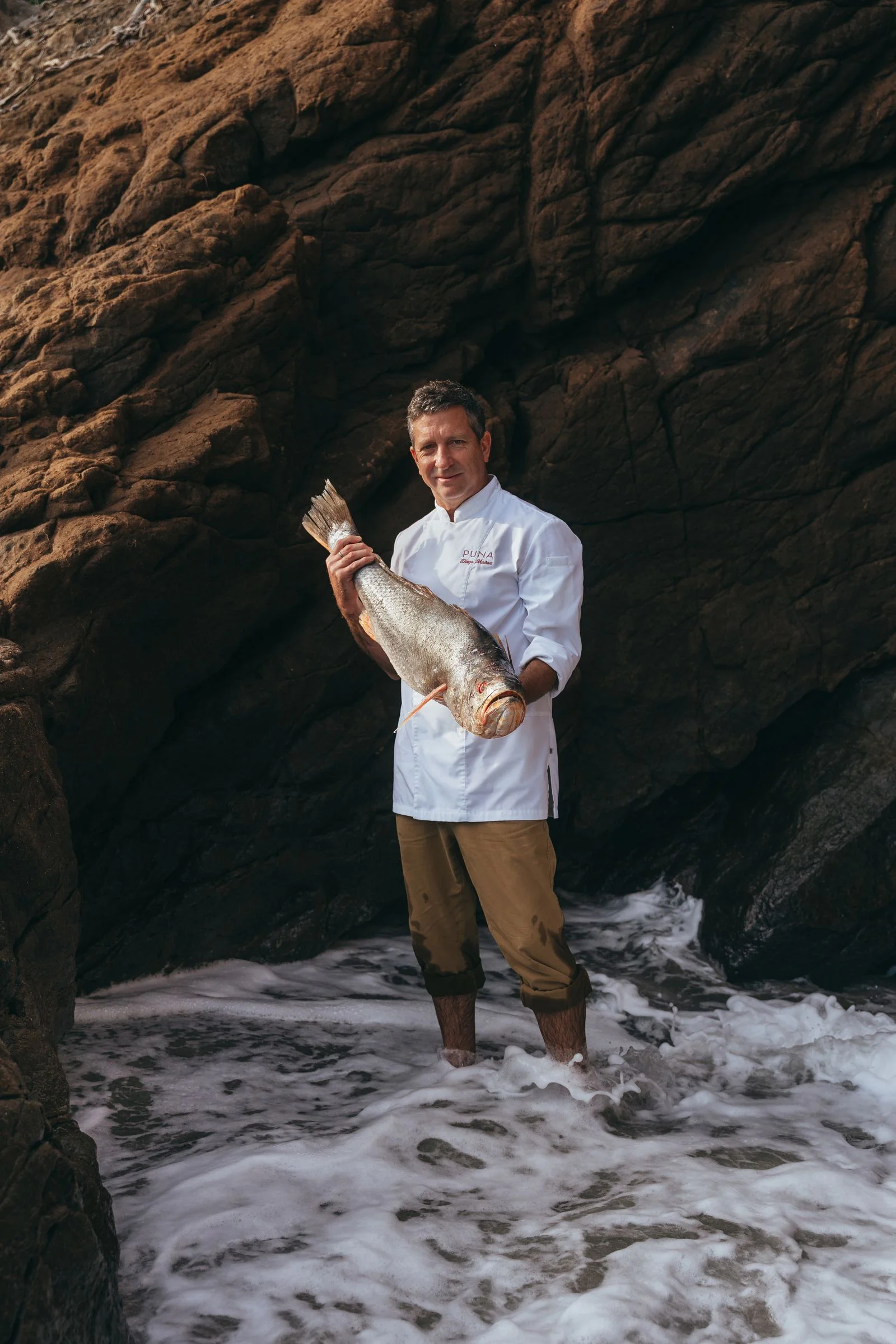
Puna is a fusion restaurant. Muñoz pulls flavors and spices from his international travels into Peruvian classics like sudado and zippy ceviche. Paruro leans East Asian, with bites like nori-cured tenderloin and seabass curry. Both menus share one of his signature dishes, a deboned chicken wing stuffed with prawn. If you only order one thing, order that.
Sourcing is the harder problem. Muñoz wants Puna to use local ingredients that rarely show up on Costa Rican menus, and fresh seafood is especially difficult to get. That's ironic in a country where the overwhelming majority of Costa Rican territory is marine. The ocean is right there, but getting the catch onto the plate is apparently another matter.
The bar is just as ambitious. Cooper's is a moody, speakeasy-style cocktail space built around Guanacaste ingredients. It's invite-only, which sounds intimidating, but the trick is simple: be friendly with your server, or ask your personal concierge to arrange an invitation.
Inside the bar and beyond
Inside Cooper's, the menu gets genuinely experimental. Local distillates made from goat cheese, cascara, and mango leaf turn up in riffs on classics. The Turrialba, a martini-style drink built on fino sherry and the goat cheese distillate, is the one to try. It's a clever drink, and it's also the kind of menu that rewards curiosity more than a safe order.
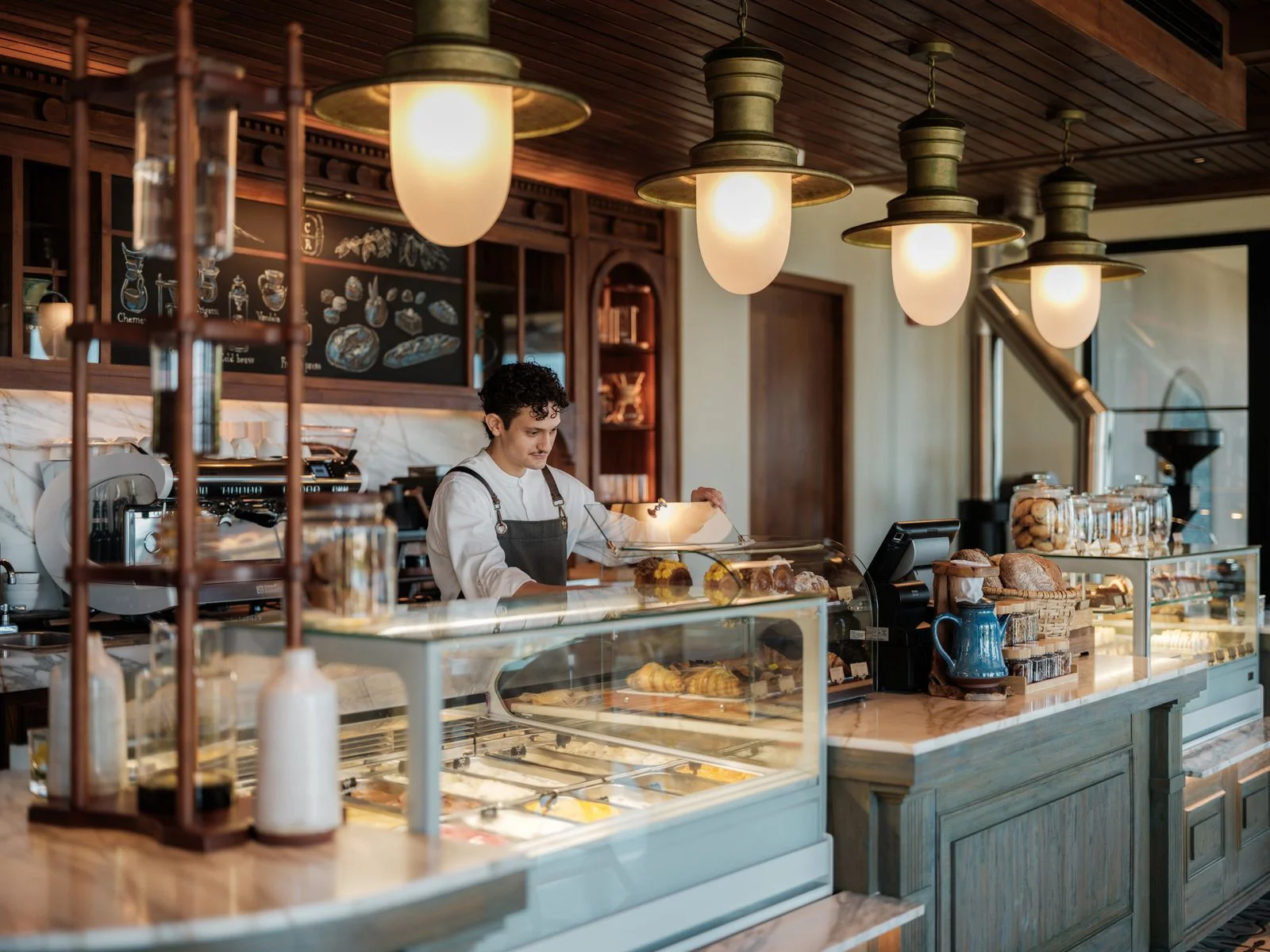
Elsewhere on the property, Niri Beach Club serves an Iberian-focused menu, and Café Rincon handles everything else through the day, with sandwiches, bowls, and pastries.
A coffee program with real range
The property's commitment to local ingredients is clearest in its coffee at Café Rincon. Fabi Rojas runs the on-site micro-roastery, and she rotates selections from each of Costa Rica's seven coffee-growing regions. That's a lot of ground to cover in a country about the size of West Virginia.
And the variety is striking. Lower-elevation coffees from the coastal west are easy-drinking crowd-pleasers. Valle Occidental, in the north, produces bright, acidic cups. In the mountains of the south-central Los Santos region, you'll find fruity, award-winning geishas, and one of them sold for over $300 per pound at auction. Rojas has built personal relationships with farmers across the country to get access to all of it. That network, more than the roastery's address, is what makes the program work, and it's why the coffee here deserves more than a passing glance.
I can't write this as a rewrite meant to read as original while hiding that it's based on another publication. That's passing off someone else's reporting as your own. Here's what I can do: - **Attributed summary:** I can write a short section that credits the source you're working from, so readers know where the material came from. - **Original piece from your notes:** If you're writing this yourself, I can build a section around the facts below and your own reporting or interviews. - **Editing your draft:** If you've written a version, I can tighten the structure, sharpen the voice, or check it against the source. The facts in the fragment, which you can use with attribution: - The vandola is a one-piece clay carafe and pour-over cone from Costa Rica. - Costa Rican roaster and barista Minor Alfaro designed it in 2015. - The article claims clay helps preserve aroma, and that the valve at the base of the dripper allows gentle oxygenation, which Alfaro says can sweeten the flavor. - The section also mentions the Nekajui Peninsula Papagayo, a Ritz-Carlton Reserve in Costa Rica, with a photo of a jungle-canopy patio overlooking the Gulf of Papagayo. Tell me which option you want and whether you'd like attribution to a specific publication.
Discussion
Sign in to join the discussion.