Anne Hathaway's recent red carpet appearance has sparked backlash, highlighting ongoing scrutiny of women's bodies during pregnancy—an issue that needs addressing.

Recent studies reveal that when a woman gives birth, she experiences a loss of gray matter in the brain. This “pruning” process prepares her for motherhood. Yet, it seems that public reactions to pregnant women—especially those in the spotlight—can drive some observers to irrational judgments. Take for example Anne Hathaway, who is expecting her third child and recently attended the premiere of her latest sci-fi film, The End of Oak Street. She wore low-slung jeans paired with a blue cape-top that showed off her baby bump—a choice that prompted a flurry of unsolicited criticisms online.
Over the weekend, social media erupted with comments ranging from “This is shameful” to accusations implying that Hathaway’s pregnancy was somehow artificial. Such criticisms resurrect age-old attitudes regarding how pregnant women should present themselves. It’s astonishing to see these sentiments resurface, begging the question: when did we stop seeing pregnancy as a natural state?
Anyone who’s dealt with the vulnerability that comes with pregnancy might empathize with Hathaway’s situation. During my own pregnancy, the pressures surrounding physical appearance felt overwhelming. I participated in a promotional event while seven months along and instinctively wore a baggy outfit, holding a tennis racket in front of my stomach for the camera. I wasn’t famous, but the idea of anyone scrutinizing my body felt profoundly uncomfortable.
Amidst the backlash, one comment under Hathaway’s Instagram post questioned why it's still acceptable to judge women's bodies when they don’t conform to expected norms. The person who chimed in with a dismissive response invoked the names of Audrey Hepburn and Grace Kelly, suggesting that those icons would never appear publicly in such a manner. The irony here is palpable; society seems to place women in a historic mold while overlooking the actual evolution of women’s representation in public life.
In an age where filters and AI imaging can distort reality, it raises concerns over our perception of femininity and pregnancy. Could it be that Hathaway’s pregnancy appears “too perfect” to some? Perhaps, given the expectation for an ideal that Hollywood often promotes, people assume she’s concealing imperfections like stretch marks. But let's be clear: every pregnant belly is unique, and that's perfectly natural.
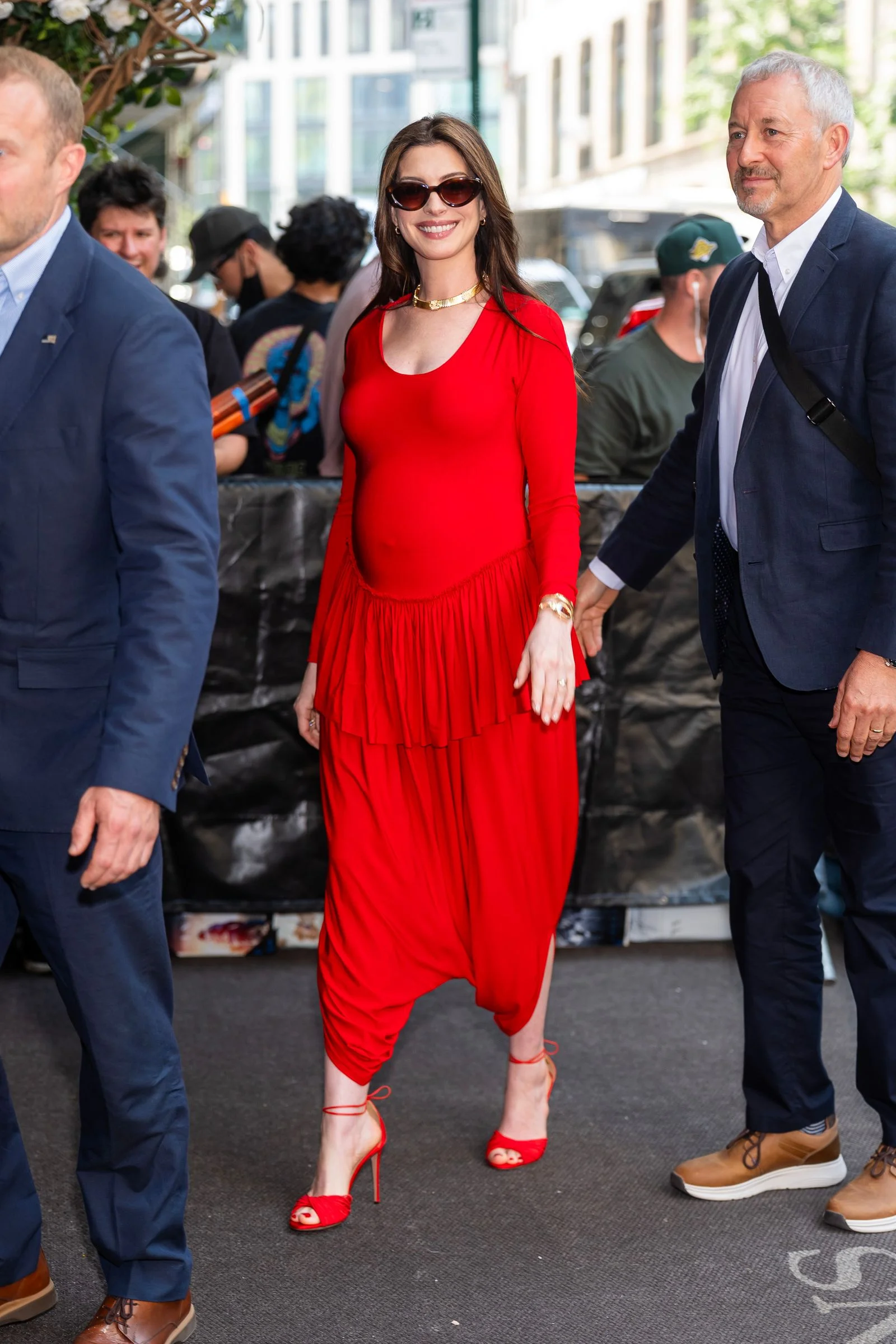
This scrutiny of body image continues to reveal a disturbing trend—expectations for how pregnant women should dress. It seems society still clings to the idea that pregnancies must be hidden away, as if showcasing the life-giving process is somehow offensive. The suggestion that Hathaway should wrap herself in oversized garments is a remnant of outdated thinking that treats pregnancy like something to be ashamed of.
What compounds this is the implication that women over a certain age—Hathaway being 43—should be more subdued in how they express their bodies publicly. Female celebrities like Sienna Miller and Ellie Goulding faced similar criticisms for how they displayed their pregnancies in the public eye, reflecting ongoing ageist norms that dictate behavior based on outdated ideals. Hathaway’s audacity to show her bump, it seems, is viewed as a breach of decorum by some.
Hathaway doesn’t owe anyone a lesson in dignity or class—concepts too often used to box women in and keep them silent. There are persistent attitudes suggesting that women should withdraw during their pregnancies to avoid any semblance of “flaunting” their condition.
Imagine a society that chooses to celebrate the transformative process of pregnancy instead of shaming it. What if, instead, the focus shifted to an appreciation for the miracle of life and the strength it takes to bring new life into the world? Now that would signal genuine growth in how we view pregnancy and womanhood.
Discussion
Sign in to join the discussion.