Explore the intricate world of conformation dog shows, where purebred canines compete based on strict adherence to breed standards.
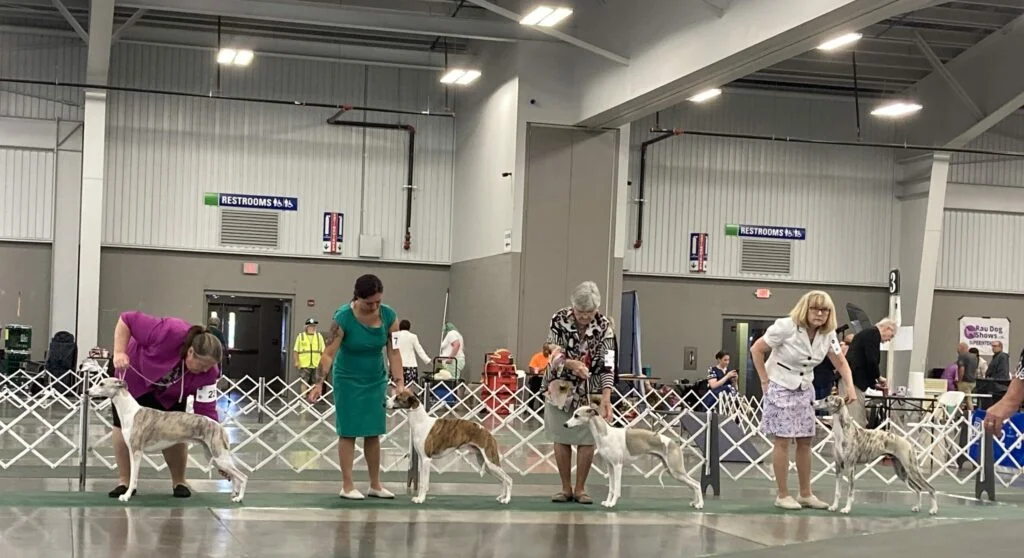
The Meadow Event Park in Doswell, Virginia, a setting surrounded by farmland and local attractions, hosted a two-day conformation dog show that showcased an impressive array of over four hundred purebred dogs. This event marks a continuation of a tradition dating back to 1859, when the first competition of its kind took place in England. Back then, participants earned guns for their winning pooches, while today’s champions earn accolades and titles that contribute to their market value.
The American Kennel Club (AKC) now oversees these conformation shows in the U.S., evaluating how well each dog aligns with its respective breed standard—a document that fuses historical roles with modern metrics, translating functions into quantifiable traits like size, movement, and demeanor. The specifics of these standards can vary greatly. For instance, the greyhound standard is succinct, encompassing just two hundred words, while the Coton de Tulear’s lengthy narrative describes its traits in vivid detail, reflecting both its aesthetic and character.
At the heart of conformation shows lies the tension between idealized history and the present reality of purebred dogs. These competitions are not merely showcases; they serve as a measure of breeding stock quality, categorizing dogs not by their taxonomic lineage but rather by their adherence to marketable traits. Judges evaluate each dog with an idealized version of its breed in mind, comparing the actual dog to its historical referent, which creates a unique paradox inherent to such events.
Inside the exhibition hall, the atmosphere was electric, filled with anticipation as handlers prepped their dogs for a series of Best in Breed competitions. The facility, boasting numerous show rings, was a hub of activity, where each morning kicked off with fresh challenges. To earn points towards championship titles, dogs must frequently participate across various shows throughout the year. Such intensive scheduling reflects the breeders' commitment to rapid point accumulation, suggesting that the primary aim isn’t entertainment, but rather efficiency in competition.
The competition isn’t just about the dogs; it extends to their names, often resembling elaborate identifiers more akin to product codes than conventional names. These full names incorporate titles that reflect their achievements and origins, further blurring the line between companionship and commodification. This structure underscores the dualities present in conformation shows: the canines embodying family yet also valued as property.
Judging at the event began in earnest with a range of human and canine participants. Handlers clad in formal attire guided their dogs through intricate examination routines, scrutinizing every detail from physical stature to personality traits as defined by breed standards. Observing the various methodologies and techniques employed by the judges was intriguing, particularly as they inspected each dog for specific characteristics, such as the whippet’s musculature or the golden retriever's temperament, all while a crowd of spectators leaned in to gather insights and gossip.
A particularly striking moment was the noticeable presence of "bark softening"—an increasingly controversial procedure that alters a dog’s vocal cords to produce a softer bark. Although this procedure is now banned in Virginia, it raised questions about the lengths to which some might go in pursuit of an ideal appearance within the confines of breed standards, showcasing the ethical dilemmas entwined with the pursuit of perfection.
As the event progressed, the confluence of historic purpose and contemporary aesthetics continued to evolve. Breeds originally designed for specific tasks, like the whippet for hunting, were now evaluated solely on physical attributes that suggest their historical utility rather than actual performance capabilities. The standards reflect a lineage rich with purpose but have increasingly come to represent an aesthetic vision rather than practical function.
Similar disparities can be seen across various breeds. Some, such as bulldogs, lack defined standards that reference historical tasks, likely due to their origins in bloodsports. Therefore, the focus in these shows risks the essential qualities that originally defined each breed, leading to concerns that competitive standards may inadvertently undermine the inherent abilities these dogs once possessed.
Another fascinating aspect witnessed was a vendor offering services for cryopreservation—helping to facilitate future breeding opportunities via preserved genetic material. This mix of scientific advancement and traditional breeding practices indicates an ongoing evolution within this community, blurring the lines between past and future, where the mechanisms of nature are carefully manipulated to serve contemporary desires.
The closing ceremonies of the dog show culminated in an elaborate Best in Show round, reflecting both tradition and spectacle. A golden retriever, a German shepherd, and a few terriers maneuvered around the ring, each handler employing techniques honed through endless practice. In an unexpected twist, the long-haired dachshund emerged victorious, an outcome that mirrored the intricacies of breed preference and judge bias that play out in these competitions. This win highlighted the very nature of conformation shows: a stage where rules are strict, yet outcomes often hinge on interpretation and subjective preferences.
Ultimately, one can't help but notice that beneath the glimmer of trophies and the elegance of the dogs lies a complex interplay of tradition, commerce, and evolving standards. Each competition serves as a snapshot of not only canine excellence but also the ongoing quest to define what it means to possess a purebred dog in an age that is rapidly redefining the significance of both breed and humanity’s relationship with canines. The show illustrates a captivating dance between honoring historical integrity and navigating the trends shaping modern dog breeding.
As I departed, I left with an awareness that conformation shows reflect a multifaceted engagement with canines—one where homage to history grapples with the influence of contemporary aesthetics, suggesting an intriguing future for the world of purebred dogs.
Discussion
Sign in to join the discussion.