Exploring the Complexity and Appeal of the Bayreuth Festival
Published Sep 11, 2026436 readers
The Bayreuth Festival blends rich musical tradition with complex history, attracting diverse enthusiasts despite challenges in attendance and Wagner's controversial legacy.
Anticipating Bayreuth: A Festival Full of Paradoxes
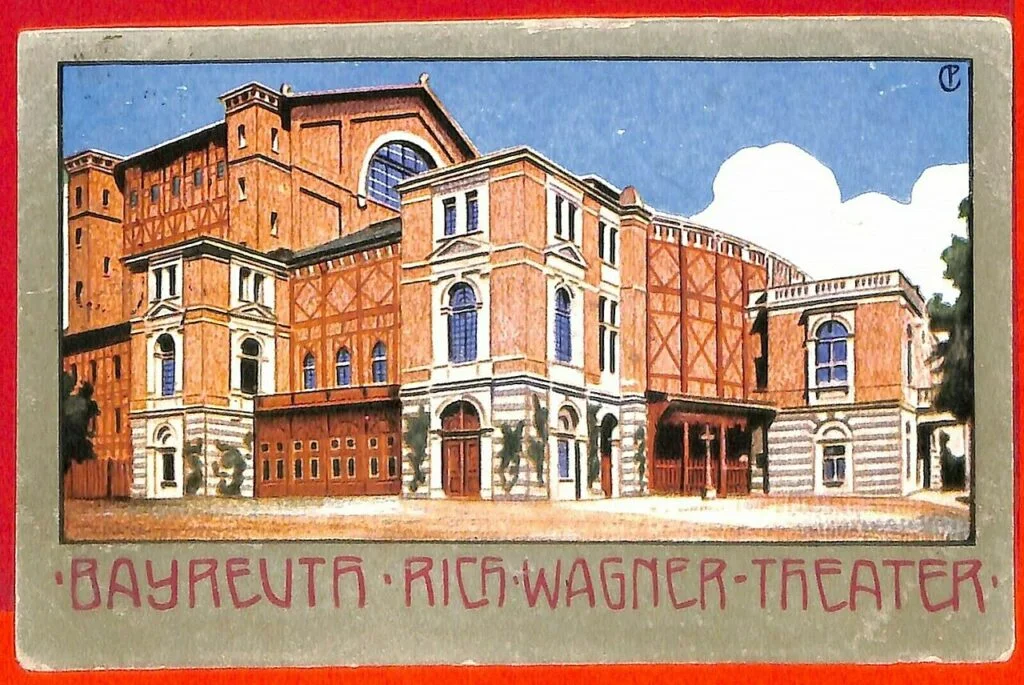
Bayreuth, home to the venerable opera festival dedicated to Richard Wagner, is as much a test of commitment as it is a celebration of music. The festival's history stretches back over a century and a half, yet entering its hallowed Festspielhaus can feel like stepping into a rite of passage rather than a straightforward artistic experience. Scoring tickets can take years, drawing in opera lovers willing to brave the austere conditions: hard wooden seats—unadorned to preserve acoustics—and lengthy performances devoid of subtitles for non-German speakers paint an unvarnished picture of what you’re signing up for. The venue itself often feels stifling, with fainting patrons a common sight. And let’s not forget Wagner’s deeply tarnished legacy, characterized by both his musical genius and his unabashed antisemitism. Hitler's adoration of Wagner only complicates an already fraught relationship with the composer, whose work now serves as a dark reminder of nationalism's seductive power.
Despite these challenges, my desire to experience the Bayreuth Festival sustained me since 2025, when my first encounter with Wagner’s archival treasures sparked a fascination that was just too compelling to resist. The quaint town of Bayreuth, marked by its Wagnerian statues and the looming presence of the Festspielhaus, felt charged with anticipation, hinting that something significant—though possibly contradictory—was on the horizon. By last July, my excitement had morphed into a small undertaking; a group of fellow enthusiasts from different backgrounds arranged a stay in a crumbling castle in Franconian Switzerland, further underlining the festival’s strange pull.
As queries flooded in about our motivations for attending this unique event, the entire group felt out of place yet determined. Despite my two previous experiences with Wagner’s operas, I was a mere amateur—an opera lover alongside a cadre that was predominantly Jewish, with only two Germans among us and just one Christian, the group’s demographic often countering the intent behind Wagner’s works like *Parsifal*. The very existence of a festival celebrating his music felt like an act of defiance against Wagner's own problematic history. Yet, part of our collective curiosity seemed rooted in Wagner’s revolutionary contributions to opera. His intricate structures and innovations like “endless melody” hinted at future musical movements, ensuring that discussions about his works would endure indefinitely.
However, the Wagner estate faces challenges that go beyond re-examining the composer’s legacy. Attendance has been dwindling, leading to budget constraints that forced organizers to cut four operas from the anniversary celebration. It’s a significant shift from decades past, where getting a ticket was little short of a miracle. In a curious twist, this year, the festival also introduced its first AI-generated performance, a sign of the times that raises serious questions about the essence of art and tradition.
The production titled *Ring 10010110*—a nod to binary code for 150—aims to reinterpret Wagner's iconic *The Ring of the Nibelung*. Although such innovation sounds potentially fascinating, there’s a palpable anxiety about whether this marriage of AI and human artistry could dilute Wagner's original vision. And now, with the backdrop of historical implications and contemporary advancements colliding, the Bayreuth Festival stands at an intriguing crossroad. As I prepared for what lay ahead, I couldn't help but wonder: how would this layered past and complex present converge in the performances waiting to unfold?
Reflections on an Unconventional Wagner Experience
What transpired over those six hours wasn’t just a performance; it was an exploration of art’s boundaries, a collision of history and modern interpretation. The AI-enhanced production might have been rooted in Wagner's vision, yet it danced through a myriad of cultural references—everything from iconic visual art to contemporary political crises. For those who attended, the experience turned into a rich tapestry of emotions, emboldened by unexpected imagery; from the haunting Horsehead Nebula to references that shook the political core: “There is no Planet B” flashed on-screen during a climactic moment, a potent reminder of our reality.
Taking a step back, the question of whether this AI-driven interpretation was simply "good" or "bad" feels inadequate. Critics and casual viewers alike found themselves grappling with something far more complex. One attendee claimed the experience transcended those binary terms, describing it as “painterly.” That description encapsulates what many felt: a fusion of style and substance that pushed the envelope of traditional expectations. It’s fascinating, really—this struggle between the desire for authenticity in art and the allure of innovation.
The Challenges of Tradition vs. Innovation
The Bayreuth Festival finds itself in a paradoxical dance with its audience. The very act of reinterpreting Wagner is both its lifeblood and a source of inevitable disappointment for die-hard fans, who cling to the nostalgia of classic representations. After a marathon of opera, a singular voice, plaintive and piercing, broke the air—a boo that soon reverberated through the crowd, transforming individual discontent into a collective crescendo of dissent. Yes, the audience was left conflicted, yet no one could dismiss the majesty of the music itself; the conductor's orchestra breathed life into each piece, overshadowing the staging's controversies. Was this a moment where the profound ambition of Wagner outshone the shortcomings of the technology at play?
Reflecting on this chaotic journey, it’s hard not to examine the personal impact. Just a week before, I was unsure about my appreciation for Wagner’s work. Yet, as I prepared for the final performance of the festival, I felt gratitude wash over me. Maybe it wasn’t merely about Wagner; perhaps it was about transformation, about facing discomfort to find a more nuanced understanding of beauty and creativity in art.
New Discoveries and Boundaries Broken
What followed—an unconventional production of *Rienzi*—was not just a spectacle but a manifestation of our moment’s complexities. Initially deemed Hitler's favorite, it was almost derailed from the Wagnerian canon, reimagined into a dialogue about contemporary issues, and performed with a humor that's often absent in opera. The audience’s laughter became a cathartic release, a symbol of shared experience in a time when traditional narratives often feel stifling. This performance, with its playful critiques and farcical elements, invited a joyful reprieve, unearthing a collective sense of liberation.
As we drove away the next day, the echoes of the evening lingered, underscored by *Tannhäuser,* reminding us of the intertwining weave between art and life. Wagner had once proclaimed that we shouldn’t receive too much too soon, a sentiment that resonates profoundly now. After witnessing the risks taken with his work, you learn to embrace the unexpected. In the end, it’s not just about the music; it’s about the dialogues it can provoke, the discomforts it can expose, and the transformations it can ignite in us all.
Discussion
Sign in to join the discussion.