Turner Brooks's new essays argue that buildings shape the minds inside them, from ship-like houses to a Yale museum of preserved brains that rewards getting lost.
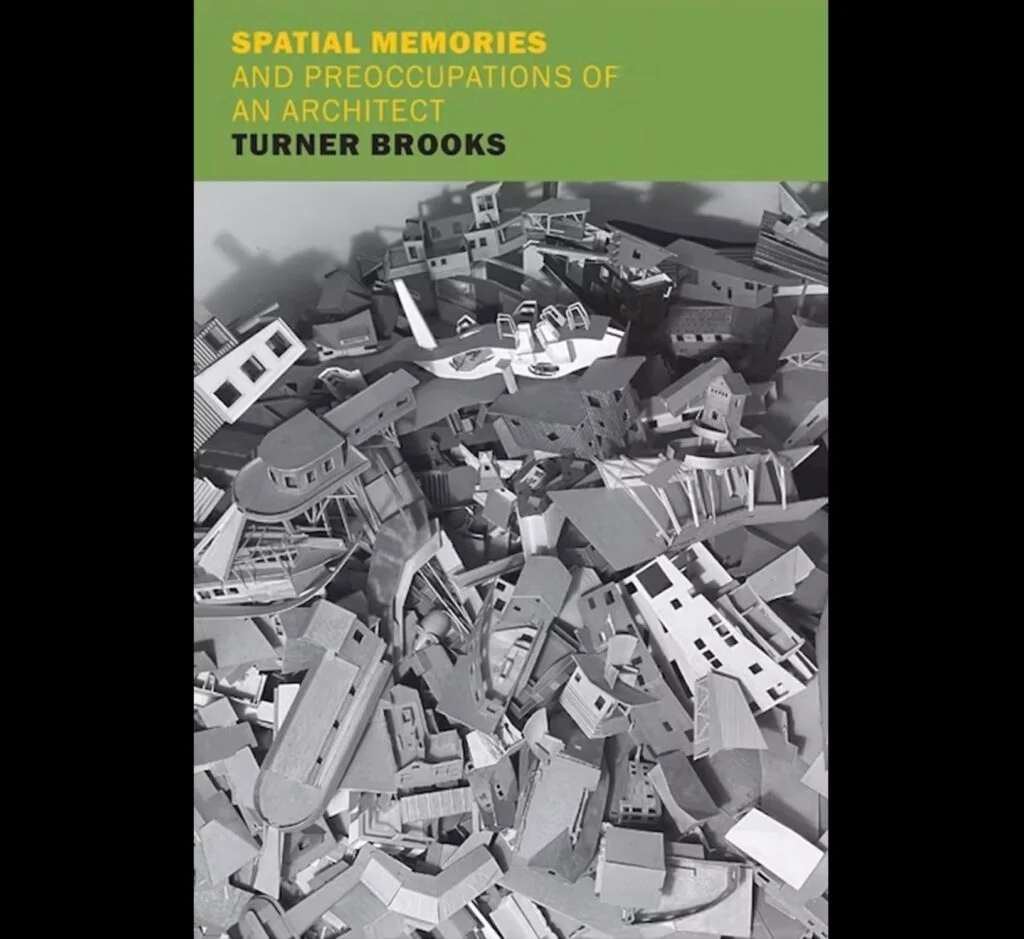
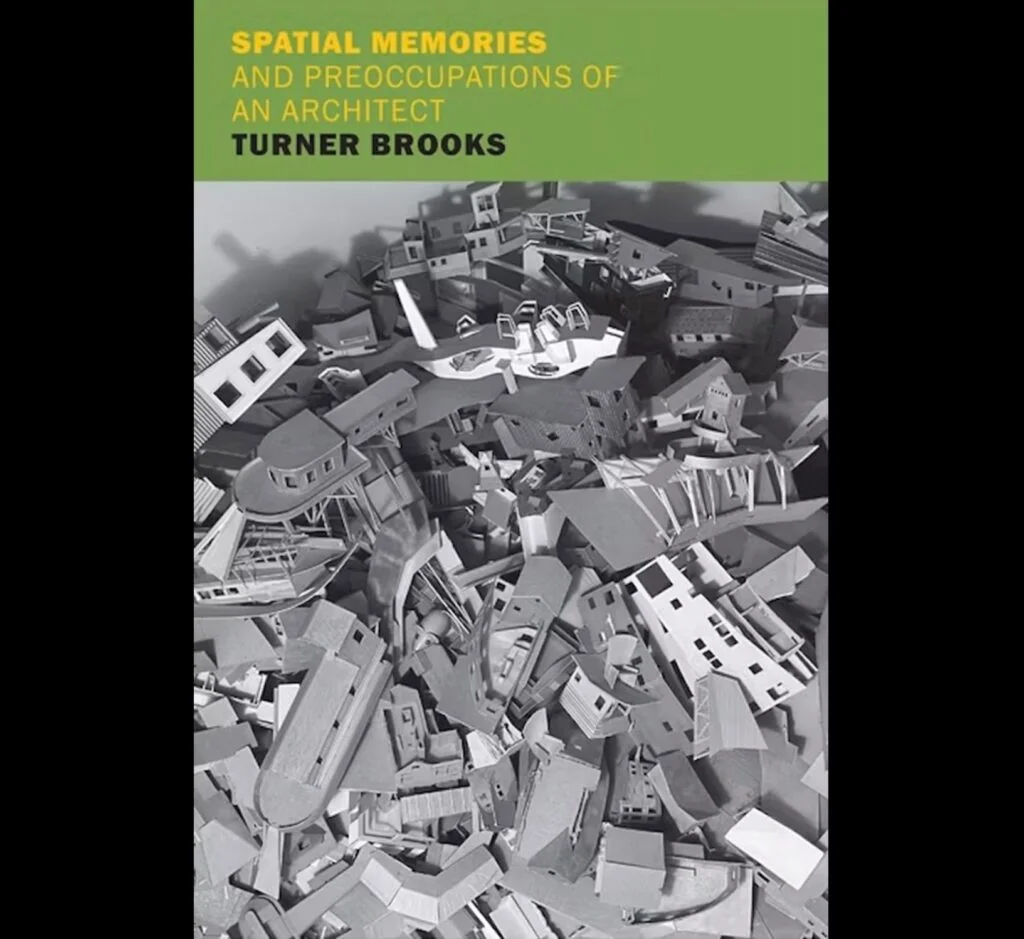
As a child, Turner Brooks lay awake in the smallest bedroom of a creaky seaside house in Maine. Below him, his grandparents talked in the living room. Outside the window, Atlantic waves crashed. Those two sounds became part of the room as surely as its Dutch wallpaper, and Brooks eventually gave the fusion a name: a "spatial memory." Years later, a classmate at the Yale School of Architecture put the idea more bluntly. "If you removed the floor, walls, and ceiling, the space would still be there."
That notion sits at the center of Spatial Memories and Preoccupations of an Architect, a new collection of twenty short pieces. The book argues that our psychological experience inside a building can shape the building itself. Brooks treats architecture less as an end in itself than as a prism for the human dramas it holds. He describes Grand Central Terminal as a womb from which other places are born. He imagines the columns of the Bibliothèque nationale de France tethering its ceiling to its floor, so the room doesn't drift off with its occupants' buoyant thoughts. The pieces wander, too. They blend childhood impressions with Edward Hopper, midcentury French philosophy, Clement Hurd's illustrations for Goodnight Moon, and steam-powered bath toys. Some read as argument, some as personal essay, and few fit neatly into either.
Buildings That Behave Like Vehicles
Brooks graduated from Yale and spent a short stint working for the Modernist Philip Johnson. Since then he has practiced for roughly fifty years in and around New England, and his output resists easy categorization. He has designed a cluster of rural polygonal houses, a residential campus for people with autism, a subterranean museum of brains floating in formaldehyde, and a theater that looks like a steamboat.
Many of his buildings borrow the logic of ships, and a few actually move. He made Yale's Gilder Boathouse look as though it had "beached itself on the riverbank" of the Housatonic. He sited the Peek House in Vermont so it appears to be "resting on mudflats waiting to float off with the rising tide." The Laffin House, built on an eight-foot-wide steel frame with wheels, has a more mobile itinerary. The last Brooks heard, it was crossing into Canada.
I find the nautical language more than decorative. A house that seems poised to leave changes how you inhabit it. You stop treating it as a fixed box and start reading it as a temporary arrangement, something that holds you for a while and then lets go.
Passages, Hiding Places and the Pleasure of Getting Lost
If the boats express one half of Brooks's thinking, the interiors express the other. His buildings are full of mazes, alternate routes, and spaces tucked inside other spaces. He likes a secret garden. He admires labyrinthine rooms because they force us to "reconnoiter with where one is, where one is coming from, and where one is going to next." That's a sharp way to describe what good wayfinding feels like when it's been stripped of signage and handed back to the body.
Two of his influences make the point clearly. The first is Kafka's short story "The Burrow," in which an unnamed animal delights in the tangled interior of its own den, a place built to confuse anyone who breaks in. The second is Sir John Soane's Museum in London. Brooks found that, though Soane's Georgian townhouses are small and "spaces are intimate, the wandering among them, as among trees in a forest, seems infinite." His reading of both works comes down to one claim: what you experience inside a building is encoded in its infrastructure, in the literal twists and turns of its plan.
Brooks's own childhood gives the idea a personal texture. He recalls wrapping himself in his father's enormous furry overcoat and finding the outside world more inviting through that extra layer of sleeve. A tree house gave him a dark perch from which the landscape looked less indifferent and more like a partner. Brooks's version of this is also my own: a laundry chute in an aunt's house, which I could crawl down from the top floor to the basement. What mattered was not its utility but its secrecy. The house is gone now, and I still wonder whether I could find the spot where I used to sit.
What Paintings Teach About Thresholds
Brooks extends the argument into art. In his chapter on painting, he finds his own fascination with the boundary between social life and physical space in masterworks like Fra Angelico's Annunciation. He focuses on Gabriel's wings, whose tips seem to slip into or out of the two pillars of the colonnade behind him. The effect makes the angel continuous with his surroundings rather than placed within them.
Hopper's Rooms by the Sea works differently but on the same theme. Brooks reads its spatial organization as a reordering of how we picture the physical world, and he links it to the Maine bedroom of his childhood. "The central blank wall with the diagonal swath of sunlight becomes a liminal zone between the vast ocean and the little domestic space." Both paintings, in his reading, stitch the universe outside a room to the interior it contains, merging what we see out there with what we feel in here.
Brooks puts the principle most directly himself. The best architecture, he suggests, lives in the tension between here and there, between touch and feeling. "Often it is the pulsation between two deliberately ambiguously different volumetric readings of the space that brings the work to life." Jonathan Schell made a similar observation in the 1995 monograph Turner Brooks: Work: "It's hard to think of a single house of Brooks's that doesn't bear some resemblance to an animal, a vehicle, a machine, and a human being."
A Museum of Minds
The idea gets its most unsettling test at the Cushing Center at the Yale School of Medicine. I visited the tiny museum, tucked into a corner of the medical library, to see its collection of floating brains for myself and to test whether Brooks's notion of spatial memory could work in a room devoted to the mind. The collection holds hundreds of brain and tumor specimens, along with thousands of photo negatives and microscope slides, all gathered by the neurosurgery pioneer Harvey Cushing.
The room folds in on itself like a maze. Polished wood and curved glass cabinets echo the folds and grooves of the organs they hold. The architecture does its job quietly, and then the displays take over. I kept getting startled by them. These were the physical remains of hundreds of human minds, and no two were alike. Some carried the marks of rare neuropathologies, but disease alone didn't explain the range of variation. I caught myself wondering whether each fissure had been set by a genetic script or carved by a lifetime of experience.
Brooks would probably ask what the difference is. In a building that is itself a kind of memory, the distinction between inherited form and lived form starts to blur, and the room feels less like a gallery than an argument. For anyone who has spent time in his buildings, the Cushing Center makes a clear case that architecture doesn't only hold us. It remembers us, and it keeps asking how we'll find our way back out.
Discussion
Sign in to join the discussion.