Alton Brown's wet-brined turkey uses a cooler to free up fridge space and skips basting. Keep the brine at 40°F or below for safe, juicy results.
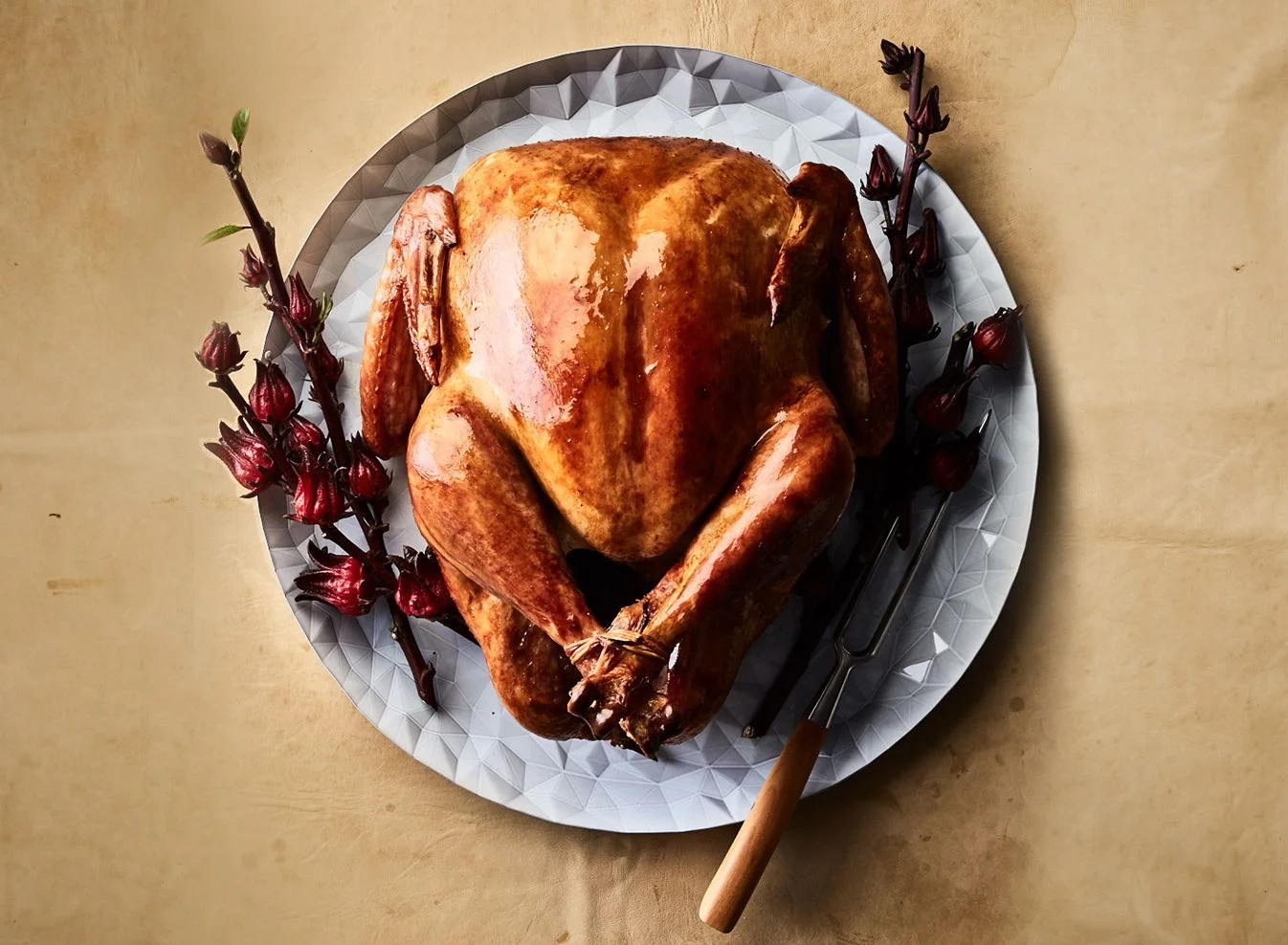
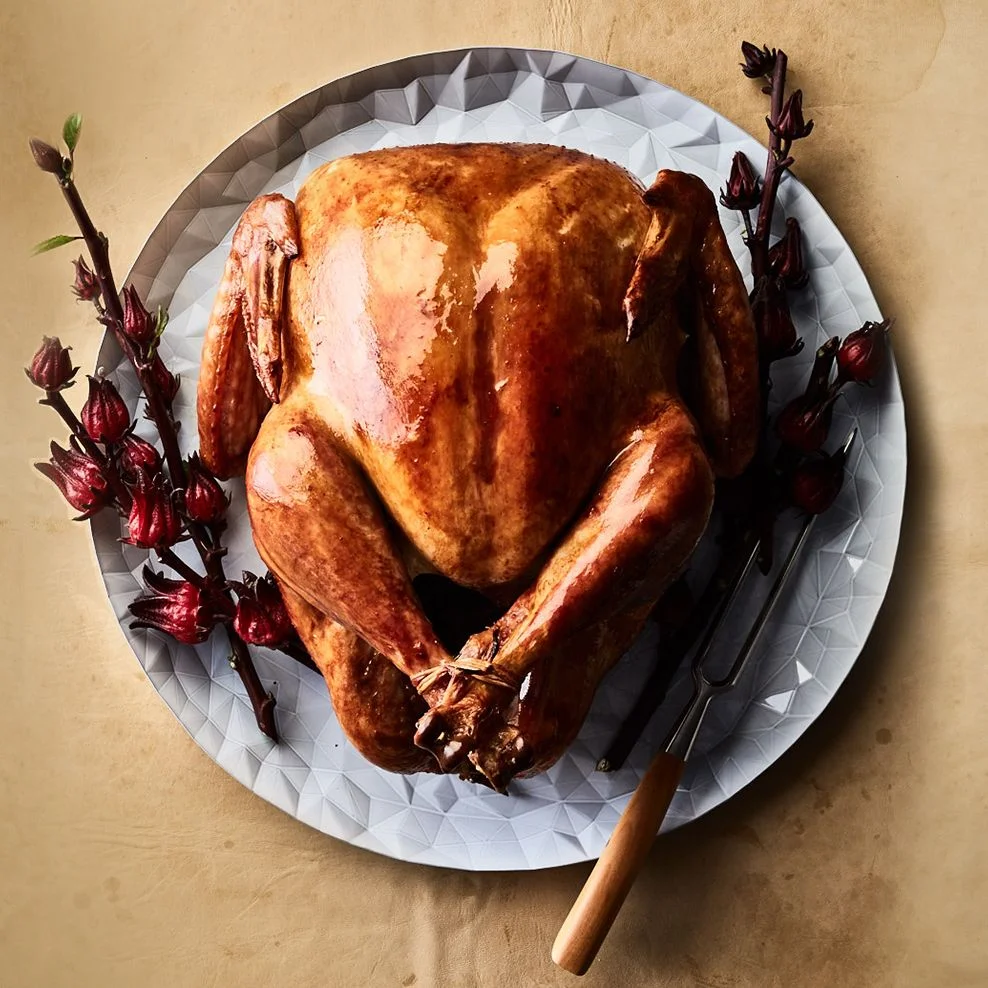 *Photo: Michael Graydon and Nikole Herriott, styling by Sue Li*
If your refrigerator can't hold a bird the size of a Thanksgiving turkey plus a brine bucket, Alton Brown has a workaround. His wet-brined turkey uses an insulated cooler as the brining vessel, which clears your fridge for side dishes and seasons the bird all the way through. For a holiday cook running out of cold storage, that's the whole pitch, and it's a good one.
How the bird gets brined and roasted
The brine is deliberately simple: kosher salt, sugar, and vegetable broth. Salt does the heavy lifting here. Over a long soak, it moves into the meat and helps the turkey hold on to moisture while it roasts, which is the reason anyone brines a bird in the first place. Once the soak is done, pat the turkey thoroughly dry. This step matters more than it looks. A wet skin won't crisp, and you want it crisping. The bird goes into a 500°F oven to get the skin browning fast. After 30 to 40 minutes, cover the breast with foil, drop the oven to 350°F, and let the turkey finish. Two temperature shifts and a foil tent is a bit more hands-on than "set it and forget it," but it's still far less fuss than most whole-bird methods.The no-baste argument
Here's the part I'd lead with. The recipe skips basting entirely, and that's the real selling point for most cooks. You don't hover over the oven spooning pan juices every half hour. You get to spend that time on sweet potatoes, apple pie, and the rest of your Thanksgiving feast. A brine does a lot of the work basting used to do, which is exactly why the method holds up.If the wet brine isn't for you
Not everyone wants a cooler full of salt water taking up half the kitchen. If that's you, Bon Appétit's dry-brined turkey is the alternative. And if you're short on time, Chris Morocco's turkey in parts gets dinner on the table in under two hours. The trade-off is obvious: less time, and no whole-bird spectacle.Brining questions people actually ask
The FAQ section covers the questions that trip people up most, and a few of the answers are where the real risk sits. **How long should you brine a turkey?** For a 14- to 18-pound bird, plan on 8 to 12 hours. It's tempting to leave it soaking for a full day, but an extended brine can make the meat overly salty. More time isn't better here. Stick to the window. **Is brining in a cooler safe?** Yes, if you hold the brine at or below 40°F the entire time. Use a thoroughly cleaned, food-safe insulated cooler, monitor the liquid with a probe thermometer, and add sealed ice packs as needed. The target is simple: keep the turkey as cold as it would be in a refrigerator. Skip the thermometer and you're guessing, and guessing with poultry is how people get sick. **Can you brine a turkey that's already been brined?** Don't. Many supermarket birds come prebrined or injected with a salt solution, and the label may say "self-basting," "enhanced," or "contains a solution." Brine one of those again and you'll likely end up with meat that's too salty. Read the packaging before you buy, and pick an unbrined bird for this recipe.Taste the gravy before you salt it
Brining does most of the work on a turkey, and it's also why the pan drippings can taste like the ocean by the time dinner's ready. Salt that goes into the bird doesn't stay there. It ends up in the pan and then in the gravy you've been stirring for half an hour. So taste before you add anything. Using low-sodium or unsalted broth gives you a lower starting point, and that keeps the final seasoning in your hands. If you've already overshot, you have two options. Whisk in a few pats of unsalted butter, or thin the gravy with salt-free broth. Neither is a perfect rescue, but both beat serving something your guests have to wash down with water. The earlier you check, the more room you have to fix it.What you'll need
Most of the shopping list is food, but the real planning question is space and time. The recipe runs 26 hours total and serves 12, so a turkey this size needs a cooler big enough to hold it, ice, and brine, and a fridge or cold spot that can stay cold for a day. The salt needs the most attention. The recipe calls for 3 cups (1 lb.) of Diamond Crystal or 1¾ cups of Morton kosher salt, and the two brands don't convert one-to-one by volume. Diamond Crystal's flakes are lighter, so the measurements differ. Buy the brand you've measured for and stick with it.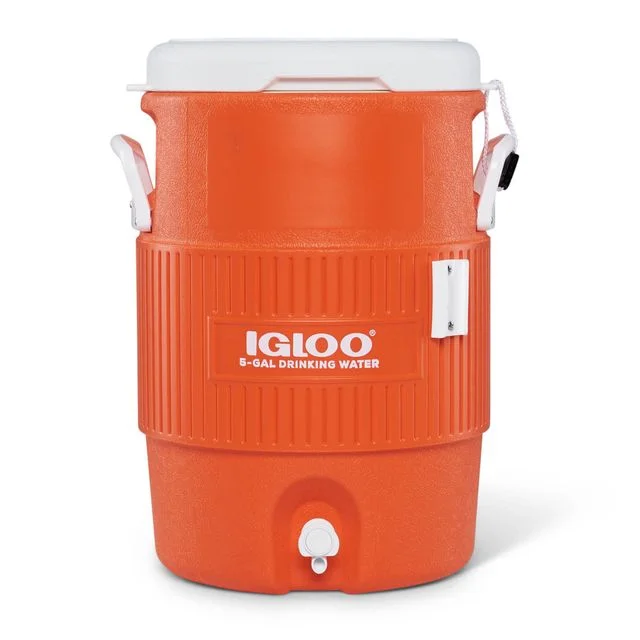 A 5-gallon Igloo cooler is the gear that makes the brine workable. At $50 on Amazon, it's the cheapest way to keep a turkey submerged and cold without crowding your refrigerator. If you already own a stockpot that fits the bird, you can skip it, but few home kitchens have one.
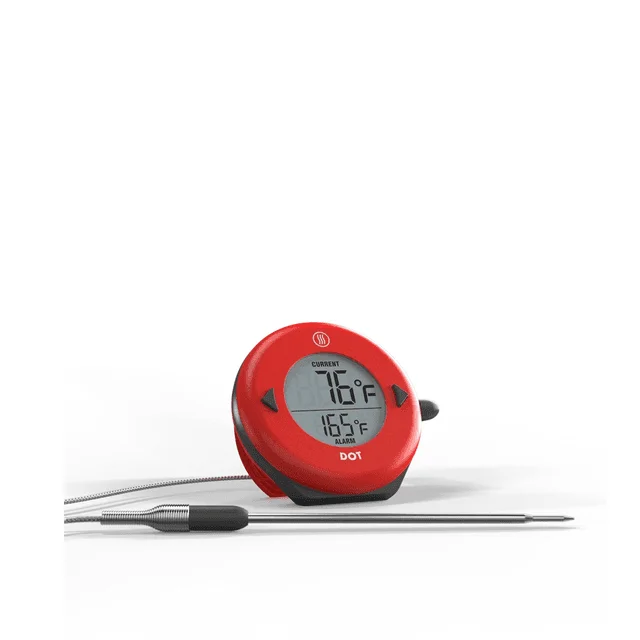 The DOT Thermometer, at $49 from ThermoWorks, is the purchase I'd defend hardest. Turkey goes wrong through overcooking far more often than through undercooking, and a fast-reading probe takes the guesswork out of the thigh. At this price, it's a lot of money for a single-use tool, but you'll likely use it for everything else you roast.
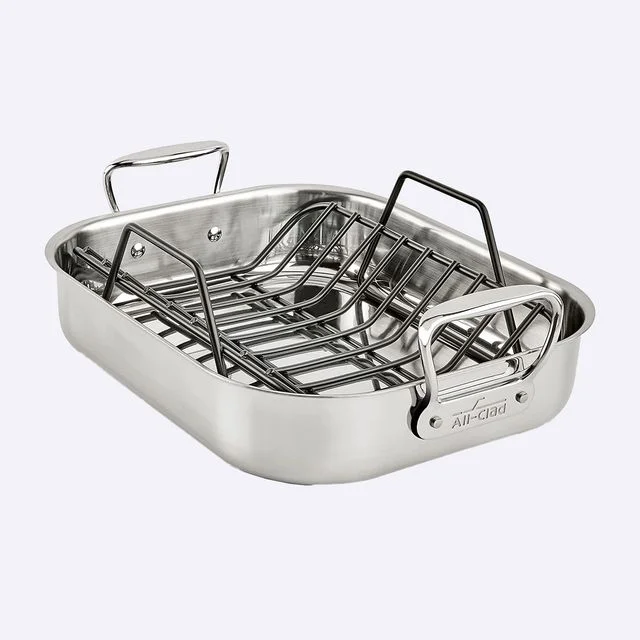 The All-Clad roasting pan with rack lists at $200 and is currently $132 on Amazon. It's the splurge on the list. A rack keeps the bird out of its own juices, which matters for both browning and the drippings you're about to turn into gravy. A cheaper pan will work, but you'll notice the difference when you're scraping up the fond.
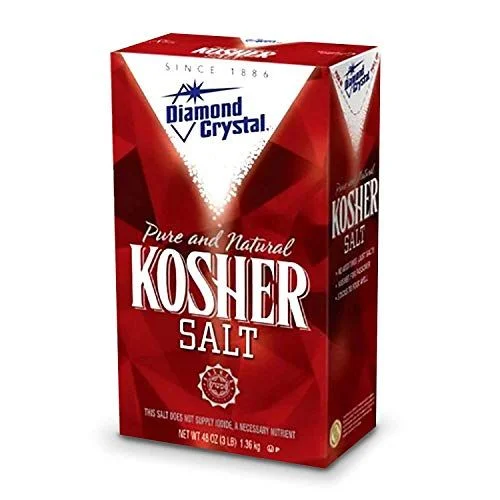 Diamond Crystal kosher salt, 3 pounds, costs $11 on Amazon. It's the cheapest item here and the one you can't substitute casually, so buy the right box and keep the measurements tied to it.
Discussion
Sign in to join the discussion.