Roast a whole turkey at 350°F for about 13 minutes per pound, allow days to thaw, and use a thermometer rather than the clock to confirm doneness.

Thanksgiving comes down to one question: how long will that turkey take? Get it wrong and the bird dries out, and no amount of good gravy will fix it. Turkey is lean, and a whole bird is a patchwork of thick breast, slender wings, and dense thighs that all want different things from the oven. Juicy meat and crackly golden skin are a real balancing act. The timing is more predictable than the reputation suggests, though, once you account for a few variables.
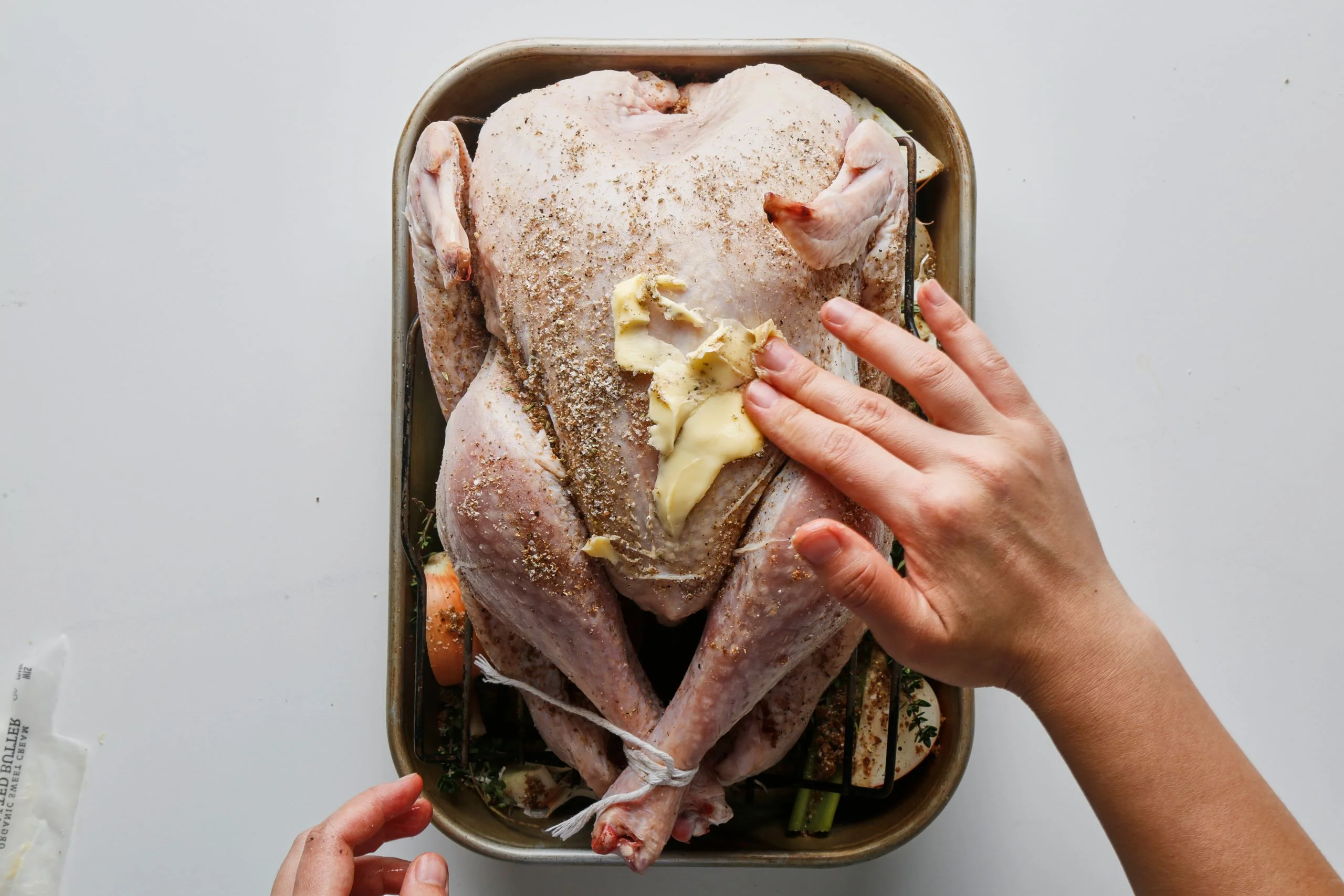
Photo by Alex Lau, Styling by Sue Li
Start with the bird and the thaw
Buy a turkey that's just big enough for your crowd. Leftovers are a fine consolation, but a smaller bird cooks faster and frees up the oven for sides and pies, which is where oven space gets tight.
Thawing is the step people underestimate. A frozen turkey needs about 24 hours in the refrigerator for every 4 to 5 pounds. A 12- to 14-pound bird needs roughly three to four days. Plan for that before anything else, because no amount of counter time will rush it safely.
Whether you roast the bird whole, spatchcock it, or cut it into parts, these prep steps won't necessarily shorten the cooking time. What they do is improve the result: moister meat inside and crisper skin outside.
How long to cook a turkey at 350°F
The simplest method is to roast a whole, unstuffed turkey, breast-side up, at 350°F. It's the approach first-time turkey cooks should start with. It asks for little hands-on attention and still produces an excellent bird. The working rule is about 13 minutes per pound, which puts a 12- to 14-pound turkey at around three hours. Treat every number here as an estimate, not a deadline.
Use this chart to get a ballpark figure for your bird:
| Turkey weight | Cooking time at 350°F |
|---|---|
| 8–12 lb. | 1¾–3 hours |
| 12–14 lb. | 3–3¼ hours |
| 15–16 lb. | 3½–3¾ hours |
| 18–20 lb. | 4–4¼ hours |
| 21–22 lb. | 4½–4¾ hours |
These times assume the turkey is fully thawed and unstuffed. Start checking about three-quarters of the way through the estimated roasting time, then check more often as it approaches its target temperature. The thermometer, not the clock, makes the final call.
Stuffing changes the math. A stuffed bird takes much longer to cook through, and the breast meat often dries out while the center of the stuffing catches up to a safe temperature. That's why we'd rather bake stuffing, also called dressing, in its own dish. You get better meat and better stuffing, and you stop gambling on one oven cycle.
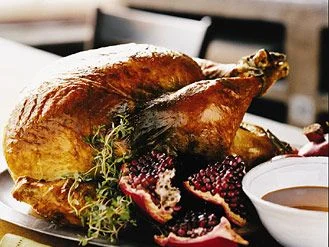
How to tell when the turkey is done
A perfectly browned bird isn't necessarily a cooked one. Color tells you about the skin, not the meat underneath. The reliable check is an instant-read thermometer, inserted into the thickest part of the breast and the innermost part of the thigh, without touching bone.
The USDA recommends reaching 165°F in all three spots. Food director Chris Morocco goes higher for dark meat, around 175°F to 190°F, so the connective tissue in the legs has time to break down. That's the built-in problem with a whole bird: the breast and the legs don't hit their ideal temperatures at the same moment. You're always trading one off against the other.
Then factor in carryover cooking. The turkey keeps heating after it leaves the oven because of residual heat. How much it climbs depends on the bird's size and how you roasted it, so don't count on a fixed number of degrees. The Bon Appétit Test Kitchen pulls the turkey when the breast reaches 150°F, then rechecks during the rest to make sure it reaches 165°F. That's a sensible approach. Pulling it at 165°F from the start is a common route to dry meat.
Rest it, then carve
Don't carve right away. A whole bird needs 30 to 60 minutes for its juices to redistribute, and that's what keeps the meat moist when the knife goes in.
Rest the turkey on a cutting board with a trough, or on a platter, to catch the runoff. Save those juices for gravy. You don't need to tent the bird with foil. Its own insulation keeps it warm for a surprisingly long time, and foil traps steam that will soften the skin you spent hours crisping.
A partly frozen bird wrecks your timeline. The cook time you planned goes out the window, and you can't reach the giblets until the cavity is clear. If the calendar is closing in faster than the turkey is thawing, you still have safe options for speeding things up.
Brine it, and brine it dry
Dry brining does more for the bird than almost anything else you'll do. Use plain kosher salt, a salt-and-pepper mix, or a custom spice blend. The salt pulls moisture to the surface, and that salty liquid soaks back into the meat and carries the seasoning in with it. The payoff is a turkey that holds its moisture as it cooks, has more tender meat, and browns better on the skin.
Wet brining has its fans, and the wet-brine recipe is there if you want it. We're firmly in the dry-brine camp. It's less messy, and you don't need to find room for a giant tub of salt water in a refrigerator that's already packed before Thanksgiving.
Give the bird at least 12 hours, and up to three days, uncovered in the refrigerator before it goes in the oven. That sounds like a long wait, but the salt needs that time to work through the large muscles. If you're short on time, you can start dry-brining before the turkey is fully thawed. Once the skin is pliable enough to season, apply the salt and put the bird back in the fridge to finish thawing.
Use your oven wisely
Buy an oven thermometer before the holiday. The dial on most ovens is a rough guide at best, and a few degrees of error matter when something roasts for hours.
Then resist the urge to keep opening the door. Every peek lets heat escape and stretches the cooking time. A reliable thermometer will tell you more than a dozen looks at the bird.
A faster, slightly more advanced method
This approach comes from Andy Baraghani's dry-brined roast turkey recipe, the same no-fail turkey method we keep coming back to. Andy set two goals: skin that's crackly and deeply browned, and meat that's tender and moist.
His answer is two oven temperatures. He starts the bird hot, at 425°F–450°F for 30–45 minutes, to brown the skin. Then he drops the heat to 300°F–350°F for another 65–85 minutes, following the recipe's internal-temperature guidance. He also brushes the outside with a tangy honey glaze, which turns the skin into a glossy, bronzed shell.
The two-temperature method can get a 12–16-pound turkey out of the oven in roughly two hours, which is a lot faster than the standard approach. The catch is that you'll need to watch it more closely. Keep an eye on the skin, and if it starts getting too dark, follow the recipe's instructions for lowering the heat. For the full technique, including the dry brine and glaze, use Andy's recipe.
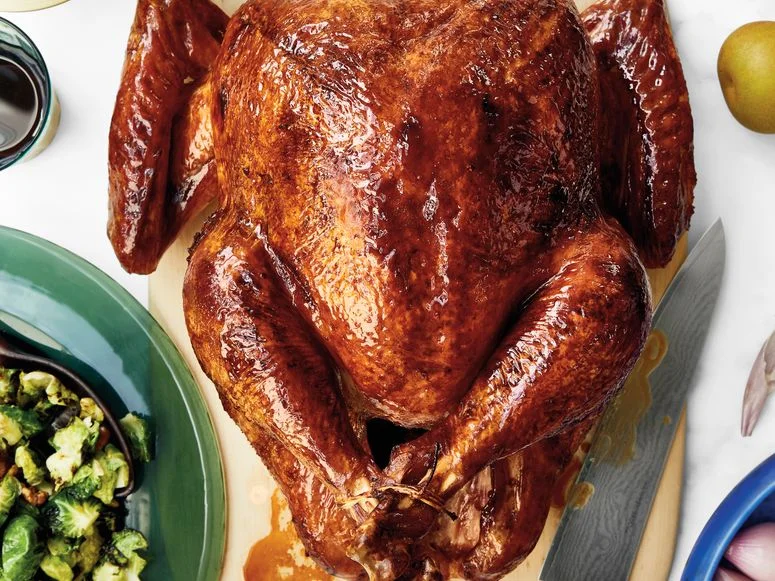
Roasting the turkey in parts
If the whole-bird timeline still feels too tight, roasting in parts solves the uneven-cooking problem directly. Each piece gets its own exposure to the oven's heat, so you control when the breast and the dark meat finish. Dry brining works on pieces too, so the earlier prep advice still applies.
You can break the bird down yourself if you're comfortable with a sharp knife. Otherwise, ask your butcher. Request five pieces: two legs, two wings, and one whole breast with the backbone removed. Keep the backbone for turkey stock.
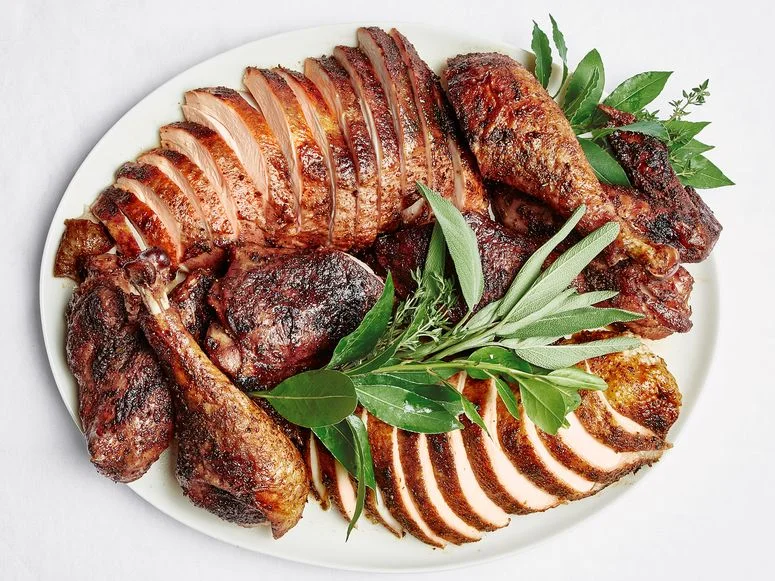
Skip the standard roasting pan. This setup puts a wire rack inside a rimmed baking sheet, which lets hot air move around every surface. The skin gets a real chance to crisp, and the drippings still collect below for the gravy.
In another favorite Thanksgiving turkey recipe, the dry-brined pieces start at 425°F for 20–25 minutes and finish at 300°F for another 50–70 minutes. Because each piece is separate, you can pull the breast once it hits the right temperature and give the legs more time. Check doneness against the recipe, and keep the USDA's 165°F minimum in mind.
The trade-off is drama. A parted turkey doesn't make the grand entrance a whole roasted bird does. Still, if the table is full of mmms instead of oohs, the cooking did its job.
Discussion
Sign in to join the discussion.