Senator-elect James Talarico and Governor-elect Gina Hinojosa celebrated election night with fountain drinks at a Texas Whataburger.

Election night in Texas ended with a toast in plastic cups, not Champagne. Senator-elect James Talarico and Governor-elect Gina Hinojosa sat down at an Austin-area Whataburger late Tuesday, after Talarico flipped a Senate seat for Democrats and Hinojosa won the governor's race, the first Democratic win for the office in more than three decades. That's a lot of history for one booth. The choice of venue is easy to dismiss as a photo op, but it says something about how the two of them wanted to be seen.
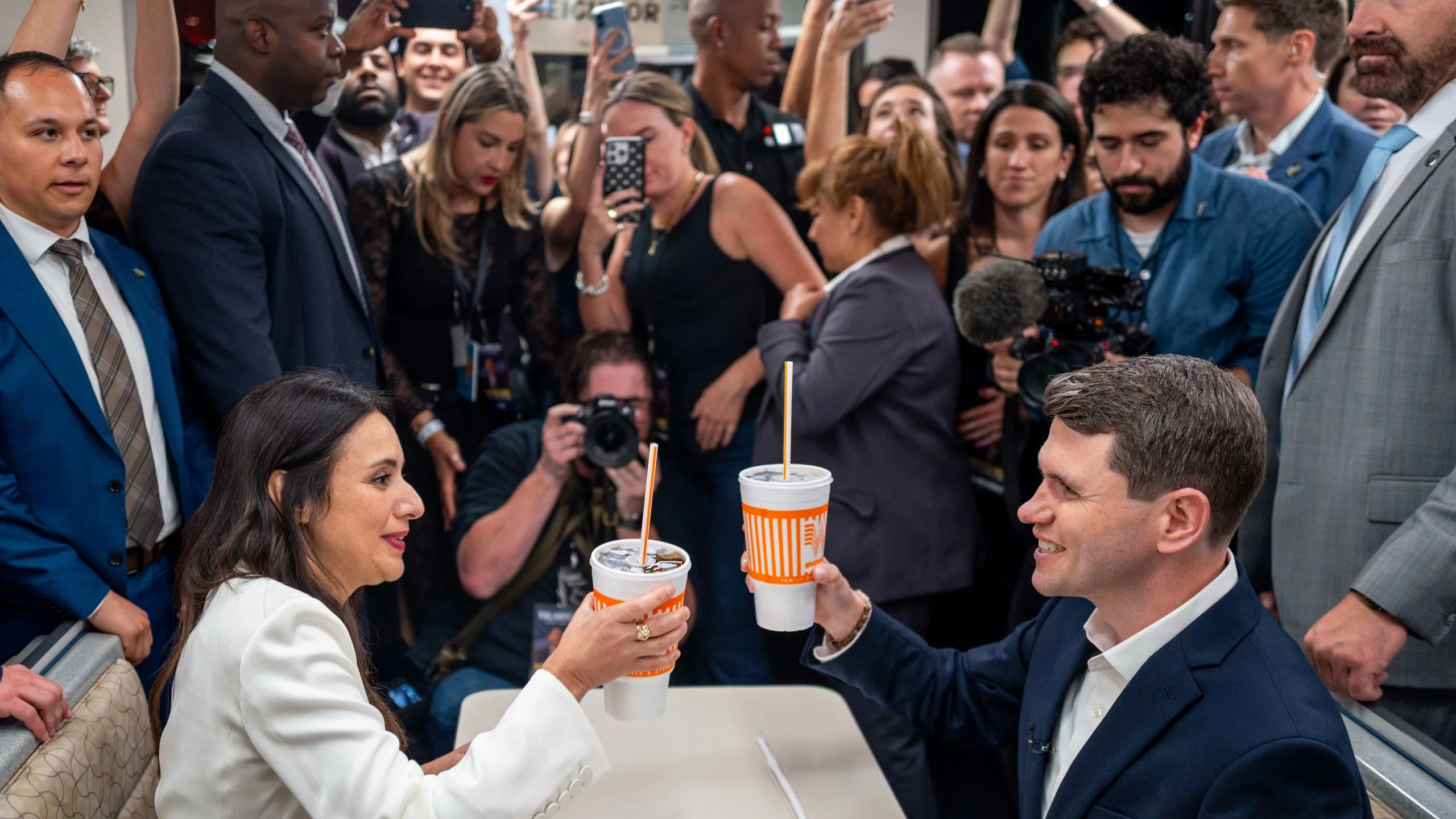
The venue fit the night better than it might seem. Talarico beat Republican Ken Paxton, who carried a scandal-plagued campaign, by running on a populist message aimed at billionaires and at a party backed by Elon Musk and other ultrawealthy donors. Hinojosa, the first Latina elected governor of Texas, centered her race against Republican incumbent Greg Abbott on corruption and data centers. Both take office as the first Democrats to hold their roles in more than 30 years.
Populist messages aimed at billionaires are easy to deliver and harder to sustain. When the donor class in question is also tied to the other side's coalition, the message works best if voters can see the money in their own lives. That's the bet Talarico seems to have made, and it's why the Whataburger setting reads as deliberate. You don't have to be a political strategist to see the contrast between a donor-funded ballroom and a booth where the drinks come from a fountain.
Why a fast-food chain works as a backdrop
Whataburger opened its first location in Corpus Christi in 1950, and its A-frame buildings have since become fixtures in small towns across the state. It's a budget meal for families, a hangout for high schoolers deciding where to go next, and a late-night breakfast stop before heading home. Plenty of Texans would argue there's no more Texas place to end a long evening than a booth with a Whatameal, which still comes in under $15 for a double burger. The price point matters here. A meal that costs less than a fancy dinner signals that the event belongs to ordinary voters, not just the people who wrote the checks.
Politicians have leaned on the chain before. In 2018, the campaign for Senate hopeful Beto O'Rourke posted video of him skateboarding outside a Whataburger before going in to eat. Fancy Ketchup has its own following, and the menu's made-to-order customization, from jalapeños and mustard on a burger to no mayo, gives the chain a personal feel that's hard to fake. That's the part candidates can't manufacture with a focus group. A place where you order exactly how you like it reads as honest, and honesty is a rare currency in a campaign season (and this is the part most people overlook).
The meat question
The campaign trail gave the pair plenty of food talk. Talarico absorbed attacks that he was vegan, a claim he denied after urging residents to eat less beef. He answered by posting photos of himself eating barbecue. Paxton still called him "Tofu Talarico," and Donald Trump floated a scenario in which Talarico excuses himself to vomit after eating meat. Those jabs were less about diet than about masculinity, a long-running link between meat and political identity.
Election night put Talarico in a different kind of meat-forward setting. The table was full of beef patties, Whatachick'n strips, and bacon-and-egg taquitos, which is a hard menu to read as a statement of anything except appetite. That's the point, though. Food in Texas politics has always been shorthand for who you're trying to reach, and the attacks on his diet were built to make him look like an outsider in a state that prizes steak and barbecue. Eating a burger in front of cameras answered the question without giving it much airtime.
The chain's own questions
Whataburger isn't without problems. After a 2019 acquisition by a Chicago-based investment firm, the chain faced complaints about diminishing quality, and a homegrown rival, P. Terry's Burger Stand, has grown in Austin. Those are real pressures, and they'll test whether a place this tied to Texas identity can keep its following through ownership changes and a crowded market. Brands that sell on nostalgia have a narrow path. Change too quickly and loyalists notice, change too slowly and newer customers go elsewhere.
That tension is familiar to anyone who covers consumer brands. When a regional favorite changes hands, the complaints usually start with portion sizes, staffing, or small menu shifts, and the broader question is whether the brand still feels like its own. I'd say the quality complaints deserve more attention than the rivalry, because a chain's identity lives or dies in the details. Local rivals can take a few customers, but they rarely take the place a brand holds in a town's memory.
What this means for the rest of the state
For now, the signal from Tuesday is simpler. Texas voters made a clear choice in a national midterm that went against the president's party, and the two newly elected officials chose a place that feels like home to most of the state. Here's the thing: a fountain drink and a burger won't win an election, but they're a reminder of what the candidates were campaigning to protect. Whether the message holds up once they're in office is a different question, and it's one the photo can't answer.
If you're working in politics or media, the lesson isn't to copy the booth. It's that symbolism works best when it lines up with the substance of the message. Talarico ran against donor influence, and a cheap meal in a familiar room made that argument without a speech. Hinojosa's focus on corruption and data centers gives her a different set of issues to deliver on, and the venue alone won't carry that weight.
What this means for you depends on where you sit. If you're a voter who doesn't follow Texas politics closely, the story is a reminder that the state's governing class is now split along different lines than it was a few years ago. If you're a reporter, the job is to check whether the optics match the policy. That's the test I'd apply to both sides, and it's the one this night will face once the cups are cleared away.
Discussion
Sign in to join the discussion.