Japanese knives often beat Western chefs' knives in kitchen tests, but their specialized designs mean choosing a style that matches how you cut.
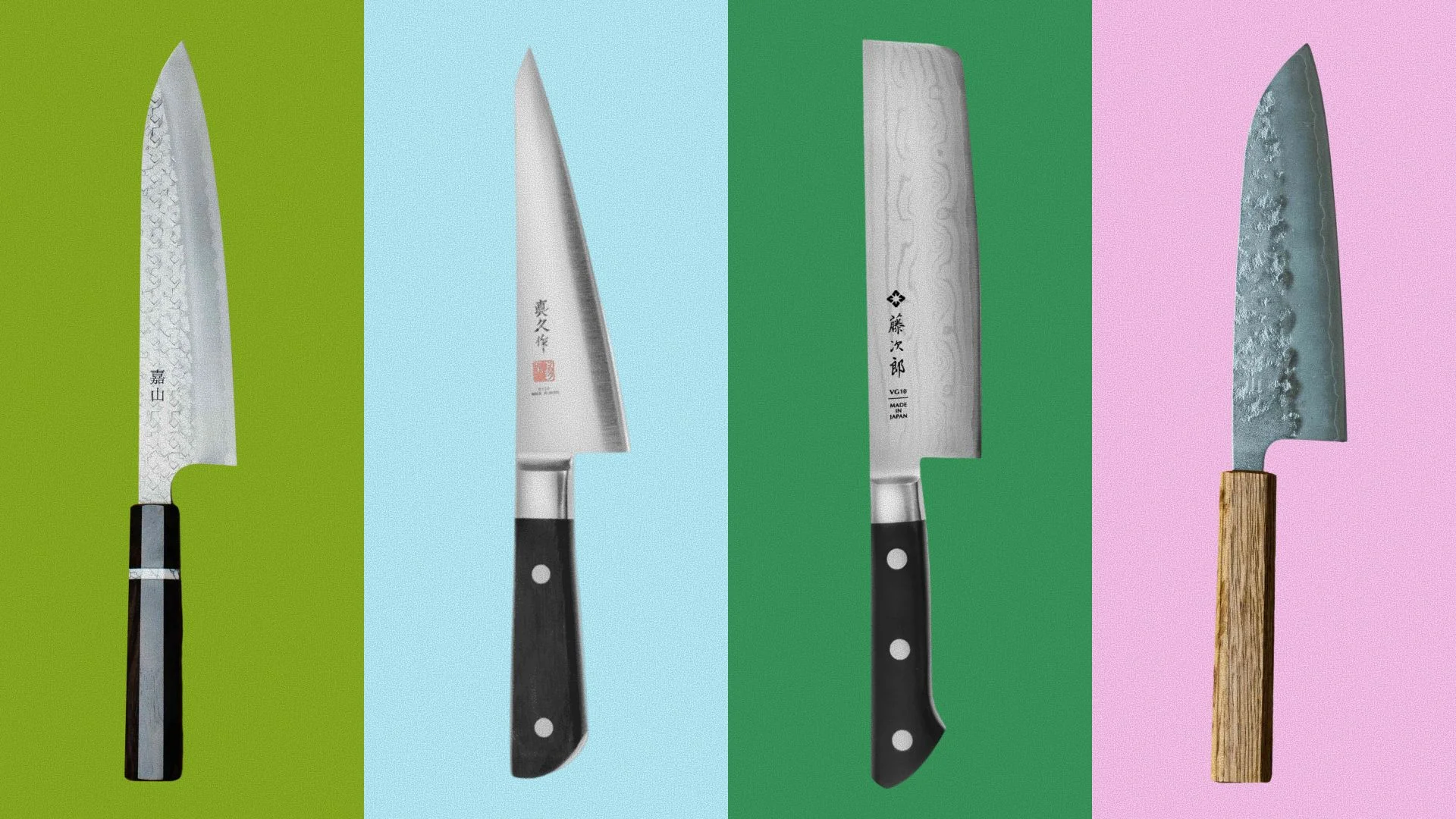
Japanese knives have moved from specialist shops into home kitchens, and the reason is simple: many of them beat their Western counterparts in side-by-side kitchen tests. That said, the same specificity that makes them good also makes them harder to buy. Choosing the wrong one means paying for a blade you won't reach for.
Why the Western chef's knife lost ground
Western knives are built to do a little of everything. They're heavy, and the thick bolster near the heel was once useful enough that chefs would use it to crack open a can of tomatoes mid-service. That's a sign of a tool asked to cover too many jobs.
Japanese knives take the opposite approach. Each one is designed around a particular kind of precision cut, and most have a more defined purpose. The payoff is cleaner work. The cost is that you need to know which blade fits your cutting habits before you buy.
The Japanese knives worth knowing
Testers have run a wide range of Japanese-style knives through real kitchen work, so the picks below reflect how the blades actually performed, not just how they looked on a spec sheet. There are more styles than the eight covered here, but these are the ones with the clearest use cases.
- Gyuto
- Santoku
- Nakiri
- Deba
- Petty
- Funayuki
- Kiritsuke
- Honesuki
What makes a Japanese-style knife different
Before you pick a style, it helps to understand the four features that separate these knives from the Western kind. Each one shapes how the knife feels and what it's good at.
Blade shape
Many Japanese knives are built for push cuts or pull-through slicing, not the rocking chop that a heavy Western chef's knife relies on. Their edges run straighter. That makes them a bit slower on a fast mince of herbs, but considerably more precise. Most also have a sheep's-foot tip that curves down toward the point, which gives you more control for fine work.
Steel
Japanese knives are usually forged from harder steel than Western knives. Hard steel holds an edge longer, so makers can sharpen at steeper angles and produce a finer edge. That's a big part of why these knives slice so cleanly. The trade-off is brittleness: harder steel can chip if you cut through something like ice or bone.
Bevel
Traditional Japanese knives are sharpened on one side only, which yields a much finer edge than the 50/50 bevel on most Western knives. Plenty of modern makers have switched to 50/50 because it's easier to sharpen. Still, you'll see many blades with a 70/30 bevel, where the inside edge (the left edge on a right-handed knife) is ground at a steeper angle. That setup is easier to maintain than a single bevel and cuts more sharply than a 50/50 edge.
Handle
Many traditional Japanese knives use a wa-style handle, an octagonal wooden grip that wraps around a hidden tang (the part of the blade that extends into the handle). Wa handles keep the knife light and quick to maneuver. Western knives typically use full-tang construction, which adds weight and heft. Plenty of modern Japanese makers have split the difference, pairing full-tang handles with Japanese blade shapes. The result is a hybrid that's durable and still good at slicing.
The types of Japanese knives
The gyuto is the closest Japanese equivalent to the Western chef's knife, and it's the logical starting point if you only want one. It handles a broad range of everyday tasks while keeping the finer edge and straighter profile that define the category.
The gyuto didn't come from a clean break with Western knives. It took shape in the early 1900s, when Japan was modernizing quickly and French cooking was catching on, and Japanese makers started with the French chef's knife and reworked it through their own blade-making traditions. The result is a Japanese chef's knife built mainly for slicing meat, with a curved edge that still handles chopping herbs.
Put one next to a Western chef's knife and the differences are obvious. The gyuto has a straighter blade, a drop point tip, and a lower overall profile. That geometry is deliberate. You rest the tip on the board and draw the blade through the food, and a thin, sharp edge does the cutting. It's a precise, pulling motion, and it rewards control more than force.
Here's the thing, though: a knife that excels at meat shouldn't be the one most people reach for daily, yet plenty of home cooks do exactly that, choosing a gyuto over a traditional chef's knife. The shape is versatile enough to anchor a collection. Meat is just where it really shines.
Our Picks
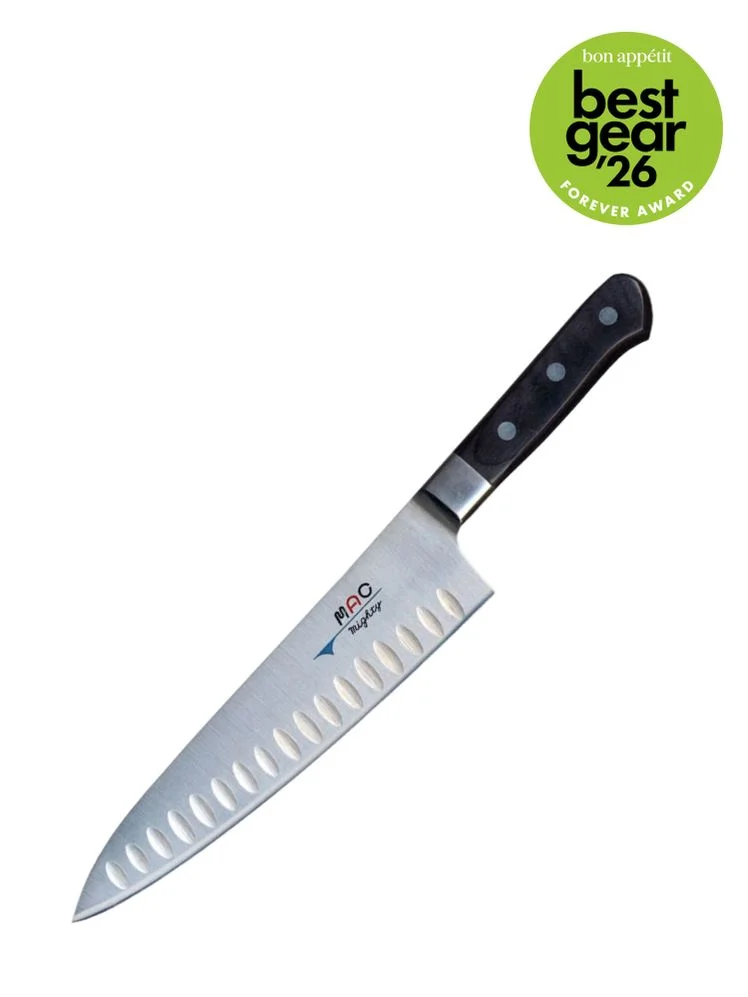
We've been fans of the gyuto here for a long time. MAC's Professional Hollow Ground Chef's Knife has topped our chef's knife review for years, and it remains the one we'd point most people toward. It lists at $195, with a reduced price of $175 at the moment. You can find it direct from MAC.
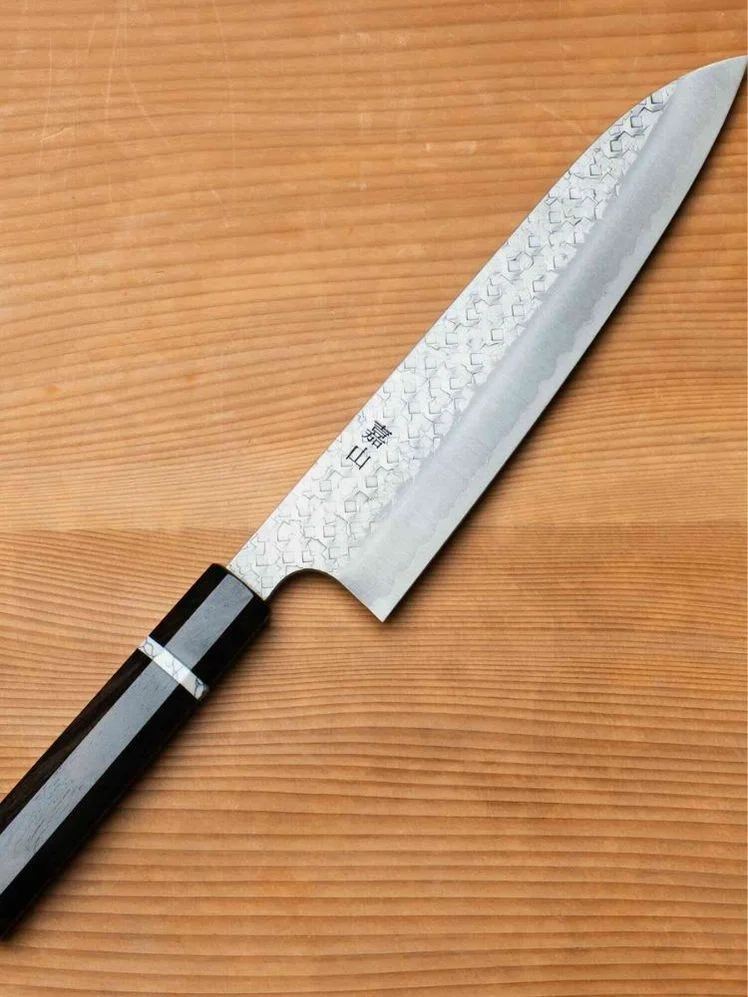
If you want something sharper and more traditional, the Kazan Arare by Shibata gyuto is the one that stuck with us. It's a 210mm blade, and it impressed us enough that we gave it a review of its own. Expect to pay $240, and it's available from Shop and Chubo.
That covers the gyuto options worth your attention. Which raises the obvious follow-up: what else belongs in the drawer? The santoku is the next stop.
Santoku
Why the santoku keeps turning up in knife sets
Santoku has moved from specialty shelf to default inclusion in brand knife sets, and that shift says something about how home cooks now think about their kitchen knives. It's a fairly modern shape, dating to around the 1940s. It's also a deliberate blend. The santoku borrows from the gyuto, the nakiri, and the deba, and the nickname "three virtues knife" tells you the intent. The shape is built for range. The tip is a steep sheep's-foot, which gives you precision for point work. The heel is tall, so push cuts stay clean. The edge has just enough curve for pull-through slicing and rock-chopping. That's a lot of jobs for one blade, and it's why the santoku handles meat, fish, and vegetables without much fuss. In practice, that means the knife earns its counter space. Cut cheese and an apple for a snack. Slice leftover roasted chicken for a sandwich. Dice an onion for a curry. Nothing about those tasks demands a specialist tool, and the santoku does all of them without making you switch blades.Two santoku worth buying
Size matters more than the marketing suggests. We like a santoku between six and seven inches, mainly because it sits in clear contrast to the longer gyuto. A shorter blade feels more controllable on a cutting board, and that's the point of owning one. Our overall pick is the MAC Professional Santoku Knife. At $140 on Amazon, it's the one we'd tell most people to buy. Reviewers in our testing praised its sharpness, its build quality, and its value. The one complaint is the handle, which feels slightly clunky. That's a fair knock, and it's the kind of thing you'll notice in the first week and then stop thinking about. Here's the thing, though: for a knife at this price, sharpness and build are what you're really paying for.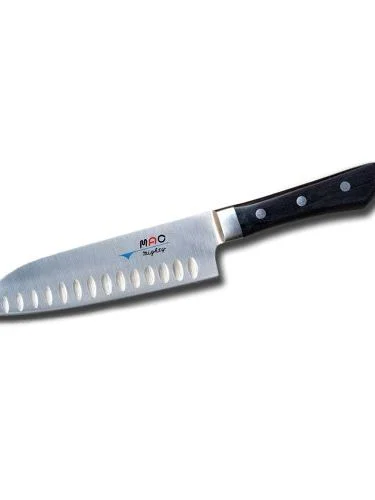 If you want a sharper, more refined blade and you care about the handle, the Kazan Ginsan Nashiji Santoku is the one we'd look at. It comes with a traditional wa-style handle, and it's razor sharp out of the box. People who've used it describe it as nimble yet sturdy, and they point to the hand-finished details as a real pleasure to hold. The catch is the price. At $180 from Chubo Knives, it's the expensive option, and the premium is hard to justify if you're just dicing onions on weeknights.
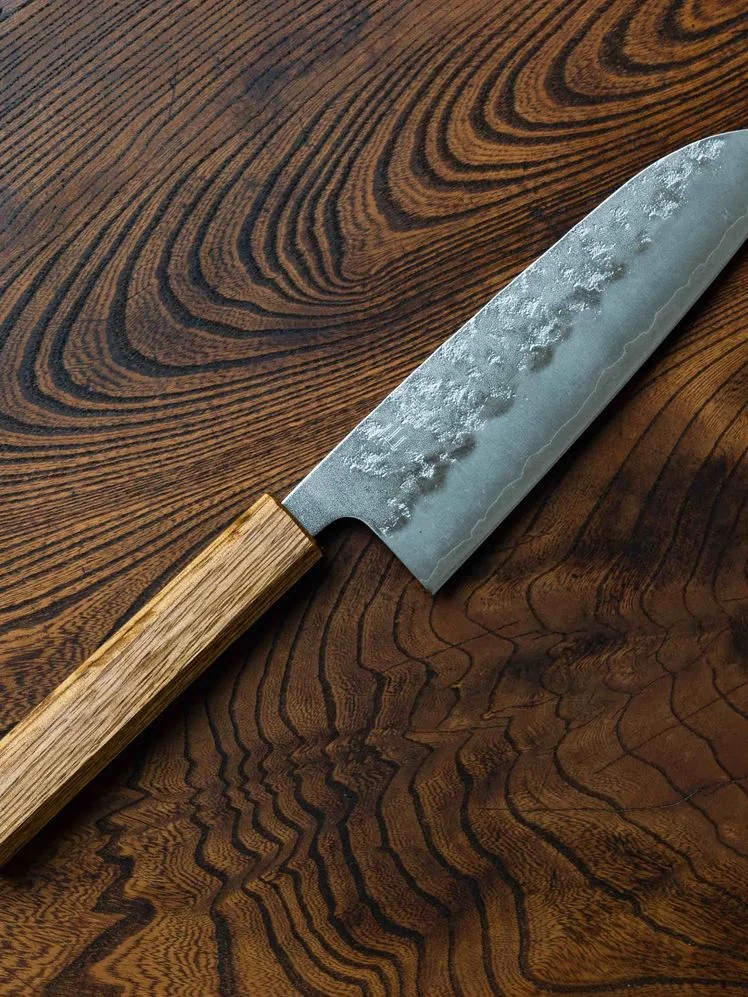 That's the real choice here. The MAC buys you most of the performance for less money, with a handle you can live with. The Kazan asks you to pay for finish and feel. Neither is wrong. But if you're buying one santoku to cover everything from sandwiches to curry prep, start with the MAC and spend the difference on a good sharpening stone.
Discussion
Sign in to join the discussion.