Today's PFOA-free nonstick is still PTFE, and "nontoxic" is largely marketing. Thousands of PFAS remain unregulated, so read cookware labels closely.
Is traditional nonstick toxic?
Here's the thing: "nontoxic" is partly a marketing word. Brands use it to position their pans as a safer alternative to traditional nonstick, which is usually coated in polytetrafluoroethylene, or PTFE. To understand why people started calling old nonstick pans "toxic," you need a quick look at PTFE's history. PTFE turned up by accident in 1938. DuPont trademarked it as Teflon in the early 1960s, and over the second half of the 20th century it upended the home cookware market. A surface that released food without oil was a big deal. By the turn of the century, Teflon was everywhere, showing up in American kitchens as coated skillets, muffin tins, baking dishes, and more. PTFE, though, is only one member of the PFAS family, which includes thousands of compounds. Around 1951, DuPont began using another PFAS, PFOA (perfluorooctanoic acid), in its Teflon manufacturing process. Over time it became clear that PFOA could enter the body through gaseous fumes or from chipped coatings. It was linked to serious effects on human health and the environment, including increased risk of certain cancers, birth defects, ulcerative colitis, and thyroid disease. Under sustained pressure from public health and environmental advocacy groups, manufacturers phased PFOA out by 2013. Today's traditional nonstick is made with PFOA-free PTFE, and it's typically free of [PFOS](https://www.p65warnings.ca.gov/fact-sheets/pfos-perfluorooctane-sulfonate-or-perfluorooctane-sulfonic-acid), another harmful PFAS. You'll see it sold under names like T-fal, Dura-Slide, or hard-anodized aluminum. PTFE itself is considered less harmful than other PFAS, but that's not the whole story. Thousands of PFAS compounds remain unregulated, and [research into the class as a whole is ongoing](https://www.epa.gov/pfas/increasing-our-understanding-health-risks-pfas-and-how-address-them). A "PFOA- and PFOS-free" label tells you two specific chemicals are missing. It doesn't guarantee the pan is free of every potentially risky PFAS.What does "nontoxic cookware" actually mean?
The term wasn't necessarily coined by GreenPan, but the brand is the one that brought it to shoppers. In 2007, [GreenPan](https://www.greenpan.us/pages/a-greener-pan) released what it described as the first PFAS-free ceramic nonstick frying pans. Since then, "nontoxic cookware" has come to mean, in practice, "PFAS-free nonstick cookware." That's not wrong, exactly. But it's a buzzword first and a precise technical claim second. When you see "nontoxic" on a box, read it as a signal about the coating, not a guarantee about everything in the pan or how safe it is to cook with.The best nontoxic cookware
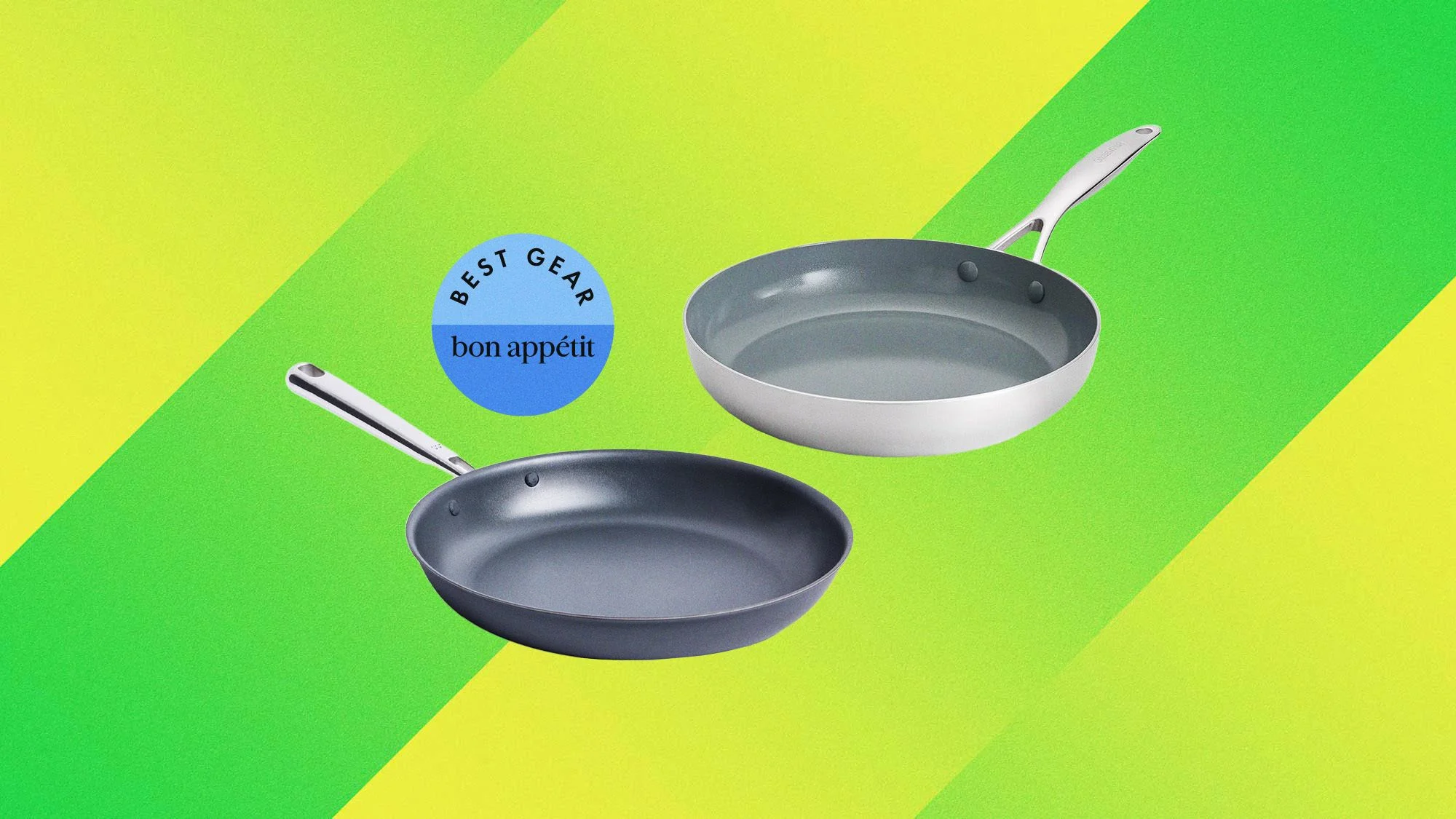
We've tested dozens of nonstick and "nontoxic" pans to find the ones worth your money and your peace of mind. Here's what earned a spot: - **The best ceramic nonstick pan:** [GreenPan Valencia Pro](https://shop.com/products/6244241277096/valencia-pro-ceramic-nonstick-12-frypan) - **An "I-can't-believe-it's-not-Teflon-or-ceramic" nonstick pan:** [Misen Carbon Nonstick Frying Pan](https://shop.com/products/15734196142161/10-deeper-carbon-nonstick-frying-pan) - **The best stainless-steel cookware:** [All-Clad D3 Stainless Steel Skillet](https://www.williams-sonoma.com/products/all-clad-stainless-steel-fry-pan/) - **The best nontoxic cookware set:** [All-Clad D3 Stainless-Steel 7-Piece Cookware Set](https://www.all-clad.com/d3-stainless-everyday-7-piece-pots-and-pans-cookware-set.html) - **The best cast-iron skillet:** [Lancaster Cast Iron Skillet](https://lancastercastiron.com/collections/cast-iron-skillets/products/lancaster-cast-iron-skillet) - **The best enameled cast-iron Dutch oven:** [Staub Cocotte](https://www.amazon.com/dp/B0CT95G74F) - **The best carbon steel skillet:** [De Buyer Blue Carbon Steel](https://www.amazon.com/Buyer-Diameter-Cooking-Naturally-Nonstick/dp/B0D9R4YMTC)"Nontoxic" gets tossed around loosely, so it's worth being precise. In cookware, it usually refers to ceramic nonstick, a coating made from silica through the sol-gel process. But the word applies to any pan made without harmful chemicals like PFAS. That's a wider net than most shoppers expect, and it catches cookware many people already own: stainless steel, cast iron, and carbon steel.
Ceramic nonstick comes closest to the slickness of traditional Teflon. The catch is that every coating wears out, and ceramic is no exception. It degrades and chips over time (more on that below). That's why we push people toward uncoated stainless, cast iron, and carbon steel. They take some practice, but once you get the technique down, food stops sticking to them too, and they last a lot longer.
The best ceramic nonstick pan: GreenPan Valencia Pro
I'll be blunt: I've sworn off coated nonstick for good. Whichever one you buy, it'll last a few years at most before the coating breaks down and you're shopping again. Still, I get the appeal. If you're set on a coated pan, ceramic is the sensible choice. Most are built on stainless steel or aluminum and coated with a silica-based layer that's slick out of the box, at least for a while. The formula varies from brand to brand, which is why we've spent years testing ceramic nonstick pans to see which ones actually deliver.
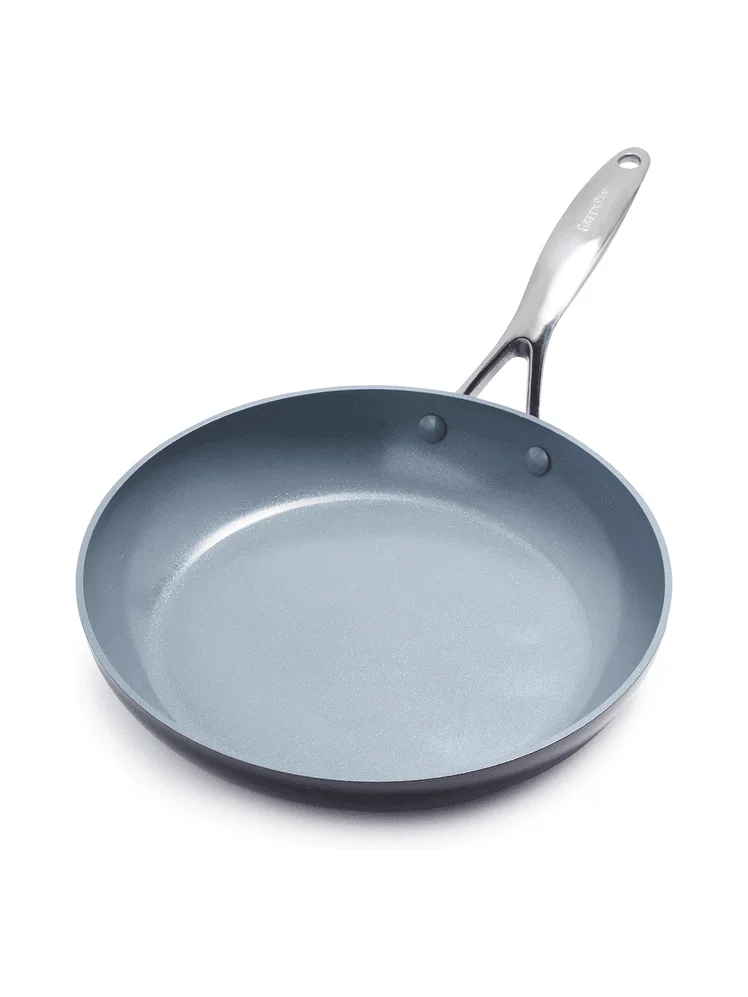
GreenPan was first to market with ceramic nonstick in 2007, and its pans have consistently topped our nonstick testing. Our favorite from the lineup is the Valencia Pro, and it earns that spot for a few reasons. It has enough heft to feel durable but stays light enough to maneuver without effort. It's also cheap enough that replacing it in a few years won't sting. And it's more scratch-resistant than earlier GreenPan models we've tried. Oh, and it's induction compatible.
The Valencia Pro is currently listed at $100 for the 12-inch frypan on Amazon.
Pros:
- Rated for high heat
- Comfortable handle
- Induction compatible
- Oven-safe
- Good conductivity
Cons:
- The ceramic coating wears down after a few years. That's a knock on all nonstick cookware, though, regardless of price or coating type.
Specs:
- Available sizes: 8", 10", 12"
- Induction compatible: Yes
- Dishwasher-safe: Yes, but hand-washing is recommended
- Metal-utensil-safe: Theoretically, but wood or silicone is recommended
- Oven-safe: Up to 600ºF
- Warranty: 1 year
If your stovetop isn't induction, you can save money with GreenPan's Paris Pro line. In our testing, it performed much like the Valencia. Which raises the question of whether induction compatibility alone justifies the premium. For many home cooks, it's a fair reason to pay up, but it's not the only deciding factor.
Nonstick that's neither Teflon nor ceramic: Misen Carbon Nonstick Frying Pan
Nonstick without the coating
Carbon nonstick is a strange category, so it helps to get the terms straight. These pans cook like traditional nonstick, but no coating does the work. The steel is nitrided, a process that infuses nitrogen into the metal, making it tougher, slicker, and resistant to both corrosion and rust. The payoff is a pan that handles high heat, metal utensils, and years of use, because there's nothing on the surface to flake off. If you've been trying to get away from Teflon without giving up easy-release eggs, this is the pitch. Misen's Carbon Nonstick pan looked like the answer. It also differs from [traditional carbon steel pans](https://www.bonappetit.com/story/best-carbon-steel-pans) in a meaningful way: it has an aluminum core that heats quickly and evenly, and its surface repels oil right out of the box.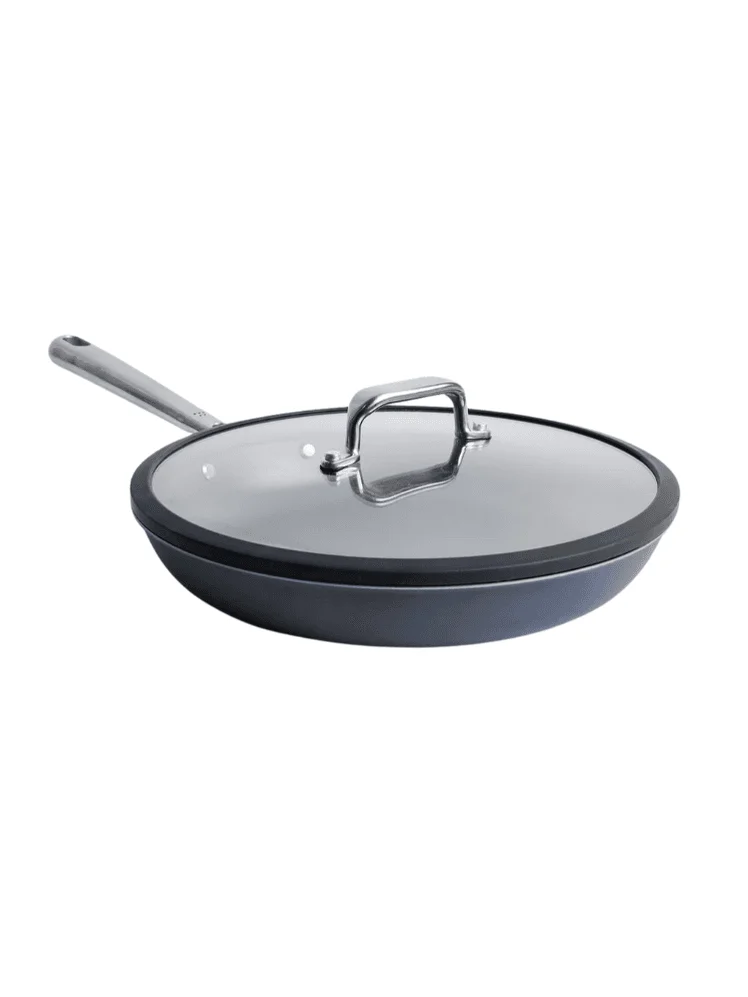
Discussion
Sign in to join the discussion.