Weighing flour beats scooping for consistent baking. The $27 Escali Primo Digital Food Scale earns top pick for accuracy, durability, and affordability.
I've been baking at home for well over a decade. My first foray into food media was a baking blog I started in middle school, and it taught me that a kitchen scale does more for your results than almost any other tool you own. Bon Appétit's Test Kitchen agrees, which is why our baking recipes give measurements in grams.
Our top picks
- Best kitchen scale overall: Escali Primo Digital Food Scale
- Best budget kitchen scale: Amazon Basics Kitchen Scale
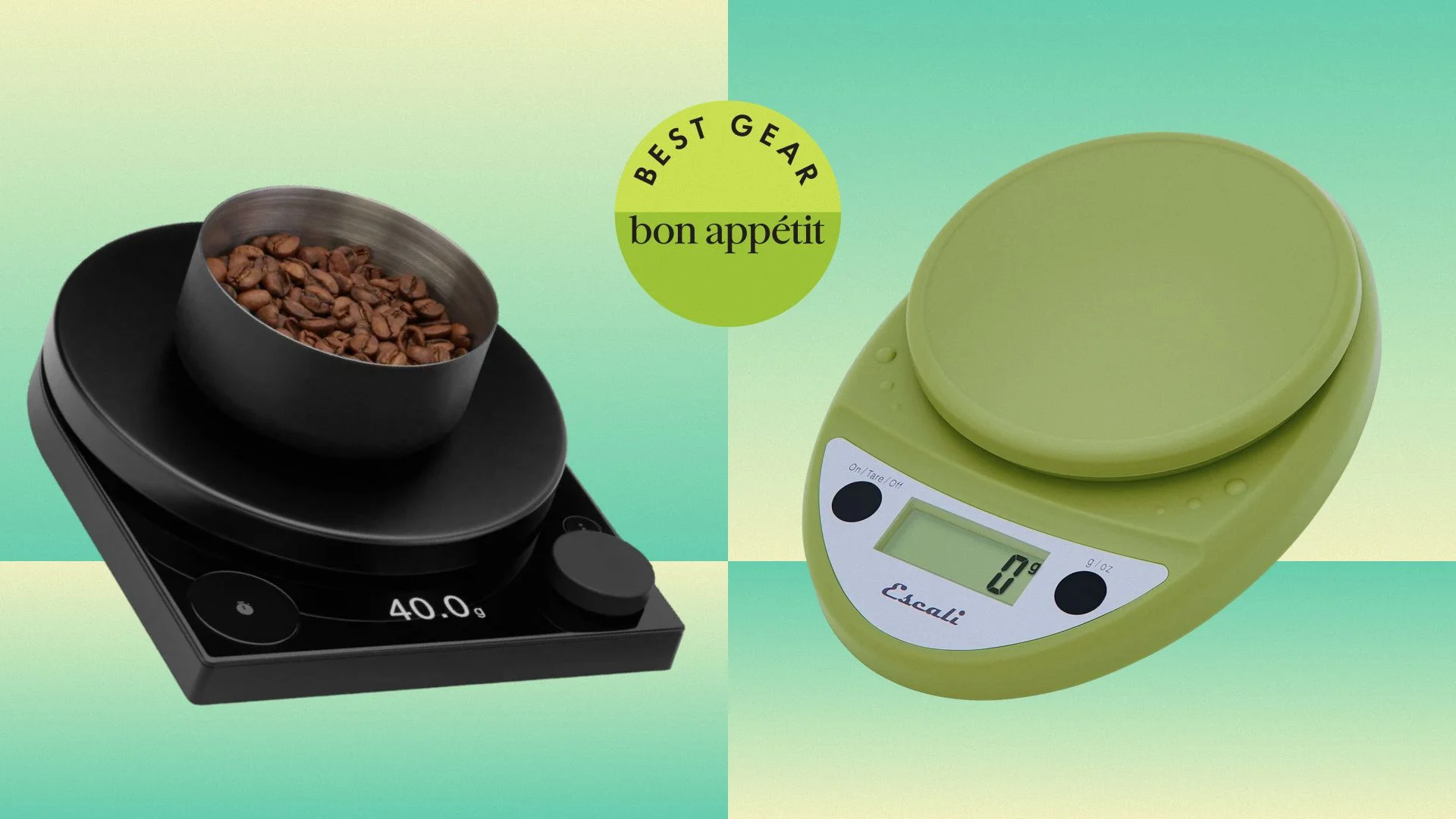
- For bakers who are also coffee nerds: Fellow Tally Scale
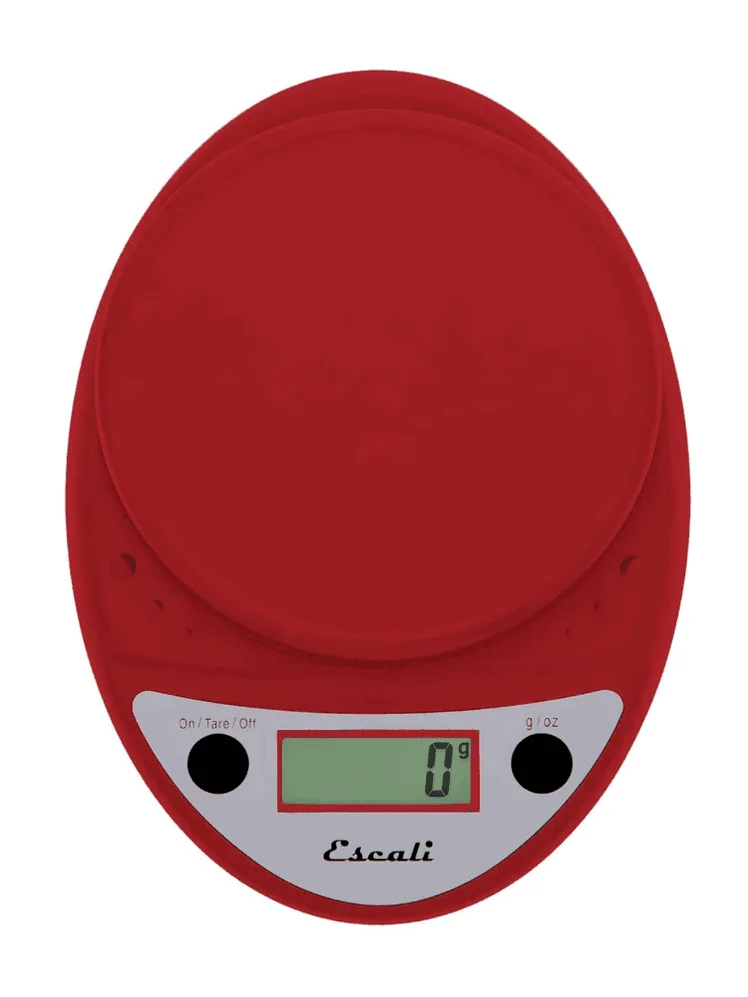
The Escali is the one I'd buy for my own kitchen. It's inexpensive, light, and compact, and it comes in a range of colors, which matters more than it sounds when the thing lives on your counter. It's also very accurate. The trade-offs are real, though. It only measures in 1-gram increments, and the display isn't backlit, so you'll be squinting in a dim kitchen at 6 a.m.
Why weighing beats scooping
Skeptics usually come around after one experiment. Senior editor Noah Kaufman and I ran it: we made one batch of cookies using flour scooped straight from the bag and weighed, and a second batch with flour spooned into a measuring cup and leveled off. The results weren't close. Scooping packs flour more densely, so the cup holds more than the recipe intends. That extra flour changes the finished cookies in ways you'll notice right away.
Which raises the obvious question: why keep fussing with cups at all? In most cases, a scale lets you skip the measuring cups and spoons entirely. Fewer utensils in the sink is a small win, but it adds up over a year of baking.
And the scale isn't only for baking. It's handy for portioning burger patties and meatballs, speeds up meal prep, and makes your Sunday morning pancake routine cleaner.
How we picked the winner
I tested 16 models over several years. I also consulted Shilpa Uskokovic, a former Bon Appétit senior Test Kitchen editor and co-owner of Hani's Bakery, to find the best scale for home cooks. The overall winner costs just $27.
New in this update: I tested the latest version of the Oxo Good Grips 11-Pound Digital Kitchen Food Scale. It was easy to use, and I liked the pull-out display. But it was less accurate than the Escali, and it costs more than double the price. The full review appears further down.
Why the Escali Primo keeps its top spot
Six years at the top of our testing is a long run for any kitchen gadget, and the Escali Primo has been a Bon Appétit Test Kitchen favorite for longer than that. Senior Test Kitchen editor and resident baking whiz Shilpa Uskokovic has relied on hers for more than a decade. "This scale has been with me for more than a decade of my career, staying faithfully by my side through 12-hour shifts in pastry kitchens, bouts of religious recipe testing, and weekly sessions of casual baking," she says.
What keeps it there is less dramatic than longevity. It's durable, accurate, easy to learn, and cheap enough that you won't hesitate to buy it. For a kitchen scale, that covers most of the list.
What works: It's lightweight, comes in a range of colors, and runs on two buttons. One turns it on and tares it. The other cycles between ounces, pounds, and grams. In our tests it responded quickly, tared fast, and gave the same reading every time you weighed the same thing. Its 4.5-minute auto shut-off is among the longest we tested, which matters when you've stepped away mid-recipe and don't want to start your flour over. The 11-pound capacity handles just about any home-kitchen task.
The design is where it quietly pulls ahead. The weighing platform is raised above the base and set off to one side, so the display stays readable when you're pouring into a big, wide mixing bowl. The plastic body and sealed control panel wipe clean after a floury session, and there are no seams for crumbs to hide in. Four rubberized feet keep it planted on the counter.
Long-term use hasn't dented it. Uskokovic says it's compact, easy to store, and simple to wipe down. It switches between grams and ounces without fuss, and it's "reliably accurate."
The catches: It only measures in 1-gram increments. That was normal across the scales we tested, but if you're dialing in pour-over ratios, you'll want finer steps. Dedicated coffee scales are their own category, and our coffee scale picks cover them. The display isn't backlit, which some pricier models offer, but we didn't miss it. And since it isn't a touchscreen, the buttons need a firm press.
The budget pick: Amazon Basics Digital Kitchen Scale
Amazon Basics is hit-or-miss across its product line, but this scale lands. At roughly half the Escali's price, it's the cheapest way in for anyone still deciding whether a scale earns a spot on the counter.
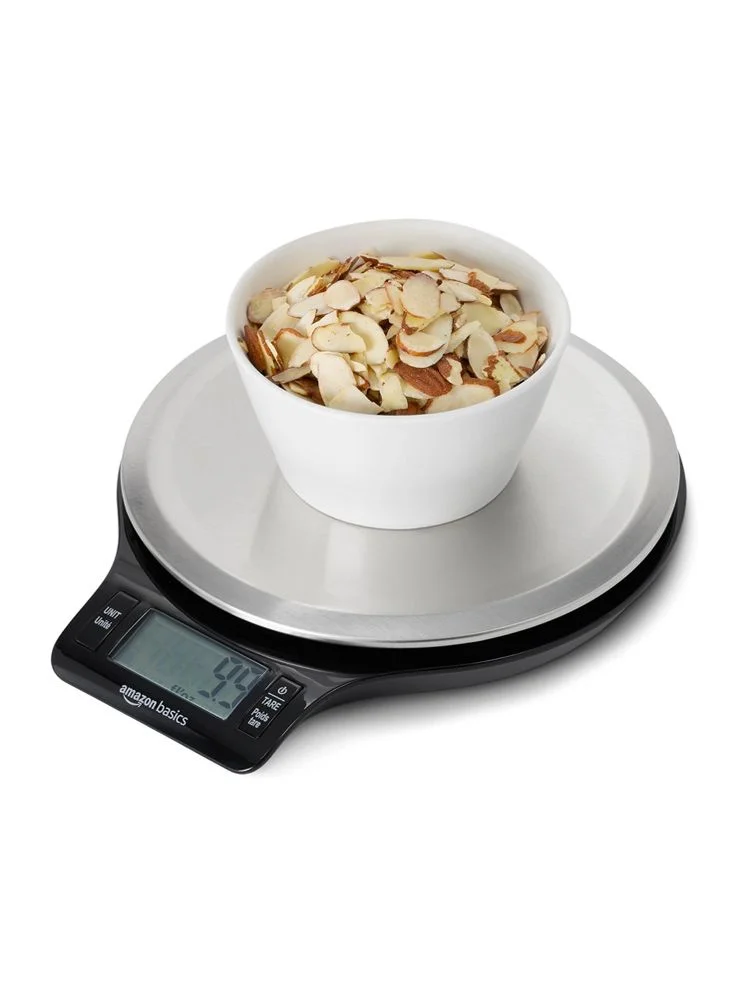
It shares a lot with the winner. It has the same two-button setup, a similarly raised platform that keeps the display visible, and the same 11-pound capacity. The body is plastic, the platform is stainless steel, and the whole thing wipes down easily.
Accuracy is the real surprise. For the money, it's hard to fault. It reacts almost as quickly as the Escali and gave an accurate reading about 99% of the time. The misses came when someone kept piling on weight or flipping between units. The error was small, and removing everything, taring, and starting over fixed it. At $10 at the time of writing, the Amazon Basics scale is a bargain, and you'd struggle to find a better model at that price.
The trade-offs: The buttons aren't sealed, so crumbs and liquid can slip into the gaps around them. It isn't quite as accurate as the Escali, and it tends to overshoot an item's weight at first before settling, usually quickly. The stainless-steel platform also scratches and smudges more readily than the Escali's plastic one.
On paper, it measures 8.3 x 7 x 1.3 inches, holds 11 pounds, reads in 1-gram steps, and runs on AAA batteries, which come included. It lists no auto shut-off, and that's the spec to notice. If you're the type who gets pulled away mid-recipe, the Escali's shut-off timing is the feature you'd miss.
Discussion
Sign in to join the discussion.