The interstitium, often overlooked, is emerging as a significant structure, challenging our understanding of bodily functions beyond traditional frameworks.
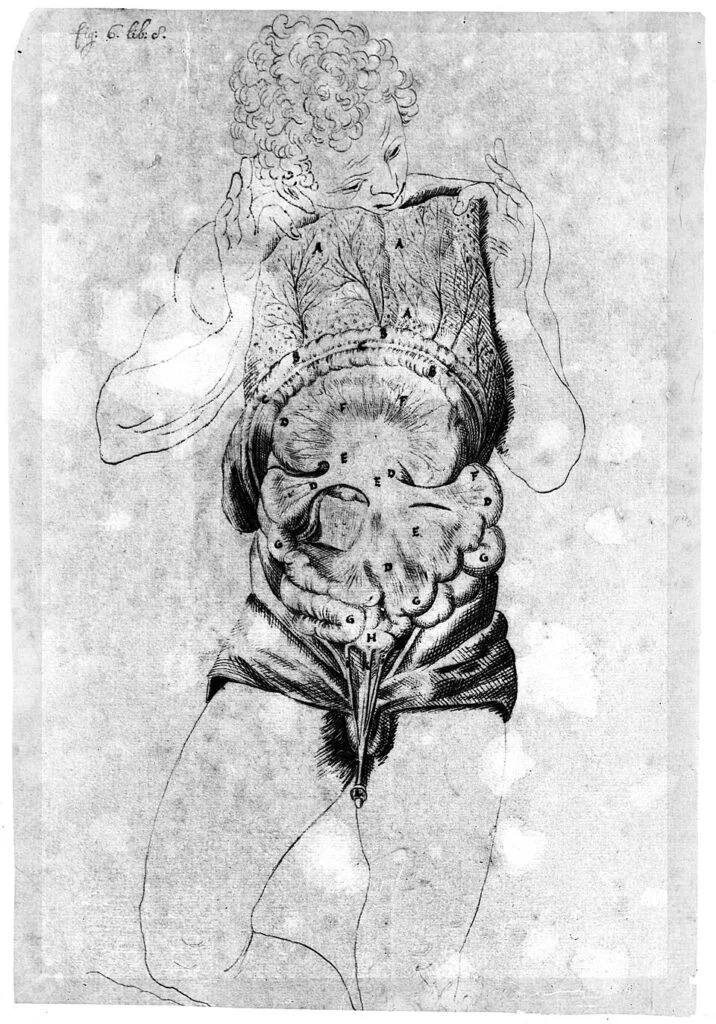
In recent discussions surrounding human anatomy, the interstitium—a term describing the vast latticework of proteins and fluids surrounding organs—has sparked renewed interest among medical professionals and curious minds alike. Once dismissed as mere background material in the study of the body, this system, which has historical roots going back to the Renaissance anatomist Andreas Vesalius, is gaining attention for its potential implications for our understanding of health and disease.
Traditionally, Western medicine has concentrated primarily on visible organ systems such as the cardiovascular and lymphatic systems. However, the interstitium may act as a novel third circulatory system, effectively interlinking various bodily functions in a way not previously acknowledged. Recent studies have shown that substances like tattoo ink can move through these “hidden pathways,” which has prompted scholars and practitioners to rethink the dynamics of bodily fluid movement and nutrient distribution.
Historical medical practices, particularly those from Eastern traditions, have long posited complex networks throughout the body. For example, Traditional Chinese Medicine conceptualizes the body as filled with "qi" flowing through meridians—pathways akin to the interstitium. Ancient Egyptians also understood the importance of vessel networks bridging different organs, demonstrating a historical acknowledgment of interconnectivity that contemporary Western medicine has largely overlooked.
Despite recent revelations regarding the interstitium, reactions among medical professionals have varied. Some embrace the potential connections to acupuncture and holistic practices, suggesting that these ancient beliefs might find validation through modern science. Conversely, skeptics challenge the interpretation of the data, arguing that it may reinforce pseudoscientific claims. The debate raises essential questions about how we value different medical traditions and their contributions to understanding human physiology.
From a personal perspective, as both a physician and someone passionate about the narrative of medicine, I find the discussions surrounding the interstitium particularly thought-provoking. They reflect broader issues within the medical community regarding humility in the face of complexity. While modern medicine excels at addressing specific ailments, it often resists examining less illuminated areas that deserve scrutiny, akin to the underappreciated parts of a poem or a painting.
In practical terms, the understanding of interstitial space has implications for how we approach treatment and diagnosis. Recent experiments have utilized decellularization techniques to visualize the interstitium in humans, unveiling its intricate structures as components of our overall biological makeup. Such discoveries challenge preconceived notions about the body, suggesting that understanding the spaces in between—rather than just focusing on individual organs—could lead to new diagnostic and therapeutic avenues.
Yet, the quest to comprehend the full scope of the interstitium begs a crucial contemplation: can we reconcile the idea of this network being a ‘passive’ part of our anatomy? The desire for all structures to serve distinct, actionable roles in our health may overshadow the beauty and significance found in aspects of our anatomy that seem to lack immediate utility. Recognizing the interstitium's function or lack thereof can help deepen our understanding of physiological processes.
The commitment to organ-system-based medical training has yielded considerable benefits, allowing for nuanced learning about the interactions between different parts of the body. However, it has also led to certain oversights—qualities of the body that do not conform neatly to established systems can remain obscured. Learning to appreciate the interstitium may require a synthesis of knowledge, integrating perspectives from various medical traditions and scientific research.
For many, the focus on tangible biological activity breeds a reluctance to acknowledge parts of the organism perceived as redundant. As we explore the interstitium further, we might uncover profound biological insights that challenge our current paradigms. But then again, perhaps the true lesson lies in accepting the interstitium as both an integral aspect of our biology and a space for reflection—a metaphor for the quiet yet essential moments in life, much like the silence enveloping a powerful poem.
As our explorations continue, one thing is undeniable: the interstitium invites us to reconsider what it means to be human, not only through what is visible but also through what lies just beyond our reach, waiting to be understood.
Laura Kolbe is a physician, medical ethicist, and writer whose work explores the intersection of medicine and narrative.
Discussion
Sign in to join the discussion.