Exploring Charles Brockden Brown's works, this article highlights his efforts to forge a distinct American literary voice by transcending European influences.
The alchemical quest for transformation, epitomized by the legendary philosopher’s stone, runs parallel to the aspirations of early American literature. One might find such ambitions intertwined with the legacy of Charles Brockden Brown, a pivotal figure in American literary history. His 1798 novel, Wieland; or, The Transformation: An American Tale, is frequently heralded as one of the first American novels and serves as a critical examination of identity and culture in a new nation.
Set against the backdrop of Philadelphia, Brown's Wieland unfolds a narrative rich in gothic elements, beginning with a character's self-immolation during a religious ceremony near the Schuylkill River. This dramatic opening sets the stage for a story that critiques the lingering European influences that Brown sought to shed. In fact, he directly challenged his contemporaries, viewing their reliance on “puerile superstition and exploded manners” as unworthy of an emerging American narrative.
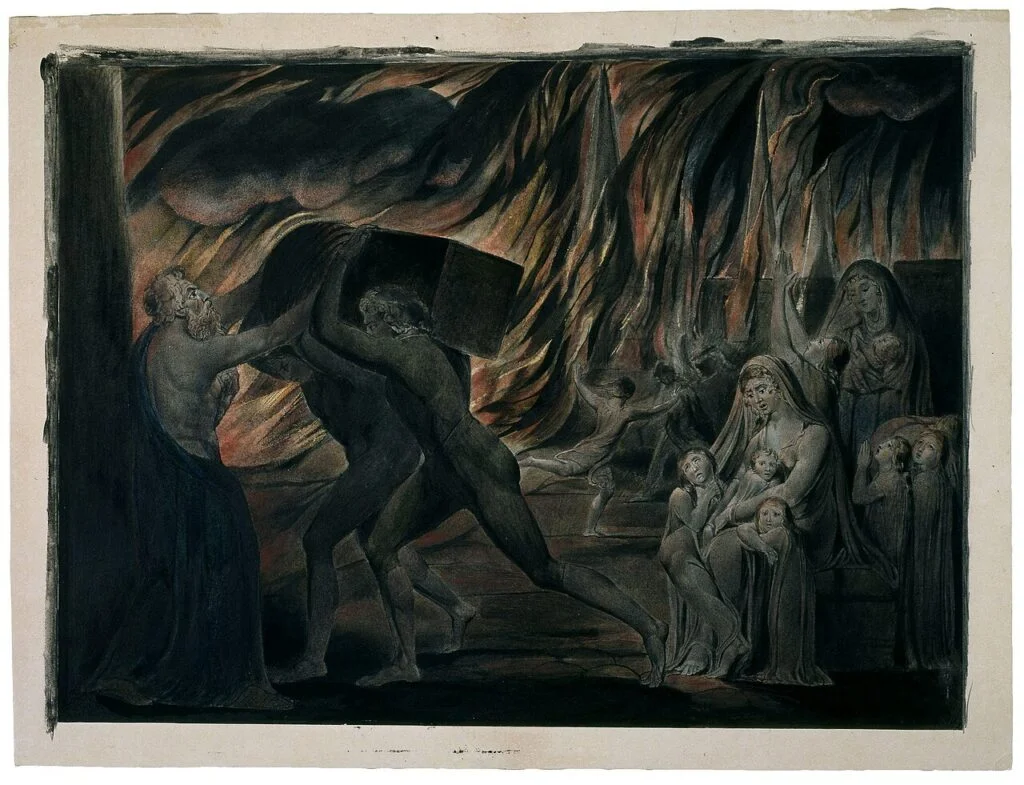
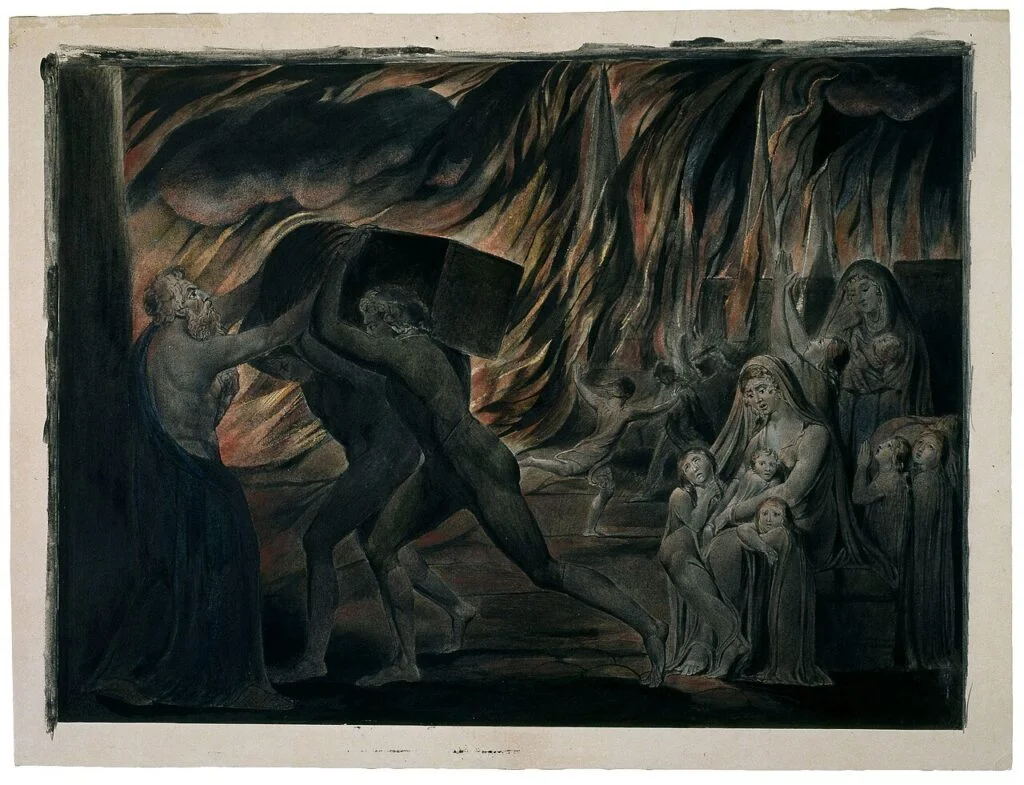
Fire (circa 1805), William Blake, The Morgan Library via Wikimedia Commons.

In Brown's view, Wieland symbolized a necessary break from Gothic European literature. It was not merely a novel transplanted to American soil; rather, it was an effort to cultivate a distinctly American literary form. By linking the destruction of a temple to the fires of creativity, Brown expressed a desire to clear away the vestiges of old world storytelling to make room for an authentic American literary identity. He poignantly questioned, “Why then slumbers the American muse?”—a challenge to cultivate a voice true to the country’s evolving ethos.
His writing engages with various gothic themes—ventriloquism, somnambulism, and the eerie phenomenon of spontaneous combustion—but ultimately grapples with a deeper understanding of the American character’s dual nature. There's a palpable tension running throughout Brown’s work, stemming from the Enlightenment ideals foundational to American society and the underlying currents of Romanticism that skew them. He depicted characters enmeshed in their own irrationality, reflecting the contradictions inherent in American identity.
Brown's protagonist, Wieland, embodies this dissonance. Caught between invisible forces that manipulate him, he becomes a tragic figure, as his journey oscillates between the supernatural and the scientific. This narrative framework cleverly illustrates how America's burgeoning identity was not free from the burdens of its history; it was a nation struggling to reconcile progressive ideals with darker, more irrational impulses.
Despite declaring independence from European cultural norms, Brown's narratives were steeped in gothic traditions. They relied on tropes familiar to his readers yet sought to reinterpret them within an American context. The mid-Atlantic region, where Brown lived and wrote, was a hotbed of eccentric sects, including the Anabaptists and Moravians, instituting a unique cultural milieu ripe for literary exploration.
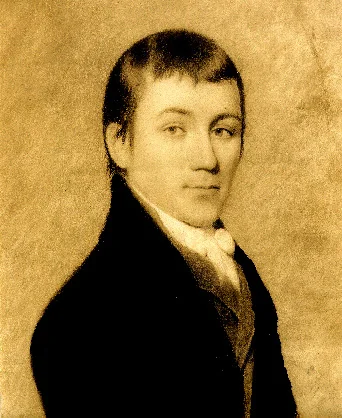
Public domain, via Wikimedia Commons.

Brown’s significant work, Edgar Huntly; or, Memoirs of a Sleep-walker, delves even deeper into the realm of the grotesque and the surreal. With its protagonist chasing a suspected murderer, the novel spirals into a chaotic exploration of identity, morality, and the struggle for self-control amidst overwhelming circumstances. As Edgar navigates his own sleepwalking state, his violent encounters with characters in the wilderness highlight America’s complex relationship with its own violent history.
This novel begins as a conventional gothic tale but evolves into a reflection of the American psyche—grappling with national amnesia and moral contradictions. The horror elements serve as a lens through which the truths of America’s past, including its brutal treatment of indigenous populations, come to the forefront. Thus, Brown’s works transcend mere storytelling; they investigate the fabric of a nation stitched together by conflicting narratives.
While Brown's contemporary status may not rival that of later American literary giants like Washington Irving or Nathaniel Hawthorne, his influence on American literature is undeniable. He was recognized in his day, even receiving attention from luminaries such as Edgar Allan Poe. His themes and characterizations laid the groundwork for subsequent explorations of the American experience through literature, probing the complexities of a nation forged in both reason and irrationality.
Even as Brown's name fades from common memory, his literary contributions remain relevant. Works like Wieland and the upcoming film adaptation reflect the enduring fascination with gothic themes and the quest for identity. Moreover, contemporary novels, such as Sara Sligar’s Vantage Point, which reimagines Brown’s narrative through modern technology, attest to his lasting appeal.
Ultimately, Charles Brockden Brown's body of work stands as a testament to the struggles of a young nation grappling with its own identity. His probing examination of the interplay between rational thought and irrational behavior is a defining characteristic of American literature—one that continues to resonate in today’s discussions about history, culture, and identity.
Brown's legacy, although diminished in popular recognition, invites a reassessment of the narratives that shaped America from its inception. By examining the often turbulent and contradictory nature of American identity, he provides an eloquent lens through which we can understand both the historical context and the literary evolution that followed.
Ed Simon is the author of several books, including Devil’s Contract: The History of the Faustian Bargain, named one of The New Yorker’s best books of 2024. He is Public Humanities Lecturer in English at Carnegie Mellon University.
Discussion
Sign in to join the discussion.