Amazon Game Studios is pivoting away from MMOs, transferring operations of key titles back to their original developers as player engagement wanes.
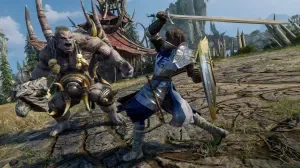
Amazon Game Studios has formally announced its retreat from the MMO sector, transferring Western operations of Throne and Liberty and Lost Ark back to their respective South Korean developers. NC (formerly NCSoft) will reclaim control of Throne and Liberty in Q4 2026, followed by Smilegate, which takes over Lost Ark in early 2027.
Amazon's Role in the MMO Market
Amazon's initial foray into the MMO space seemed promising. Their role centered on publishing these games and managing live-service elements in Western markets, and they set themselves up as a key player in this highly competitive sector. Both titles, particularly Lost Ark, launched to significant success—especially on Steam, where Lost Ark captured impressive player counts upon its debut. Yet, the longevity of that success has come under question. Player engagement waned as the novelty of these games faded. Many MMO players have a history of moving on after the first few months if a game does not continually meet their expectations, which appears to have been the case here.
Engagement metrics highlight a crucial aspect of live-service games: they must continually innovate or offer substantial content to retain player interest over time. This requires not just strong initial gameplay but also a dedication to updates and expansions that resonate with a devoted player base. Many fans embraced Lost Ark not just for its mechanics but for the regular infusion of new content and community engagement the developers provided—objectives that Amazon seems to have struggled with fulfilling in the Western markets.
Impact of the Transition on Players
As Amazon passes the reins to NC and Smilegate, players can expect some downtime during this critical transition. However, the good news is that both games will remain available in the West, allowing players to retain most of their character progress and player data. Still, there's a catch: cross-progression between Steam and consoles for Throne and Liberty will be discontinued post-transition. For many players, this limitation may feel like a strike against them, especially in an era where seamless gaming experiences are what drive engagement and satisfaction.
Players reluctant to transfer their data have the option to opt-out, but this choice comes at a significant cost: characters, items, and progress won’t carry over, essentially forcing a complete reset in their gaming experience. For those who choose to consent to the transfer, the process should require minimal effort—accepting new terms of service upon first login. But remember: trust isn’t built overnight. Players with reservations are likely to second-guess this decision, especially given past concerns regarding data privacy in the gaming industry. In gaming communities, fear surrounding transparency often leads to widespread skepticism about how developers handle player data, a trend that's been amplified in recent years.
Amazon's MMO Aspirations: A Lost Promise?
The trajectory of Amazon's MMO ambitions paints a rather grim picture. Just a few short years ago, the company seemed poised to capture significant market share in the MMO genre. They launched their own title, New World, in 2021, and for a while, the numbers showed promise with substantial player counts. However, sustained growth proved elusive. What started as a vibrant community quickly diminished as players became disillusioned. The game's launch was marked by a slew of technical issues and a lack of meaningful content updates, eventually leading to a dwindling player base. Following on the heels of New World, Amazon published Lost Ark in 2022 and initially planned to launch Throne and Liberty in 2024. They had even envisioned introducing the anime MMO Blue Protocol, though that project was ultimately scrapped. (And this is the part most people overlook: launching a game is just the beginning.)
Today, as Amazon’s MMO ambitions seem to unravel, the writing feels like it's been on the wall. Earlier this year, they confirmed that New World’s servers are slated for shutdown in early 2027. This decision caps off a long and tumultuous journey for a title that once seemed filled with potential. The path involved an elaborate console launch last year and numerous updates that left fans hopeful—right until the unexpected announcement of its impending shutdown. Further compounding this retreat from the genre was the cancellation of the Lord of the Rings MMO, particularly alarming amidst layoff waves at Amazon Game Studios.
Implications for Amazon and the Gaming Industry
The implications of Amazon's retreat from the MMO sector are significant. For one, it not only highlights the difficulties giants face when diving into established markets but sets a concerning precedent for their future ambitions. The gaming industry is notoriously hard to penetrate, especially within genres requiring ongoing community engagement and content production. While Amazon is a powerhouse in e-commerce and cloud services, maintaining a vibrant gaming community demands a different skill set—one that seems to have eluded their grasp thus far.
If you're working in this space, watch this development closely. The lessons here suggest that even with deep pockets and a willingness to invest, success isn't guaranteed. Other companies may feel hesitant to invest heavily in MMOs without proven track records or expert teams. Amazon's retreat may send shockwaves through the industry, causing other prospective entrants to reconsider their strategies in a domain where the balance of innovation and player satisfaction is just as important as financial investment.
Whether this signals the end of Amazon's gaming ventures or a shift toward focusing on different genres remains to be seen. But as it stands, the decision to step back from MMOs certainly evokes questions about their long-term strategy in an arena that requires not just heft but heart as well.
Discussion
Sign in to join the discussion.